
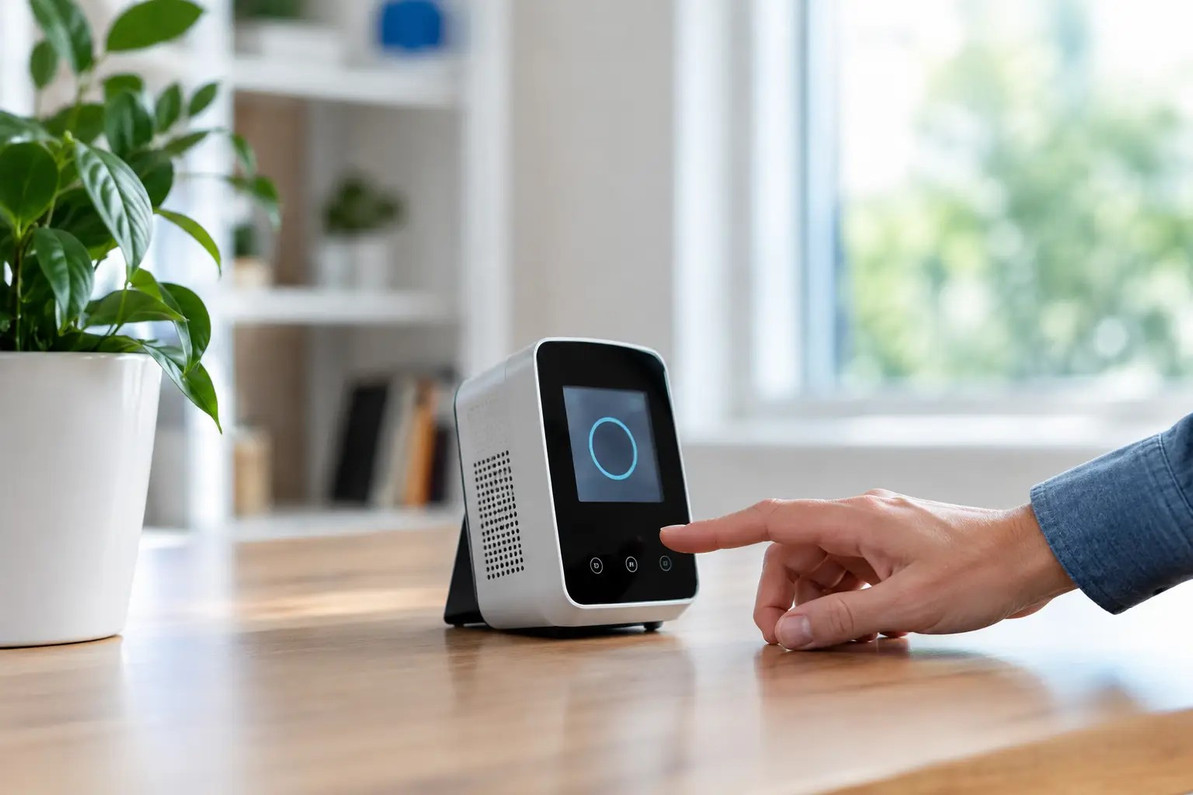
How to Choose Ozone Monitors for Your Space
An ozone smell after a treatment, a concern about outdoor air entering a building, or a workplace process that uses ozone all call for more than guesswork. Ozone monitors provide a real measurement of ozone concentration, helping homeowners and business buyers determine whether conditions are acceptable, when an area needs more ventilation, and whether an ozone-generating process is operating as intended.
Ozone can be useful in tightly controlled commercial applications, but it is also a lung irritant. That makes the right monitor less about finding the cheapest meter and more about choosing a device that measures the concentrations and conditions relevant to your space. A monitor intended to verify very low ambient levels is not necessarily the right choice for a higher-output ozone process.
Start With the Ozone Measurement You Need
The first buying decision is measurement range. Most shoppers do not need a meter that measures the same concentrations. The right range depends on why you are testing and where the testing occurs.
For occupied homes, offices, schools, and other indoor spaces, a low-range ozone monitor is generally the sensible starting point. These instruments are designed to detect relatively small changes in ozone concentration, which is what matters when evaluating indoor exposure, outside air intrusion, or the aftermath of an ozone-producing device. Resolution matters here. A monitor that displays small changes can give you a clearer picture than one built only for high concentrations.
Higher-range ozone monitors are better suited to controlled commercial or industrial settings where ozone is deliberately used. Examples can include treatment rooms, process areas, or facilities that need to verify that an area has returned to an acceptable level before people re-enter. In these settings, look beyond the maximum number on the specification sheet. Confirm that the meter can measure both the expected peak and the lower level you need to verify before occupancy.
A broad measurement range can sound like a universal advantage, but there is a trade-off. Some wide-range instruments may offer less useful resolution at the low end. Buy for the concentrations you actually need to measure, not just the largest range advertised.
Ozone Monitors Need the Right Sensor Technology
Most portable ozone monitors use an electrochemical sensor. This approach is practical for field measurements because the units are compact, responsive, and easier to move from room to room. A handheld monitor can help a facility manager check multiple locations, while a fixed instrument may be the better choice for ongoing observation in one critical area.
No sensor is maintenance-free. Sensor age, temperature, humidity, and exposure to other airborne chemicals can affect readings. This does not mean a monitor is unreliable. It means buyers should treat the instrument as a measurement tool that needs proper use, care, and periodic verification.
When comparing ozone monitors, review whether the manufacturer states calibration requirements and expected sensor service life. Calibration is especially relevant for commercial buyers who need defensible readings for internal procedures, employee safety planning, or process documentation. A monitor that costs less initially can become the more expensive choice if its calibration process is unclear or difficult to support.
For residential buyers, the same principle applies in simpler terms: a monitor is only helpful when you can trust its readings. Choose a specialized instrument from an established air-quality brand rather than relying on a general-purpose gadget that makes vague claims about detecting every air concern.
Choose Features That Match How You Will Use the Meter
A screen that shows a live reading is useful, but it may not be enough. Ozone levels can change as ventilation cycles on, doors open, outdoor conditions shift, or an ozone source runs and stops. The features that matter depend on whether you are checking a single event or managing a recurring condition.
For quick spot checks, prioritize a clear display, straightforward controls, a practical battery setup, and a response time that fits your work. A portable meter should be easy to carry into the room, position away from direct airflow, and read without complicated setup.
For repeated testing, data logging becomes much more valuable. Logged readings can show whether ozone rises at a particular time of day, after equipment runs, or when outdoor air quality changes. This is particularly useful in small businesses, property management, and facilities with recurring odor or ventilation concerns. A single reading can tell you what is happening at that moment. A trend can help identify why it is happening.
Audible or visual alarms are worth considering when a reading needs an immediate response. In a commercial environment, an alarm can signal that an area should be ventilated, a process should be checked, or access should be restricted until the concentration drops. Make sure alarm thresholds can be set appropriately for your policy and application. An alarm is only useful if the people responsible understand what action it should trigger.
Other practical features include a protective case, a sampling pump when the application requires one, and the ability to record maximum or average readings. Do not pay for every available feature automatically. A homeowner verifying an occasional concern may need a reliable portable monitor, while a facility using ozone routinely may benefit from logging, alarms, and a more formal calibration plan.
Placement Can Change the Reading
Even the right ozone monitor can give a misleading result if it is placed poorly. Avoid measuring directly in the discharge stream of an air-moving device, beside an open window, or immediately next to a suspected source unless you are specifically trying to assess that source. Those locations can produce readings that do not represent the air people are actually breathing.
For an occupied room, place the monitor in the breathing zone whenever possible, away from walls and obvious drafts. Allow the instrument time to stabilize according to its instructions. In a larger space, test more than one location. Ozone can vary within the same room based on airflow, equipment placement, and ventilation patterns.
If you are evaluating an area after ozone has been intentionally generated, measure before re-entry and continue ventilation as needed. Do not use odor as the decision point. Some people notice ozone at very low levels, while others may not recognize the smell reliably. A measurement provides a better basis for deciding whether a space needs more time and fresh-air exchange.
Know What an Ozone Monitor Will Not Tell You
Ozone monitors are specialized tools. They do not replace a particle monitor, a carbon monoxide alarm, a radon test, or an air purifier selected for dust, smoke, VOCs, and allergens. A low ozone reading does not prove that overall indoor air quality is good. It only answers the ozone question.
This distinction helps prevent a common purchasing mistake: buying one device and expecting it to diagnose every air problem. If a home has allergy symptoms, visible dust, wildfire smoke, chemical odors, or moisture concerns, the solution may involve separate testing and filtration decisions. For example, a HEPA air cleaner addresses airborne particles, while substantial activated carbon filtration can help with many odors and chemical vapors. Neither function is the same as measuring ozone.
Ozone also should not be treated as a shortcut for routine indoor air cleaning. For homes and occupied offices, focus first on source control, ventilation where appropriate, and proven filtration suited to the pollutant at hand. If ozone is part of a controlled treatment process, use a monitor to verify conditions rather than relying on assumptions.
A Practical Buying Checklist
Before selecting a monitor, write down the location, the expected ozone range, and whether people will occupy the space during or after the event being measured. Then determine whether you need a portable spot-check instrument or ongoing monitoring with logging and alarms.
Ask how the unit is calibrated, how long the sensor is expected to last, and whether replacement or service support is available. Confirm that its stated accuracy and resolution make sense for your intended measurements. If you are buying for a business, include the person responsible for safety procedures or facility operations before making a decision.
A.M.I. Services carries specialty indoor air-quality products with a focus on helping buyers match the product to the concern. For ozone measurement, Eco Sensors is a recognized name to consider when you need a dedicated instrument rather than a general air-quality display.
The best ozone monitor is the one that gives you a meaningful reading in the place where decisions need to be made. Choose the range carefully, plan for sensor care, and use the result to guide ventilation, access, and process decisions with confidence.
Recent Posts
-
How to Choose Ozone Monitors for Your Space
An ozone smell after a treatment, a concern about outdoor air entering a building, or a workplace pr …14th Nov 2026 -

Best Airocide Commercial Uses for Cleaner Spaces
A lobby can look spotless and still have an air problem. A persistent food odor near a break room, c …12th Nov 2026 -

Is Austin Air IT Portable for Everyday Use?
A purifier can be easy to move and still be the wrong choice for the room. That is the key question …10th Nov 2026