
Airocide APS-200 Setup for Cleaner Indoor Air
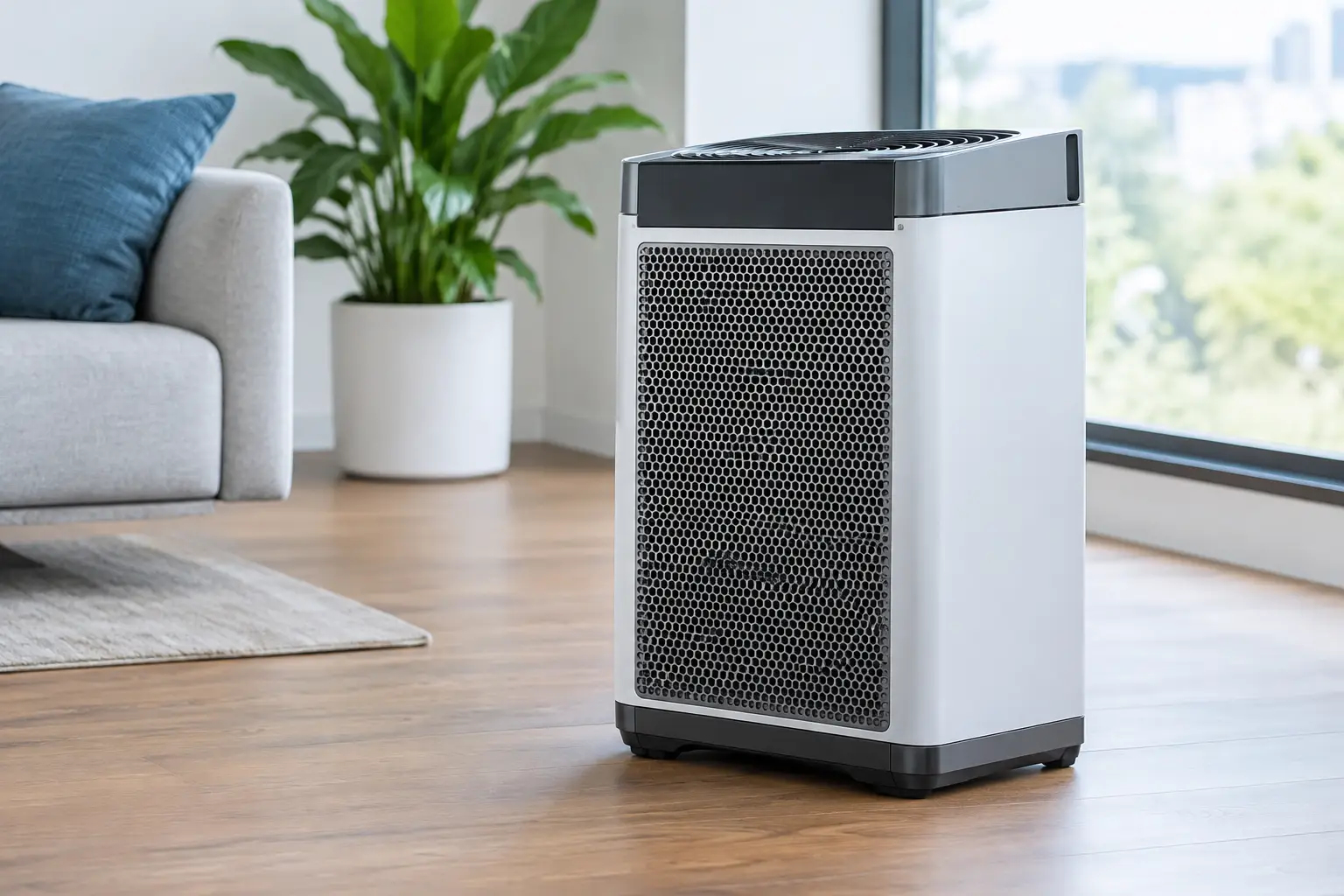
A new air purifier can be plugged in within minutes, but the difference between simply running it and getting useful day-to-day results often comes down to placement and maintenance. An effective Airocide APS-200 setup starts by putting the unit where pollutants are generated or where people spend the most time breathing the air - not tucked behind furniture in the least-used corner of the room.
The Airocide APS-200 PM 2.5 is a practical choice for households and smaller professional spaces concerned about airborne particles alongside odors and chemical pollutants. Its PM 2.5 monitoring feature gives users a clearer view of fine-particle conditions in the room, while Airocide's photocatalytic technology is designed to address airborne contaminants through its reaction chamber. Proper setup helps the unit circulate air as intended and makes its readings more useful.
Airocide APS-200 Setup: Start With Placement
Before removing the unit from the box, decide which room has the greatest need. For many households, that is a bedroom where allergy and asthma concerns affect sleep, a kitchen-adjacent living space, a home office, or an area where outdoor smoke and traffic pollution enter the home. In a small business, it may be a reception area, treatment room, office, or break room where people gather throughout the day.
Place the APS-200 on a stable, level surface near a grounded electrical outlet. A table, credenza, sturdy shelf, or countertop can work well if it gives the unit open space around its air intake and exhaust areas. Avoid placing it on deep carpet, a soft surface, or an unstable stool. Keep it away from sinks, tubs, direct splashing water, and locations with heavy grease exposure.
Air needs a clear path to move through the purifier. Do not push the APS-200 tightly against a wall, wedge it behind a chair, or hide it inside a cabinet. Curtains, bedding, plants, and stacked papers can also restrict airflow when they sit too close to the unit. If the room layout is limited, prioritize clearance over making the purifier disappear from view.
Center placement is helpful in an open room, but it is not always the best practical choice. If smoke enters through one window, for example, positioning the unit on the side of the room closest to that source can make more sense. For a bedroom, choose a location that is open to the room but not so close that airflow or operating sound is distracting during sleep.
Give the PM 2.5 Reading Time to Settle
The PM 2.5 display is most useful when the APS-200 is operated consistently in a stable location. Fine-particle readings can change when someone cooks, vacuums, opens a door, burns a candle, sprays an aerosol product, or brings in outdoor air. That variability is normal.
After setup, allow the unit to run long enough for the room conditions to stabilize before treating a reading as your baseline. Look for patterns over several days rather than reacting to every brief change. A recurring increase after cooking or during certain times of day can point to a source problem worth addressing, such as ventilation, candle use, dust disturbance, or outdoor air infiltration.
The display is a helpful decision tool, not a substitute for common sense. If there is visible smoke, a strong chemical odor, water damage, or a suspected mold issue, address the source as well as using air treatment. An air purifier works best as part of a broader indoor air strategy.
Startup Steps for the APS-200 PM 2.5
Once the unit is correctly positioned, startup is straightforward. First, inspect the purifier and cord for shipping damage. Remove all external packaging and any protective materials that could interfere with operation. Review the product documentation that came with your specific unit, since control layouts and care instructions should always follow the manufacturer guidance supplied with the product.
Plug the APS-200 directly into a suitable wall outlet, then turn it on using the unit controls. Confirm that the unit is operating and that the PM 2.5 display is active. If the display does not appear to respond as expected, check that the unit has power and that no packaging remains in place. Avoid using a damaged cord or forcing a plug into an outlet that does not fit securely.
For most rooms, continuous operation delivers more consistent air treatment than turning the purifier on only when an odor or particle concern becomes noticeable. Air pollution can build gradually, and many triggers - dust, outdoor particles, cooking residues, and volatile organic compounds - are not always obvious at first. Running the unit routinely helps it maintain better conditions rather than playing catch-up after a problem develops.
Fan-speed decisions depend on the room and the concern. A lower setting may be appropriate when quiet operation matters, such as overnight in a bedroom. A higher setting can be useful after cooking, during periods of outdoor smoke, or when the room has been occupied by several people. The trade-off is simple: higher airflow can provide more active circulation, while lower settings may be preferable for noise-sensitive spaces.
Choose the Room Before You Choose the Setting
The APS-200 cannot treat every enclosed area of a home equally from one location. If your main concern is sleep quality, allergies, or asthma symptoms at night, put the unit in the bedroom rather than leaving it in a hallway. If odors and chemical fumes are the primary issue, locate it near the affected living area while keeping appropriate clearance.
For an open-plan home, start in the room with the heaviest pollutant load or highest daily occupancy. A purifier in a large open area may still improve nearby spaces, but walls, closed doors, and room volume all affect circulation. In some homes, moving the unit between a daytime living area and a bedroom is reasonable. In others, a dedicated unit for each priority room is the more dependable approach.
Small business buyers should apply the same logic. Place the APS-200 where employees, clients, or customers are exposed for the longest periods, not in a storage room or distant corridor. For large facilities or spaces with substantial occupancy, ongoing smoke exposure, or more demanding air-quality conditions, Airocide commercial units may be a better fit than relying on one residential-style placement.
Keep the Unit Working as Intended
Setup is not finished when the unit powers on. Periodically wipe exterior surfaces with a soft, dry or lightly damp cloth as appropriate for the manufacturer instructions, keeping liquids away from electrical components. Check the area around the purifier for dust buildup, furniture changes, or new obstructions that could limit airflow.
The APS-200 also has a service component that should not be overlooked: the reaction chamber. Airocide reaction chamber replacement kits are intended to restore the active treatment component at the recommended replacement interval. Do not assume the unit requires no maintenance simply because it does not use a conventional disposable HEPA filter in the same way as many other air cleaners.
Replacement timing can depend on the manufacturer's current guidance and the operating environment. A home with frequent cooking, pet activity, wildfire smoke exposure, or heavy odor concerns may place different demands on an air purifier than a lightly used guest room. Keep the purchase date and maintenance reminders in a place where they will not be forgotten.
If performance seems to change, start with the basics: verify that the unit has open clearance, confirm it is powered on and operating in the intended room, and inspect whether the reaction chamber is due for replacement. Do not use unapproved parts or attempt repairs beyond the care steps specified for the unit.
Common Setup Mistakes to Avoid
The most common mistake is treating the APS-200 as a decorative appliance rather than an air-treatment device. Blocking its airflow, running it only occasionally, or placing it far from the actual concern limits what it can do. Another frequent issue is expecting one purifier to overcome an active source, such as frequent indoor smoking, a persistent moisture problem, or major cooking emissions without ventilation.
Avoid placing the unit immediately beside an open window if outdoor pollution is entering continuously. In that situation, reducing the incoming pollution may matter as much as where the purifier sits. Likewise, avoid moving the unit every few hours without a reason. Consistent placement helps you understand the PM 2.5 patterns in a particular room and judge whether your air-quality habits are improving.
A well-placed Airocide APS-200 PM 2.5 gives you more than a powered-on appliance. It becomes a practical part of the room where your family sleeps, works, and spends time - with cleaner-air habits supported by useful particle information and timely reaction chamber care.
Recent Posts
-
Airocide APS-200 Setup for Cleaner Indoor Air
November 6, 2026 A new air purifier can be plugged in within minutes, but the difference between s …6th Nov 2026 -
How to Install Scalewatcher Nano at Home
November 4, 2026 Hard-water buildup does not wait for a convenient time. It collects on sho …6th Nov 2026 -
Does Hard Water Damage Appliances? What to Know
October 31, 2026 A water heater that suddenly takes longer to recover, a dishwasher leaving cloudy …6th Nov 2026