
Airocide Versus HEPA for Cleaner Indoor Air
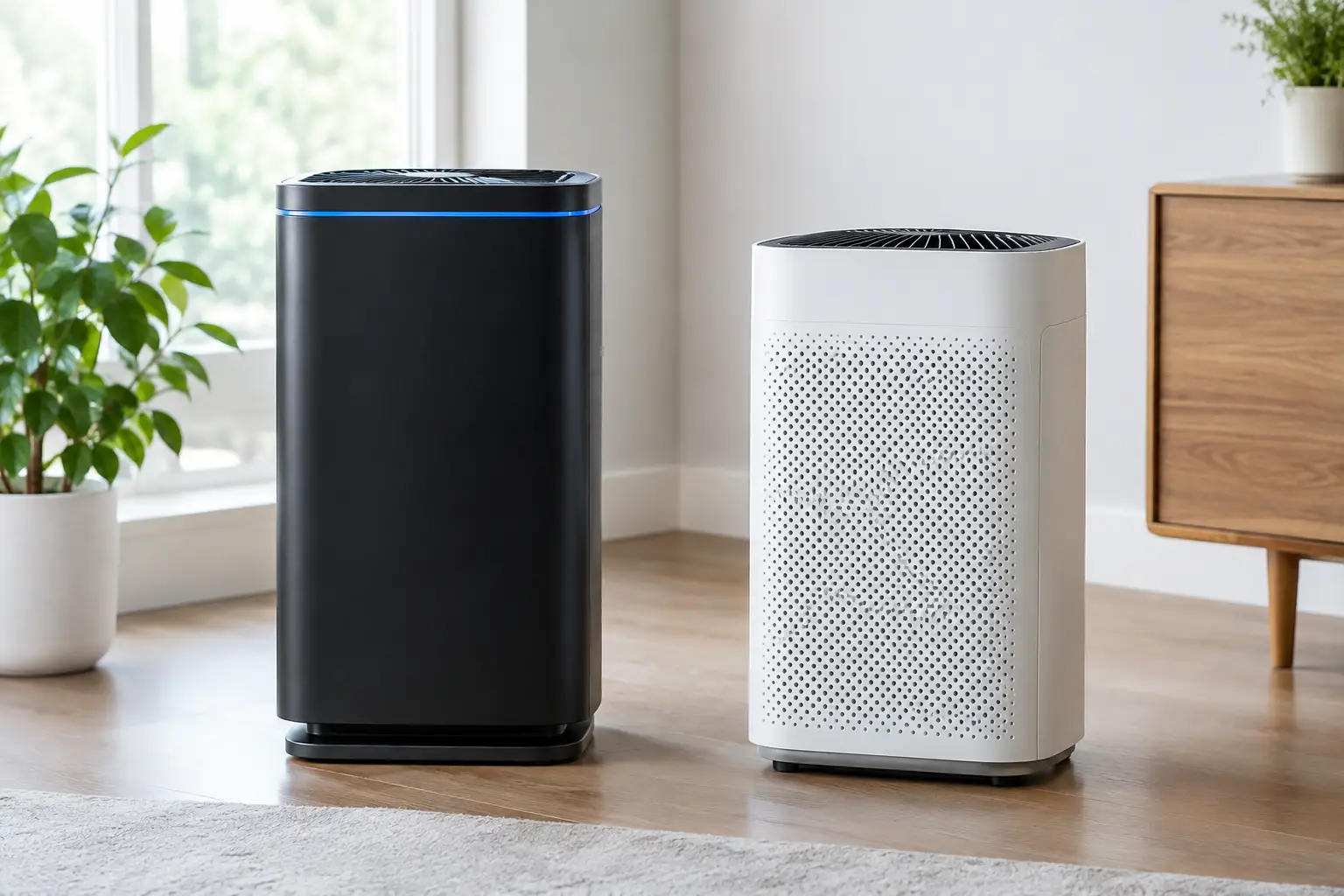
A dusty room and a chemical-sensitive room can both feel like they need an air purifier, but they do not necessarily need the same technology. The Airocide versus HEPA decision comes down to what is actually in the air: solid particles such as dust and pollen, or gases such as VOCs, odors, and chemical vapors. Choosing based on the problem first can prevent an expensive mismatch.
HEPA is the familiar answer for airborne particles. Airocide uses a different approach, built around photocatalytic oxidation inside its reaction chamber. Neither technology is automatically better. Each addresses a different part of the indoor-air equation, and some homes and commercial spaces need both particle control and gas-phase treatment.
Airocide Versus HEPA: The Core Difference
A true HEPA filter is a dense mechanical filter designed to capture fine airborne particles. It is especially relevant for pollen, pet dander, dust, mold spores, smoke particles, and PM2.5. A HEPA air cleaner draws room air through the filter, where particles remain trapped until the filter is replaced.
Airocide technology is designed to address airborne contaminants that are difficult for a particle filter to hold, particularly volatile organic compounds, chemical odors, and other gas-phase pollutants. Rather than collecting contaminants in a media filter, air moves through a photocatalytic oxidation reaction chamber. The process is intended to break down targeted organic compounds.
That distinction matters in a home with allergies. If the primary complaint is visible dust, cat dander, or seasonal pollen, a HEPA-focused air cleaner is generally the more direct choice. If the concern is a newly remodeled room with paint fumes, persistent cooking odors, fragrances, cleaning-product vapors, or chemical sensitivity, Airocide may be the more relevant technology.
When HEPA Is the Better First Purchase
HEPA is usually the easier buying decision when particle pollution is obvious or predictable. Families managing allergies or asthma commonly need help reducing the particle load that circulates through bedrooms and living areas. Pet owners may see dust collect quickly, but the more meaningful issue is often fine dander that does not settle right away.
Smoke also has two components. The visible haze and fine soot particles call for strong mechanical filtration. In a smoke-prone area, a HEPA system should be a central part of the plan, especially when it is paired with substantial activated carbon for the odor and gas portion of smoke.
A HEPA label alone does not tell the whole story. Shoppers should also evaluate the unit's room-size rating, airflow, filter replacement cost, and carbon capacity. A small tabletop purifier with a HEPA filter may be useful close to a desk or bed, but it will not provide the same whole-room impact as a properly sized unit operating consistently in a closed space.
For a bedroom affected by pollen, dust, pet dander, or fine particulate matter, a high-quality HEPA air cleaner is often the most practical starting point. It provides a clear physical mechanism: air passes through the unit and particles are captured.
Where Airocide Has a Different Advantage
Airocide is worth serious consideration when gas-phase contaminants are the main concern. VOCs can be released by paint, flooring, furniture, adhesives, fragrances, hobby materials, cleaning products, and stored household chemicals. They may be odorless, noticeable only at certain times, or associated with irritation for sensitive occupants.
Standard HEPA filtration does not remove gases simply because it is HEPA. Some air cleaners add carbon or other sorbent media to help with odors and VOCs, but performance depends heavily on how much media is present, the compounds involved, and when the media becomes saturated. This is why an air cleaner that performs well during allergy season may not be the best answer for a strong chemical odor.
Airocide's photocatalytic oxidation design is intended for that separate challenge. It does not rely on a conventional particle filter as its primary method for VOC reduction. That makes it a compelling option for people who are focused on chemical vapors, persistent odors, and occupied spaces where airborne organic compounds are a concern.
The Airocide APS-200 PM 2.5 is particularly relevant for buyers who want an Airocide solution while keeping fine particulate matter in the decision. Review the product's stated coverage guidance and maintenance requirements for the specific installation area rather than choosing only by square footage on paper. Open floor plans, high ceilings, active kitchens, and frequently opened doors can all increase the air-cleaning load.
For larger applications, Airocide commercial units can make more sense than trying to place multiple small residential units throughout a facility. Offices, waiting rooms, salons, fitness spaces, and other occupied commercial environments may have recurring odor or VOC concerns that are different from a single-family bedroom.
What Each Technology Does Not Solve on Its Own
The most useful comparison is not about declaring a winner. It is about recognizing the gap each approach can leave behind.
A HEPA air cleaner is not a complete VOC solution. It can reduce airborne particles that aggravate allergies and asthma, but HEPA media by itself does not neutralize chemical gases. If a room smells strongly of new carpet, perfume, solvents, or cleaning chemicals, particle filtration may make the air feel cleaner without fully addressing the source of the odor.
Airocide is not a substitute for high-capacity particle filtration when pollen, dander, dust, or wildfire-related PM2.5 is the central issue. Photocatalytic oxidation is not the same as physically collecting a large particle load. In a home with shedding pets or a household affected by outdoor smoke, a dedicated HEPA-based solution remains important.
Neither technology removes the need for source control. If possible, move paints, solvents, fuel containers, and heavily fragranced products out of occupied areas. Address moisture problems that can support mold growth. Improve ventilation when outdoor conditions allow. An air purifier works best as part of a practical indoor-air plan, not as permission to ignore a continuing pollution source.
Choosing for Common Indoor-Air Problems
For allergies, pet dander, household dust, and pollen, start with HEPA. These are particle-driven concerns, and a correctly sized HEPA unit gives the most direct response.
For wildfire smoke, look for HEPA filtration for the particulate portion and meaningful gas and odor treatment for the smoke smell. Depending on the severity and duration of exposure, this may mean using more than one technology or more than one unit.
For odors and VOCs after painting, remodeling, buying new furniture, or changing cleaning products, Airocide deserves close consideration. It is also a strong option for people whose symptoms are associated more with chemical exposures than with dust or pollen.
For mold concerns, separate the problem into two parts. Air cleaning can help reduce airborne mold spores, where HEPA is relevant, but it cannot fix wet materials, a hidden leak, or excessive humidity. If a musty smell persists, identify and correct the moisture source before expecting any purifier to solve the problem.
For an office or small business, assess the contaminant source and occupancy pattern. A space with frequent cleaning, food odors, product fumes, or customer traffic may benefit from Airocide commercial units. A dusty office near traffic or construction may require a stronger emphasis on particulate filtration. Many facilities need a layered approach rather than a single device.
Maintenance Is Part of Performance
Every air-cleaning technology has an ongoing ownership cost. With HEPA systems, filters eventually load with particles and need replacement. Delaying replacement can reduce airflow and weaken performance, even if the unit still runs.
Airocide systems require attention to the reaction chamber as specified for the model. Reaction chamber replacement kits are not optional accessories to overlook. They are a core part of maintaining the technology's intended operation over time. For either type of unit, follow the manufacturer's replacement schedule and adjust for demanding conditions such as pets, smoke, renovation dust, or continuous commercial use.
Before purchasing, plan for where the unit will sit, whether it can run at a useful fan speed without disrupting sleep or work, and how easily you can keep up with maintenance. The best air cleaner is one sized for the room and used consistently.
The Practical Buying Decision
Choose HEPA first when the air problem is primarily particles. Choose Airocide when VOCs, chemical odors, or gas-phase organic contaminants are the concern driving the purchase. When a space has both - as many homes do after smoke exposure, remodeling, or heavy daily use - combining particle filtration with gas-focused treatment is often the more complete strategy.
Start with the air issue that affects your household or workplace most often, then select equipment that directly addresses it. Cleaner indoor air is less about buying the most familiar technology and more about matching the solution to what people are actually breathing.
Recent Posts
-
Airocide APS-200 Setup for Cleaner Indoor Air
November 6, 2026 A new air purifier can be plugged in within minutes, but the difference between s …6th Nov 2026 -
How to Install Scalewatcher Nano at Home
November 4, 2026 Hard-water buildup does not wait for a convenient time. It collects on sho …6th Nov 2026 -
Does Hard Water Damage Appliances? What to Know
October 31, 2026 A water heater that suddenly takes longer to recover, a dishwasher leaving cloudy …6th Nov 2026