
When to Replace Your HealthMate Filter at Home
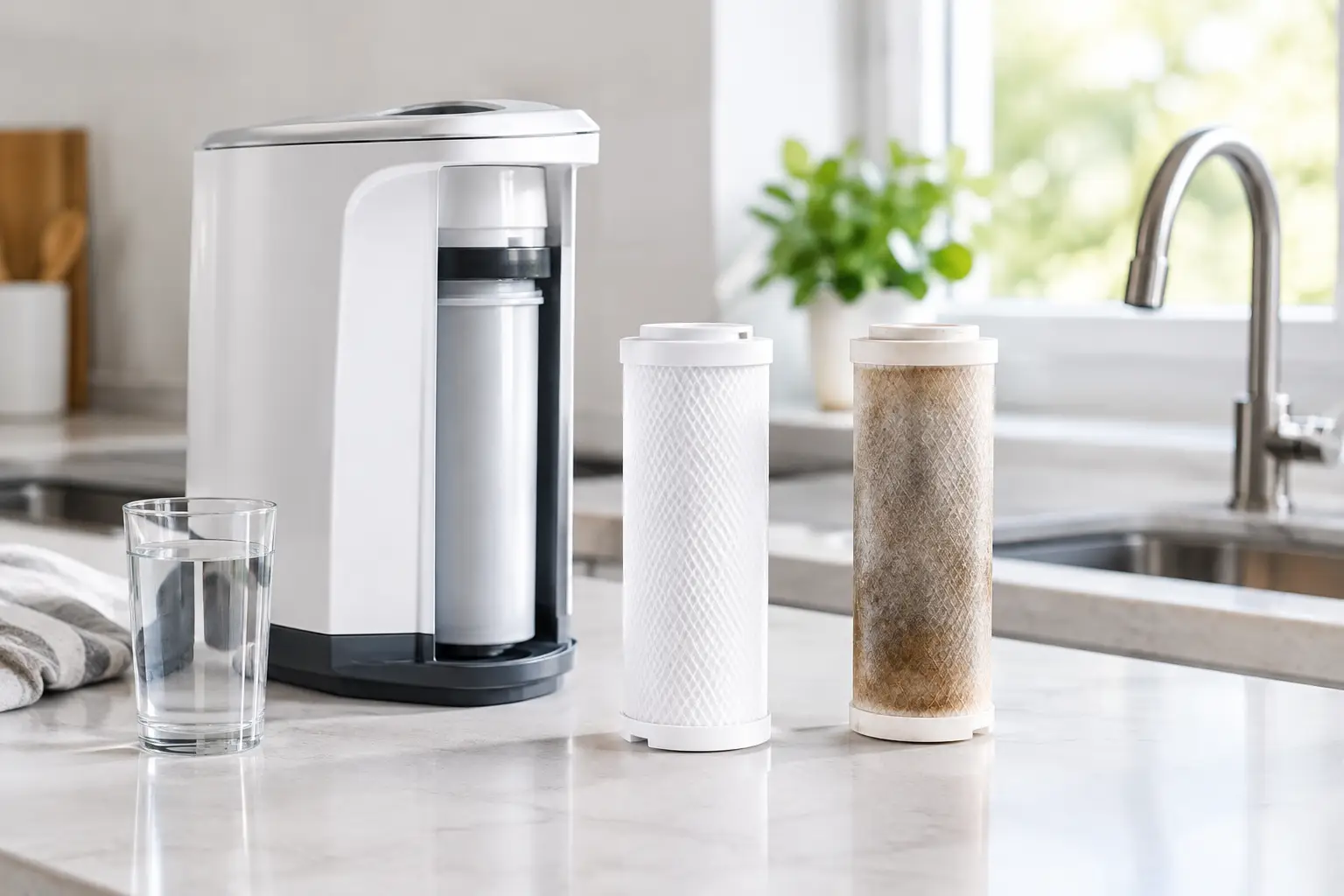
A HealthMate can keep working around the clock long after its filter has reached the end of its useful life. Knowing when to replace HealthMate filter media helps protect the reason you bought the unit in the first place: dependable removal of airborne particles, odors, and chemical vapors from the rooms where your family spends time.
For most homes, the Austin Air HealthMate replacement filter is designed to last up to five years under normal residential use. That long service interval is a major advantage, but it can also make filter replacement easy to postpone. Heavy smoke, pets, renovation dust, strong odors, and high chemical exposure can shorten the effective life of the filter. A calendar matters, but so does what the air cleaner has been asked to handle.
Start With the Five-Year Replacement Interval
Austin Air designs the HealthMate with a deep, multi-stage filter rather than a thin disposable panel. Its filtration system includes a prefilter for larger particles, True Medical HEPA for fine airborne particles, and activated carbon with zeolite for odors and gases. The substantial amount of filter media is why a HealthMate filter can serve a typical household for years.
As a practical buying guideline, plan on replacing the filter at the five-year mark for normal residential operation. Record the installation month on your calendar, in your home-maintenance app, or directly on the replacement filter box. If you bought a used unit or cannot verify when the current filter was installed, replacing it is usually the sensible choice. You gain a known maintenance starting point and avoid relying on an unknown filter history.
Five years is not a guarantee that every filter will perform identically in every home. A HealthMate operating in a lightly used guest room has a different workload than one running continuously near a busy kitchen, an attached garage, or a home affected by wildfire smoke. The filter does not need to look dirty from the outside to be spent. Odor- and gas-adsorbing media becomes less effective as it fills with contaminants.
Signs It Is Time to Replace a HealthMate Filter Sooner
A drop in airflow is one of the clearest clues. If the unit seems noticeably quieter or produces less air movement at the same fan setting, its filter may be heavily loaded with dust and particles. First check that the air intake and outlet are clear and that the unit is placed with adequate open space around it. If airflow remains weak, the filter deserves attention.
Odors returning sooner than they used to can be another meaningful sign. The HealthMate is often chosen for cooking odors, pet odors, smoke, and chemical vapors. When the room begins retaining those odors despite normal operation, the activated carbon and zeolite may no longer have enough available capacity.
Consider an earlier replacement when the purifier has been working through unusual conditions, including:
- Extended wildfire smoke events or frequent fireplace and tobacco smoke exposure
- Renovation, sanding, drywall work, or repeated heavy dust conditions
- A home with multiple shedding pets or consistently high airborne dust
- Frequent exposure to strong cleaning chemicals, fragrances, solvents, or paint fumes
These conditions do not automatically mean the filter needs immediate replacement. They do mean that the five-year schedule should be treated as a maximum target rather than a fixed promise. Pay closer attention to airflow, odor control, and the unit's known operating history.
Buy the Correct Austin Air Replacement Filter
The Austin Air HealthMate requires the replacement filter made for the standard HealthMate. Do not assume filters fit across the Austin Air lineup simply because the cabinet dimensions appear similar. The HealthMate Plus, Bedroom Machine, HealthMate Jr., HealthMate Jr. Plus, Immunity Machine, and “IT” personal air purifier have different filtration configurations or form factors. A filter selected for another model may not fit correctly or deliver the filtration performance intended for your unit.
Before ordering, confirm the model name on the purifier cabinet or your original documentation. The standard HealthMate is distinct from the HealthMate Plus, which uses additional filtration capabilities intended for more demanding chemical and gaseous contaminant concerns. Choosing the exact replacement filter preserves the product design you originally selected.
An authentic, model-specific replacement is also the practical choice for fit. The filter must sit properly inside the cabinet so air is pulled through the media rather than around it. A poor fit can compromise performance, create rattling, or make reassembly frustrating. For a machine expected to help with allergies, asthma triggers, smoke, odors, or chemical sensitivities, this is not the part to guess on.
How to Replace the Filter Without Complications
Replacing a HealthMate filter is straightforward, although the filter is substantial and can be heavy. Choose a clean, open area and have the new filter ready before opening the unit. If the old filter has handled significant dust or smoke, consider wearing gloves and avoiding the task near people with heightened respiratory sensitivities.
Start by unplugging the air cleaner. Carefully turn the unit upside down on a protected surface, then remove the bottom plate according to the unit's instructions. Lift out the old filter and set it aside for disposal. Vacuum loose dust from the interior of the cabinet and the intake grille with a soft brush attachment if needed. Do not use water inside the unit, and do not attempt to wash or vacuum the filter media itself for reuse.
Place the new filter into the cabinet in the correct orientation, reinstall the bottom plate securely, and return the unit upright before powering it on. Run it at a higher speed briefly after installation if there is any dust disturbed during the changeout, then return it to the setting that suits the room.
The most common mistake is forcing parts during reassembly. If the bottom plate does not sit evenly, stop and check that the filter is fully seated. A properly matched HealthMate replacement filter should install cleanly without makeshift adjustments.
Get More Useful Life From the New Filter
You cannot reset a saturated carbon filter, but you can reduce unnecessary strain on a new one. Keep the HealthMate away from direct sources of steam, grease, and construction debris when possible. Address active moisture or mold problems at the source rather than expecting an air purifier to solve the underlying condition. Use kitchen ventilation during cooking and avoid deliberately adding strong fragrance products to the air the unit must clean.
Placement also affects results. Give the HealthMate room to draw air in through the sides and release cleaned air from the top. Tucking it tightly behind furniture, inside a cabinet, or against curtains restricts circulation and can make the unit seem less effective. For bedrooms, position it where airflow can move through the occupied area without blowing directly into your face all night.
Running the unit consistently at a reasonable speed is usually more useful than running it only after an odor or allergy trigger becomes obvious. Regular operation keeps the room's particle level more stable and makes the air cleaner part of a practical indoor air routine rather than an occasional response tool.
Is It the Filter or Another Problem?
Not every change in performance means the filter is finished. A unit that will not turn on, has unusual mechanical noise, or has a damaged cord needs a separate inspection. Likewise, a persistent musty odor may point to moisture or mold growth in the building, while strong chemical odors can originate from a current source that needs to be removed or ventilated.
Still, when a standard HealthMate is approaching five years of service, a fresh filter is often the most direct way to restore the air cleaner's intended particle and odor-reduction capability. It is a predictable maintenance cost that protects a long-lasting air purifier instead of replacing the entire unit prematurely.
A new HealthMate filter gives your purifier a fresh working lifespan. Mark the installation date, keep the unit positioned for good airflow, and let your home's actual air conditions guide whether the next replacement should happen at five years or a little sooner.
Recent Posts
-
Airocide APS-200 Setup for Cleaner Indoor Air
November 6, 2026 A new air purifier can be plugged in within minutes, but the difference between s …6th Nov 2026 -
How to Install Scalewatcher Nano at Home
November 4, 2026 Hard-water buildup does not wait for a convenient time. It collects on sho …6th Nov 2026 -
Does Hard Water Damage Appliances? What to Know
October 31, 2026 A water heater that suddenly takes longer to recover, a dishwasher leaving cloudy …6th Nov 2026