
Austin Air Immunity Machine Guide for Buyers
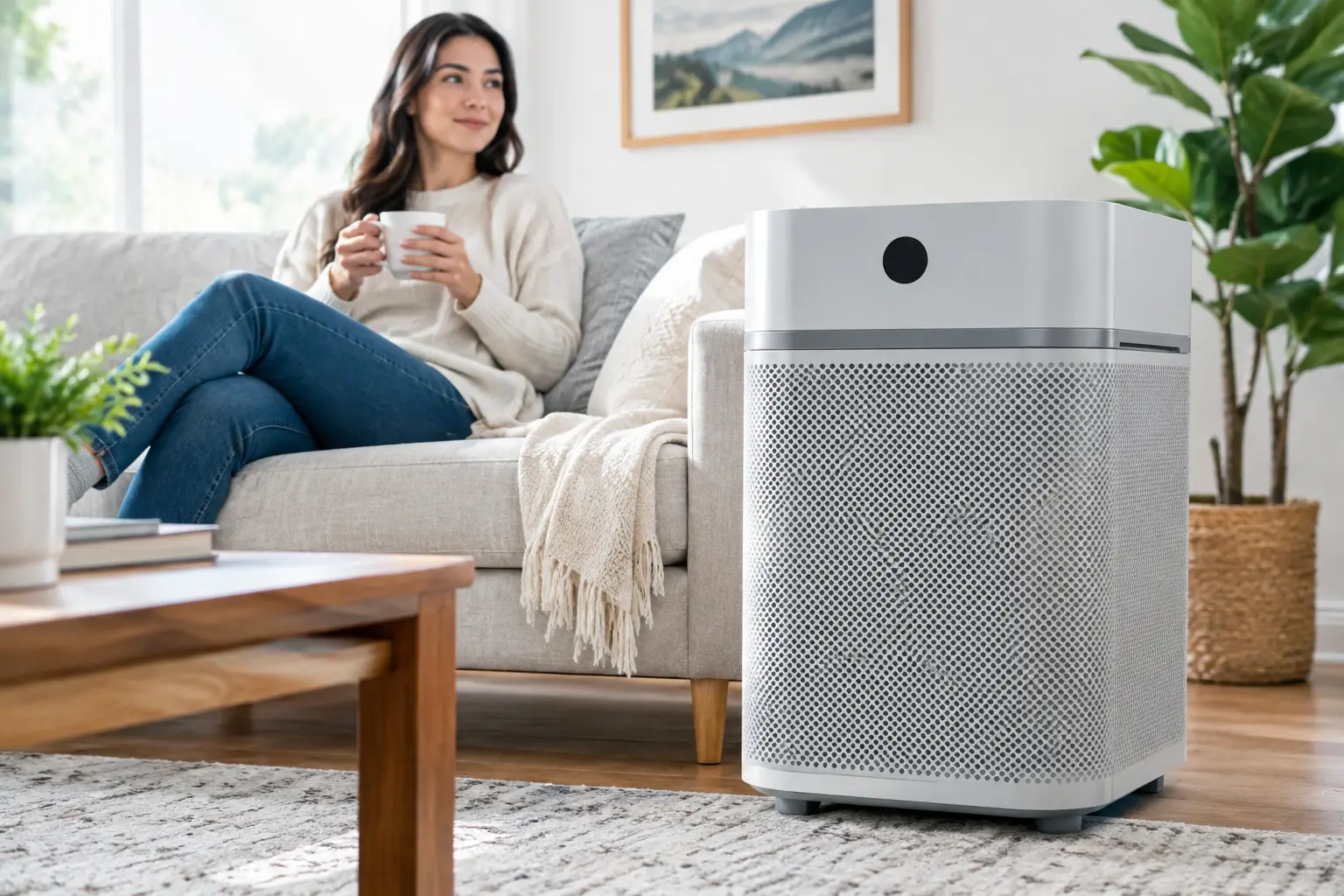
A purifier can be technically capable and still be the wrong purchase if it does not match the problem in your home. This Austin Air Immunity Machine guide is for buyers dealing with more than ordinary dust - especially persistent odors, smoke, chemical vapors, allergy triggers, or heightened sensitivity to indoor pollutants. The Immunity Machine is a substantial whole-room air cleaner built for people who want deep mechanical and gas-phase filtration rather than a small, convenience-focused unit.
Who the Austin Air Immunity Machine Is For
The Austin Air Immunity Machine is best considered when indoor air concerns are broad or difficult to pin down. It is a strong fit for households managing allergies, asthma concerns, chemical sensitivity, lingering renovation odors, pet odors, wildfire smoke exposure, or a home near traffic and other outdoor pollution sources. It can also make sense for bedrooms, main living spaces, home offices, and small workplace areas where cleaner air is a daily priority.
Its main appeal is not a compact profile or app-based features. It is high-capacity, multi-stage filtration in a durable steel housing. Buyers who prefer a machine with manual controls, a long-running filtration system, and no unnecessary electronics often find that approach reassuring.
That does not mean it is automatically the right Austin Air model for every situation. If your priority is a smaller room, a lower initial investment, or easier portability, another unit may be a more practical fit. The Immunity Machine earns its place when the room and the air-quality concern justify its larger size and more comprehensive filter media.
What Makes Its Filtration Different
The Immunity Machine uses a multi-stage filter designed to address particles and gases at the same time. This distinction matters because a standard particle-focused air cleaner may help capture dust and pollen while doing far less for odors and volatile organic compounds, commonly called VOCs.
The filtration system includes a prefilter for larger airborne debris, medical-grade HEPA filtration for fine particulate matter, and a substantial blend of activated carbon and zeolite. The gas-phase media is enhanced with potassium iodide, which is intended to support adsorption of certain chemical gases and odors. Together, these layers target common indoor contaminants such as dust, pollen, pet dander, mold spores, smoke particles, odors, and many airborne chemical vapors.
No air purifier can remove every pollutant under every condition. It also cannot solve a moisture problem, remove mold growing inside a wall, or replace source control. If a new paint smell, fuel-like odor, or musty condition is intense, first identify and reduce the source whenever possible. The Immunity Machine can be a valuable part of the plan, but it should not be treated as a substitute for repairing leaks, improving ventilation, or addressing active mold growth.
Why carbon quantity matters for odors and VOCs
For buyers concerned about chemical smells, the amount and type of gas-phase media deserve as much attention as the HEPA rating. Activated carbon and zeolite work by adsorbing gases onto the media surface. More media generally provides more capacity before the filter becomes exhausted.
That capacity is especially relevant in homes with recurring odor exposure, including cooking odors, attached-garage fumes, cleaning-product vapors, smoke residue, or off-gassing from furnishings and renovation materials. Results depend on the concentration of the pollutant, how continuously it enters the room, and whether the source remains present. A purifier can noticeably reduce a mild, occasional odor, while a constant heavy source may overwhelm any portable unit over time.
Room Fit, Airflow, and Noise Expectations
The Immunity Machine is designed for large-room use and has a powerful fan. It is a better choice for a primary bedroom, open living area, or shared indoor space than for a tiny bathroom or a room that is rarely used. Place it in the room where people spend the most time or where the concern is most noticeable, rather than expecting one unit to clean air evenly throughout a closed-door home.
Airflow is central to performance. Higher fan speeds move more air through the filter, which means faster cleaning and greater pollutant reduction in the room. The trade-off is audible fan noise. For many owners, the practical approach is to run the machine at a higher speed when the room is empty, after cooking, or during a smoke event, then use a lower speed for sleeping or working.
Sound tolerance is personal. A steady fan can function as background noise in a bedroom, while another buyer may prefer a quieter model for a desk-side office. Consider where the unit will sit, when it will run, and whether you are comfortable using higher settings when needed. Choosing based only on the lowest speed can leave you with less cleaning power during the times it matters most.
Austin Air Immunity Machine Placement Guide
Give the air cleaner room to breathe. Position it on a stable, level floor with clear space around the intake and outlet. Avoid placing it tightly behind a sofa, inside a cabinet-like recess, or directly against curtains. Restricted airflow reduces the amount of room air that can pass through the filter.
A central spot in the room is ideal when practical, but convenience matters too. A machine placed a few feet from a wall in the area where you spend time is generally more useful than one parked in an inconvenient location and seldom operated. Keep it away from direct water exposure and avoid using it as a tabletop surface.
For bedrooms, place the unit where airflow is not blowing directly onto your face if that feels uncomfortable. For smoke, odor, or VOC concerns entering from a particular area, such as an attached garage wall or a window facing traffic, placement nearer that pathway may help intercept pollutants before they spread. Just leave adequate clearance and do not block the unit with furniture.
Choosing It Instead of Another Austin Air Model
Austin Air buyers often compare the Immunity Machine with the HealthMate, HealthMate Plus, Bedroom Machine, HealthMate Jr., and HealthMate Jr. Plus. The right choice depends on the mix of pollutants, the room size, and your budget for the original unit and eventual filter replacement.
The Immunity Machine stands out for buyers looking for its specific enhanced gas filtration alongside HEPA-level particle capture. It is commonly the better fit when chemical sensitivity and airborne irritants are central concerns, not merely seasonal pollen or visible dust.
The HealthMate is often considered by households seeking broad coverage for everyday indoor contaminants. The HealthMate Plus is a closer comparison when stronger chemical and odor concerns influence the purchase. The Bedroom Machine is directed toward bedroom-focused air quality needs, while the HealthMate Jr. and HealthMate Jr. Plus serve buyers who need a more compact solution for smaller spaces.
There is no benefit to buying a larger, heavier machine than your room and concern require. On the other hand, under-sizing a purifier for a large, actively used room often leads to disappointment. Match the model to your actual use case, not just the floor plan or a single marketing claim.
Filter Life and Replacement Planning
A long-life filter is one of the reasons many buyers choose Austin Air. However, filter life is affected by the environment. A home with pets, smoke exposure, frequent cooking, construction dust, or elevated chemical odors can load a filter more quickly than a low-pollution household.
Plan for a genuine Austin Air replacement filter as part of ownership rather than treating it as an unexpected future cost. Using the correct replacement filter preserves the machine's intended filtration design and fit. If odors begin returning sooner than expected, visible dust accumulates heavily around the intake, or airflow seems reduced, review the unit's condition and the environment before assuming the air cleaner has stopped working.
Routine care is simple. Vacuum the exterior intake area gently as needed, keep the housing clean and unobstructed, and operate the unit consistently during periods of concern. Do not wash or attempt to recharge the internal filter. Carbon and zeolite media do not regain their original capacity through household cleaning methods.
Questions to Ask Before You Buy
Before choosing the Immunity Machine, be clear about the air issue you want to address. Are you primarily trying to reduce pollen and dust, or are odors, smoke, and chemical vapors just as troubling? Is the unit intended for one closed bedroom, a large open space, or a business area with intermittent occupancy? Will you run it continuously, or only after a specific trigger such as cooking or outdoor smoke?
Also consider the realities of the room: floor space, noise preference, pet activity, and whether doors stay open. These details determine whether the Immunity Machine's capacity will be used well. For a household that needs serious filtration where people sleep, work, or gather, its straightforward design and deep filter media can be a practical long-term investment.
Clean indoor air is rarely about one perfect setting or one dramatic overnight change. Put the Immunity Machine in the room that needs it most, run it consistently, reduce pollution sources where you can, and let the filter do the sustained work it was built to do.
Recent Posts
-
Airocide APS-200 Setup for Cleaner Indoor Air
November 6, 2026 A new air purifier can be plugged in within minutes, but the difference between s …6th Nov 2026 -
How to Install Scalewatcher Nano at Home
November 4, 2026 Hard-water buildup does not wait for a convenient time. It collects on sho …6th Nov 2026 -
Does Hard Water Damage Appliances? What to Know
October 31, 2026 A water heater that suddenly takes longer to recover, a dishwasher leaving cloudy …6th Nov 2026