
Air Scrubber vs Purifier: Which Do You Need?
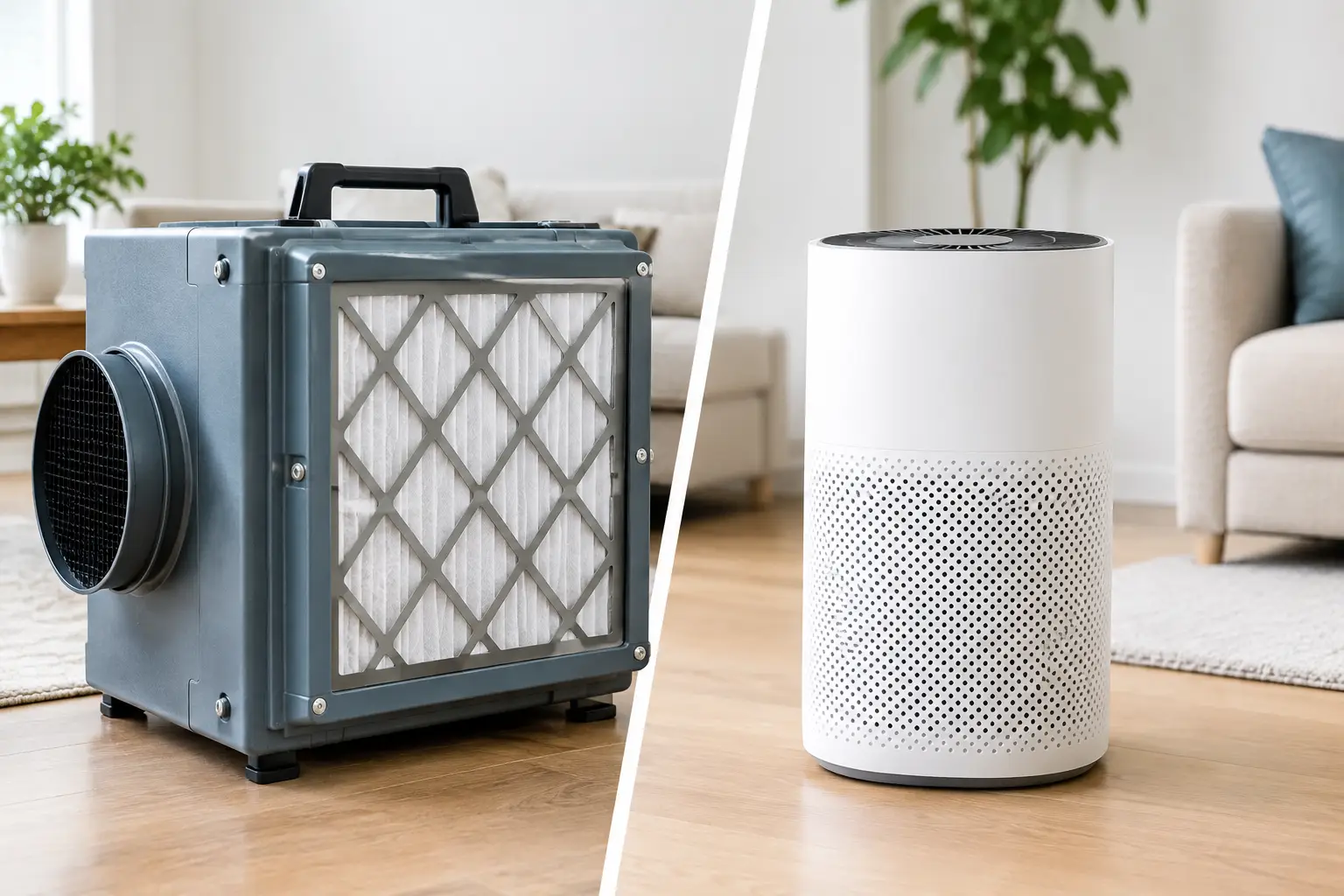
A smoky kitchen, a musty room after a leak, and a bedroom where allergies flare up may all feel like the same problem: bad air. They are not always solved by the same equipment. The air scrubber vs purifier decision comes down to what is in the air, whether there is an active cleanup situation, and whether you need ongoing protection or short-term, high-output filtration.
For most homes and offices dealing with everyday dust, pollen, pet dander, smoke particles, odors, and chemical concerns, an air purifier is the more practical long-term purchase. An air scrubber is usually a specialized tool for restoration work, construction dust control, or heavy contamination cleanup. Knowing the difference prevents an expensive mismatch and helps you put the right solution where it will do the most good.
Air Scrubber vs Purifier: The Core Difference
An air purifier is designed to operate continuously in occupied spaces. It pulls room air through a filtration or treatment system and returns cleaner air to the room. Depending on the model, it may target particles such as dust and pollen, gases and odors, or both. A good purifier is intended to be part of daily indoor air management, especially in bedrooms, living areas, offices, and other places where people spend hours at a time.
An air scrubber is typically a high-capacity portable filtration machine used during a defined project or event. Restoration contractors may use one after water damage or mold remediation. Builders may use one to control fine dust during renovation. It can be run inside a contained work area, sometimes with ducting, and may be used to create negative air pressure so particles do not migrate into clean areas.
The names can cause confusion because some sellers use “air scrubber” loosely for almost any device that improves air quality. The practical distinction is more useful than the label: air scrubbers are generally cleanup equipment, while air purifiers are generally everyday indoor air appliances.
When an Air Scrubber Is the Better Choice
Choose an air scrubber when there is a temporary but concentrated airborne particle problem. Think drywall sanding, demolition dust, smoke cleanup, or professional remediation after a moisture event. In these situations, the objective is to move a large volume of air through substantial filtration while work is underway or while the affected area is being cleaned.
A true scrubber setup may also support containment. If a contractor seals off a work zone, a machine can pull air from that area and help reduce the chance that dust or debris escapes into adjacent rooms. This is a job-site strategy, not a substitute for fixing the moisture source, removing damaged materials, or following proper remediation procedures.
Air scrubbers have trade-offs in a home setting. They can be loud, bulky, and more power-hungry than a residential purifier. Their airflow can be excessive for a small occupied bedroom, and many are not built around the quieter, all-day operation people expect at home. They are valuable tools when the event calls for them, but they are rarely the best answer to year-round allergies or normal household dust.
If you suspect mold growth, do not rely on any machine to make an active moisture issue disappear. Stop the water source first. Determine whether professional assessment or remediation is necessary, then use air cleaning as one part of the recovery plan.
When an Air Purifier Makes More Sense
An air purifier is the better fit when the concern returns every day. That includes seasonal pollen entering through doors and windows, pet dander, tracked-in dust, wildfire smoke infiltration, cooking particles, and the airborne irritants that can make sleep or work less comfortable.
For particle-focused concerns, look for substantial mechanical filtration and enough airflow for the room. Austin Air models combine medical-grade HEPA filtration with extensive activated carbon and other adsorbent media, making them a strong option for buyers who need help with both airborne particles and odors or chemicals. The Austin Air HealthMate is often a sensible starting point for broad household air quality needs in a main living area.
The Austin Air HealthMate Plus adds enhanced attention to chemical odors and formaldehyde concerns. For people with significant chemical sensitivities or persistent odor issues, that added gas-phase filtration may justify the higher investment. The Austin Air Bedroom Machine is built for buyers who want especially comprehensive filtration in the room where they sleep, while the HealthMate Jr. and HealthMate Jr. Plus suit smaller rooms and more compact spaces.
Air purification is not one-size-fits-all. A compact unit may be appropriate for a bedroom but undersized for an open living room. A purifier that excels at particles may not be the right choice when VOCs, chemical fumes, or odors are the primary complaint. Start with the room size and dominant concern, then choose the technology and model accordingly.
Smoke, odors, and chemicals need more than particle capture
Smoke is a good example of why buyers should look beyond a single filtration claim. Smoke contains fine particles, but it also carries gases and odors. HEPA media is highly effective for particulate matter, while activated carbon and other adsorbent media are needed to address many odor and gas concerns. The amount and quality of that media matter.
Austin Air’s large, replaceable filter assemblies are designed for long service life and broad contaminant coverage. That makes these units a practical choice for homes dealing with recurring smoke exposure, pet odors, household chemicals, or urban air pollution. Replacement filters should be treated as a planned ownership cost, not an afterthought. A purifier can only perform as intended when its filter media is maintained on schedule.
For buyers interested in a different approach to airborne chemical contaminants, Airocide uses photocatalytic oxidation technology. The Airocide APS-200 PM 2.5 is designed for residential air treatment, while Airocide commercial units address larger-scale applications. These systems use replaceable reaction chamber kits, so commercial buyers and homeowners should factor replacement timing into their purchase decision.
What an Air Purifier Cannot Do
A reliable air purifier can reduce exposure to certain airborne contaminants, but it cannot correct the source of every problem. It will not repair a leaking roof, remove mold growing behind a wall, eliminate a gas leak, or replace professional cleaning after a major contamination event.
It also cannot overcome poor placement. A unit tucked behind furniture, placed in a closed-off corner, or run only occasionally will have less effect than one positioned where air can circulate freely. In a bedroom, placing the purifier several feet from the bed and away from curtains or obstructions is usually more useful than hiding it at the far end of the room.
For wildfire smoke or outdoor pollution, close windows and doors as conditions allow, reduce indoor particle-generating activities such as frying, and run the purifier consistently. For odor or VOC concerns, remove or reduce the source whenever possible. Air cleaning works best as part of a practical indoor air plan, not as permission to ignore the cause.
How to Choose Without Overbuying
Begin with the room, not the product label. Measure or estimate the square footage, consider ceiling height and open doorways, and decide whether the unit needs to serve one closed room or a larger connected space. Bedrooms generally benefit from quiet, continuous operation. Living rooms may require greater coverage because they are larger and see more activity.
Next, identify the leading concern. For allergies, dust, pet dander, and fine smoke particles, prioritize effective particle filtration and adequate airflow. For odors, chemical sensitivity, and gases, select a unit with meaningful gas-phase treatment capacity rather than assuming every HEPA purifier handles vapors equally well. For a temporary renovation or remediation job, discuss a dedicated air scrubber or contractor-grade setup with the professionals managing the work.
Noise, filter replacement availability, and operating habits matter too. The best purifier is one you can keep running consistently. A unit sized appropriately for the room can often be operated at a lower, quieter setting after the air has been cleaned, helping make daily use more realistic.
A Practical Buying Direction
If you need ongoing help in an occupied home, apartment, clinic, or office, start by evaluating an air purifier. Austin Air offers durable, filter-based options for buyers who want substantial mechanical and carbon filtration. Airocide provides a distinct air-treatment option for households and commercial spaces focused on chemical and odor concerns.
If you are facing construction dust, water-damage cleanup, or a professionally managed mold remediation project, an air scrubber may be the right tool for the immediate job. Once the work is complete, an appropriately sized purifier can help support cleaner everyday air in the rooms you use most.
The right choice is not the machine with the most aggressive name. It is the one matched to your contaminant, your room, and the way you actually live or work in the space.
Recent Posts
-
Airocide APS-200 Setup for Cleaner Indoor Air
November 6, 2026 A new air purifier can be plugged in within minutes, but the difference between s …6th Nov 2026 -
How to Install Scalewatcher Nano at Home
November 4, 2026 Hard-water buildup does not wait for a convenient time. It collects on sho …6th Nov 2026 -
Does Hard Water Damage Appliances? What to Know
October 31, 2026 A water heater that suddenly takes longer to recover, a dishwasher leaving cloudy …6th Nov 2026