
Scalewatcher Vs Water Softener: Which Handles Hard Water?
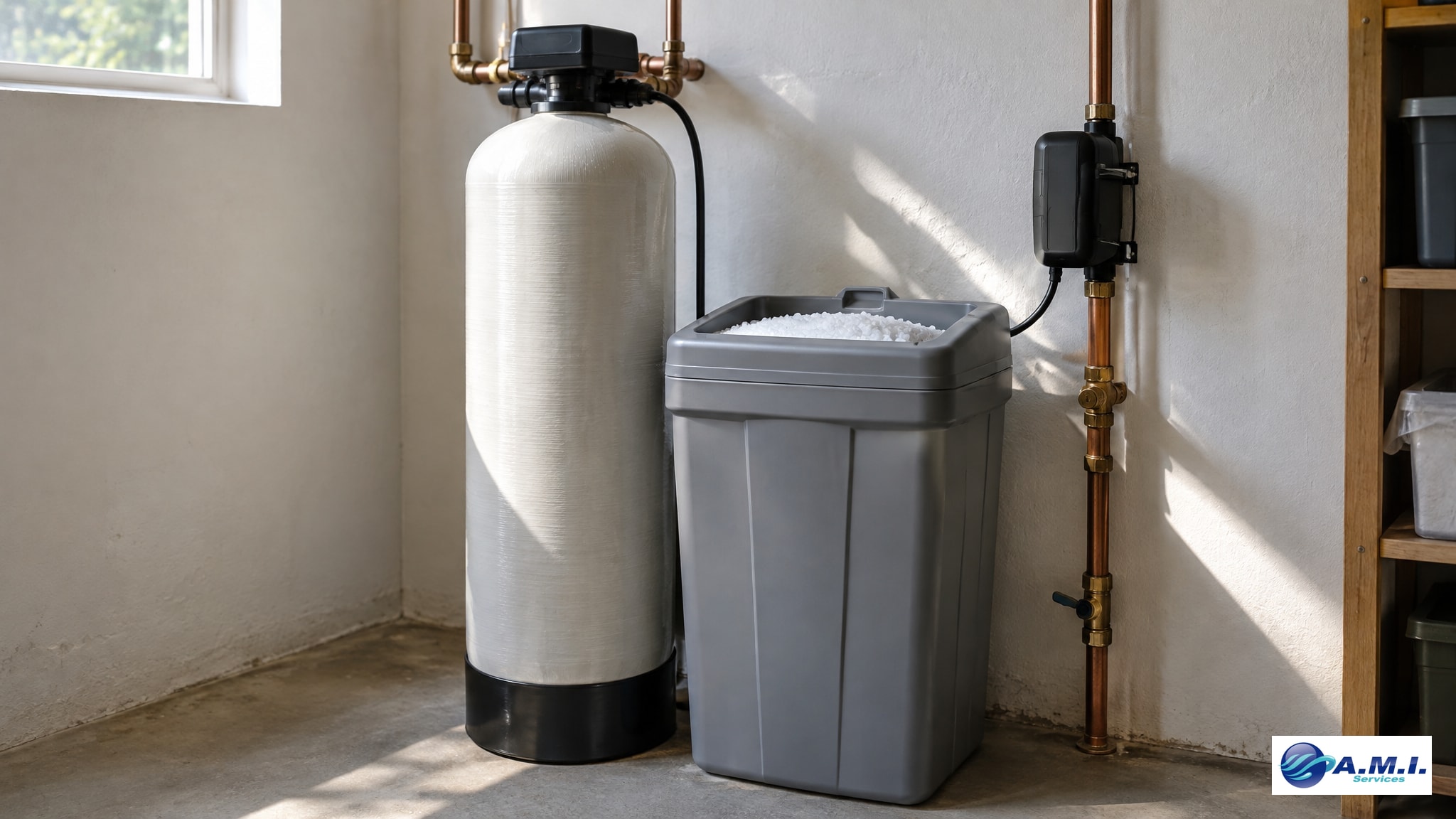
Hard water shows up as white crust on faucets, spots on glass and a film in the shower. Two very different products promise to deal with it: a salt-based water softener and a salt-free electronic conditioner such as a Scalewatcher. They solve the problem in different ways, and the right pick depends on what you want your water to do.
This guide compares them on how they work, scale results, water feel, installation, upkeep and ten-year cost. It also says plainly what each one does not do.
Scalewatcher vs Water Softener: The Short Answer
A salt-based softener removes the hardness minerals, calcium and magnesium, from your water. A Scalewatcher electronic conditioner leaves those minerals in the water and aims to change how they behave so they are less likely to form hard scale on pipes, fixtures and appliances.
That difference decides almost everything else.
A softener suits you if your water is very hard, you want the slick, soapy feel of true soft water, and you don't mind buying salt and doing regular upkeep. A Scalewatcher suits you if you want a salt-free hard water solution, would rather keep the minerals in your water, and prefer a unit that needs no refills.
Neither is a universal answer. A conditioner will not give you softened water, and a softener will not suit a household that can't or won't use salt.
How Each One Works: Ion Exchange vs Electronic Conditioning
Water treatment professionals draw a clear line between true softening, which removes hardness, and scale inhibition, which changes scale behavior but leaves the minerals in place. Keep that line in mind as you read product claims, because the two categories are not interchangeable.
What a salt-based softener does
A softener pushes your water through a tank of resin beads. The beads grab calcium and magnesium and release sodium in exchange, a process called ion exchange.
Eventually the resin is full. The unit then flushes itself with brine from a separate salt tank, rinses away the captured minerals down a drain line, and starts again. This cycle is called regeneration.
Because the minerals are physically removed, a softener lowers your measured water hardness. That is the one thing a conditioner cannot claim.
What a salt-free electronic water conditioner does
A Scalewatcher works from the outside. You wire a unit to the incoming pipe, and it applies an electronic signal to the water inside. The signal is meant to change how the dissolved minerals behave so they are less inclined to bond into hard scale on surfaces.
There is no resin, no brine and no drain line. The water leaving the pipe has the same mineral content as the water entering it.
So here is the direct answer on a common question. A Scalewatcher does not remove hardness minerals. It aims to stop them forming scale. A test strip will still read your water as hard, and the water will not feel slick or "silky."
Scale Prevention vs Scale Removal: What You Can Expect
Scale is the visible damage: crust on fixtures, buildup in pipes, and a coating on water heater elements that makes the heater work harder. If you're comparing an electronic descaler with a water softener, this is where the results differ most.
Where an electronic descaler helps
The Scalewatcher range is aimed at deposits on faucets, showerheads, fixtures, pipes and water-using appliances. For a household with moderately hard water that wants less crust and no salt, that is often what is needed.
You also keep the minerals in your water, which matters to people who dislike the feel of softened water or who want to avoid adding sodium.
It is a prevention tool. If you are hoping for a single gadget that makes your water test as soft, this is not it, and heavy hardness is where you should be most cautious about expectations.
Where a softener is the stronger choice
A softener is the stronger choice when hardness is high. Because it takes the minerals out, soap lathers freely, spotting on glass drops sharply, and you typically need less detergent and shampoo.
If your main goal is true soft-water lather, or your water is very hard, a softener does something a conditioner doesn't. You can check your local hardness level through your water utility's report or a home test kit. The USGS explains how hardness is measured if you want the background.
Water taste and feel
Softened water feels slippery on the skin, and some people describe it as hard to rinse off. Others love it. Because softeners swap in sodium, the taste can also change slightly.
Conditioned water feels like the water you already have, because its mineral content hasn't changed. Your showers will feel the same as before. If you want that familiar feel, or you simply dislike the slick finish of soft water, a conditioner is the better match.
Installation and Upkeep Compared
Think about who will actually maintain the system. A unit that needs monthly attention only works if someone remembers to give it that attention, so your own habits matter as much as the specs.
Scalewatcher installation: clamp-on, no plumbing cuts
Scalewatcher installation is a wiring-and-clamp job on the incoming water pipe. You don't cut pipe, you don't add a drain line, and you don't need floor space for tanks. That makes it a realistic option for renters and apartment dwellers, as long as you can reach the main incoming pipe and have a power outlet nearby.
Once it's on, upkeep is minimal. There is no salt to carry, no resin to replace and no tank to clean.
Follow the instructions that come with your model for placement, and ask the A.M.I. Services team if you're unsure where on your pipe it should go.
Softener installation, salt, and maintenance
A softener is a plumbing project. It is installed into the water line, needs a drain for regeneration waste, and takes up room for the resin tank and the brine tank. Many homeowners hire a plumber, which adds to the upfront cost.
After that, you carry bags of salt and top up the brine tank on a regular basis. Plan on watching the salt level, and expect the unit to use some water and electricity each time it regenerates.
Brine tanks also need periodic cleaning. Salt can bridge or crust over, and sludge can settle at the bottom, so most manufacturers recommend emptying and cleaning the tank from time to time. Resin wears over the years and may need servicing or replacing.
10-Year Cost: Upfront Price, Salt, Water and Replacement Parts
Sticker price tells you little. A softener can look affordable on day one and cost more by year ten, while a conditioner costs more upfront than you might expect for something with no moving parts. Compare both over the same decade.
Scalewatcher prices range by model and can change, so check each product page for the current figure. As a guide, the Nano sits at around $235, the 3 Star at around $399, the 4 Star at around $636 and the 5 Star at around $925.
Building your own 10-year cost comparison
Collect local quotes and fill in these lines for each option:
- Upfront price: the unit itself.
- Installation: a plumber's quote for a softener; for a conditioner, whatever help you want with the wiring-and-clamp setup.
- Salt: your yearly salt use multiplied by ten. A conditioner has none.
- Water and electricity: a softener uses both for every regeneration. A conditioner draws only a small amount of power to run its signal.
- Resin, parts and service: replacement resin or repair visits for a softener over ten years.
- Brine-tank upkeep: your time, or a service call.
A conditioner is largely a one-time purchase with low running costs. A softener spreads its cost across salt, water and servicing.
The comparison also has to account for results. A softener may cost more to run, but if you need true soft water, a cheaper conditioner that doesn't deliver it saves you nothing.
Choosing a Scalewatcher Model for Your Home
As a retailer, A.M.I. Services answers sizing questions on the Scalewatcher range every day. The most useful guidance is to match the model to the size of the home and how heavily the water is used.
Nano and 3 Star for smaller homes and apartments
The Scalewatcher Nano is a compact salt-free electronic conditioner designed for small homes and apartments on municipal water. It is the starting point if you have a small footprint and a modest budget.
The Scalewatcher 3 Star is a compact electronic descaler designed for indoor residential use only. It suits a household that wants a step up from the Nano without moving to a whole-house model.
4 Star and 5 Star for larger whole-house needs
The Scalewatcher 4 Star Electronic Water Softener Conditioner is whole-house hard water treatment without salt or chemicals, aimed at deposits on faucets, showerheads, fixtures, pipes and appliances. Despite "softener" in the name, it works as an electronic conditioner and not as an ion-exchange unit.
The Scalewatcher 5 Star Hard Water Conditioner is positioned for salt-free whole-home scale control, covering plumbing, fixtures and household appliances.
If your home is large, or you can't tell which model fits, ask the team before you buy. Sizing depends on your plumbing and your water, and a quick conversation is cheaper than a wrong guess.
Which Is Right for Your Home? A Quick Decision Guide
Match your situation to the lines below.
- You're on a salt-restricted diet, or local rules limit salt discharge. A salt-free conditioner avoids both issues.
- You rent. A clamp-on unit with no plumbing cuts is far easier to install and to take with you.
- You want low maintenance. No salt, no brine tank and no resin favors a conditioner.
- You want silky, soft-water feel and heavy lather. Choose a softener, because a conditioner will not deliver it.
- Your water is very hard. A softener removes more of the problem. A conditioner is better suited to moderate hardness.
Some homes use both. If you already have a softener, a descaler is generally not needed, because the softener has already removed the minerals that form scale. Adding a conditioner only makes sense when the softener is bypassed for some lines or you want extra protection for a specific appliance.
If a salt-free, low-maintenance setup sounds right, browse the full range of Scalewatcher hard water conditioners. Then contact A.M.I. Services and the team will help you size a model to your home.
Frequently asked questions
Are you not supposed to drink softened water?
Softened water is generally fine to drink for most people, but it contains added sodium from the ion-exchange process. If you follow a low-sodium diet, ask your doctor, and consider keeping an unsoftened tap for drinking. A salt-free conditioner doesn't add sodium.
Can bacteria grow in a water softener brine tank?
The salty brine is a hard environment for most microbes, but salt crusts and sludge can build up at the bottom of the tank. That is why manufacturers recommend emptying and cleaning the brine tank periodically. Follow your unit's manual for how often.
What's the best water softener to buy?
The best salt-based softener is the one sized to your water hardness and household use, so get your hardness tested first. A.M.I. Services focuses on salt-free options, so if you want to avoid salt, brine and drain lines, look at the Scalewatcher range.
Will a Scalewatcher get rid of the scale I already have?
A Scalewatcher is aimed at helping control scale from forming, not at making your water soft. Don't expect it to act like a softener or to give you a slick feel. Ask the A.M.I. Services team about your specific situation and which model fits.
Recent Posts
-
Scalewatcher Vs Water Softener: Which Handles Hard Water?
Hard water shows up as white crust on faucets, spots on glass and a film in the shower. Two very di …25th Nov 2026 -
Commercial Air Purifier for Office: How to Choose & Size
Picking a commercial air purifier for an office comes down to one thing: matching the unit to the r …23rd Nov 2026 -
Best Air Purifier for Mold Spores: Top Home Picks
Mold spores travel through the air, and that is the one part of a mold problem a purifier can actua …22nd Nov 2026