
Commercial Air Purifier for Office: How to Choose & Size
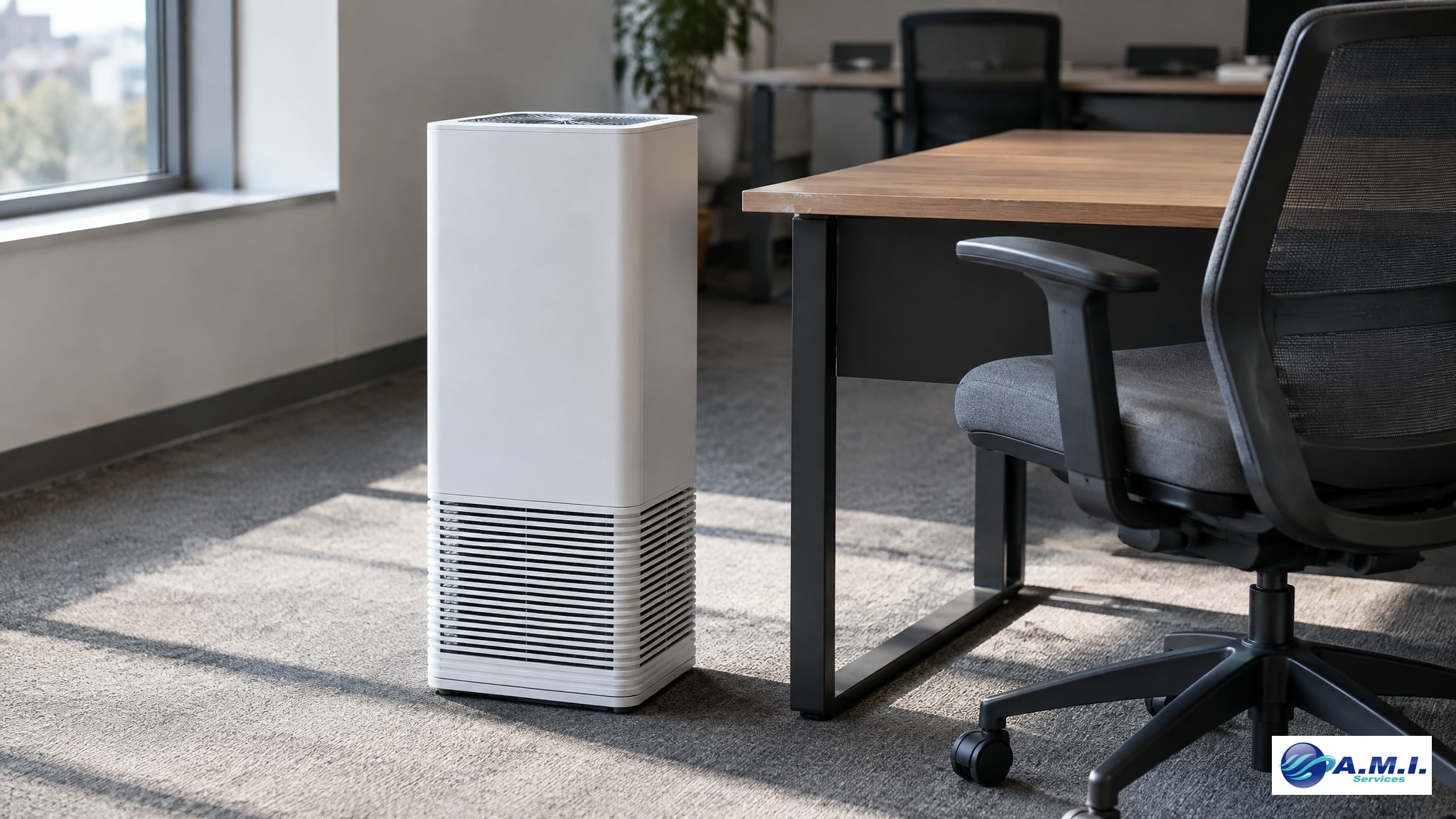
Picking a commercial air purifier for an office comes down to one thing: matching the unit to the room. A unit that is too small runs flat out and still can't keep up, while an oversized one costs more than the job needs. This guide walks facility owners through a sizing method based on floor area, ceiling height and occupancy. It then covers which technology handles germs, VOCs and odor, which Airocide commercial units suit which space, and what noise and upkeep look like once the units are running.
Do Commercial Air Purifiers Work in an Office?
Yes, when the unit is sized for the room. A properly sized purifier pulls office air through a filter or treatment stage over and over, capturing airborne dust, pollen, smoke and the particles that carry germs, and some designs also treat certain gases.
It will not clean everything. A purifier does not replace fresh-air ventilation, and it cannot fix a pollutant that is still being produced, such as a leaking solvent container or a freshly installed carpet. Think of it as one layer alongside ventilation and source control.
The most useful distinction to carry into your buying decision is that particles and gases are separate problems. EPA's technical summary on air cleaners treats particle removal and gas removal as different jobs, and a unit that excels at one may do little for the other. Decide which one you are fighting before you compare models.
How to Size a Commercial Air Purifier by Square Footage and Occupancy
Most catalog pages stop at "covers up to X square feet." That number is a starting point, but it hides two variables that change the answer: how tall the ceiling is and how many people share the air.
Calculate Room Volume and Required Airflow
Start with volume, not floor area. Multiply floor area by ceiling height, because a room with a 14-foot ceiling holds far more air than a same-size room with an 8-foot ceiling, and square footage alone undercounts it.
Next, choose a target air-change rate. That is how many times per hour you want the room's full volume of air to pass through the purifier. A quiet private office needs fewer changes than a busy reception area, so set the rate by how the room is used.
Then convert it to airflow:
- Room volume (cubic feet) = floor area × ceiling height.
- Air needed per hour = room volume × air changes per hour.
- Airflow needed per minute = air needed per hour ÷ 60.
A typical case: a 30-by-40-foot open office with 10-foot ceilings holds 12,000 cubic feet. If you plan for five air changes an hour, that is 60,000 cubic feet per hour, or 1,000 cubic feet per minute of delivered airflow.
Check that figure against the airflow or coverage rating on each product page. If the rating falls short, you need a larger unit or more than one.
Adjust the Load for Occupancy, Use, and Layout
The math gives you a baseline. Real rooms push it up.
Every person adds skin flakes, breath and anything they carry in on their clothes, so a waiting room or shared open floor needs more capacity than an empty private office of the same footprint. Plan for peak headcount, not the average Tuesday.
Layout matters just as much. Partitions, cubicle walls and closed doors break up airflow, so a single unit at one end of a divided floor may barely reach the other end. Pollutant sources count too: a copy room, a kitchenette or a lobby door that opens all day deserves extra capacity nearby.
If your numbers land between two sizes, go up one. And if one room is split by walls into several zones, treat each zone as its own small room.
Matching Technology to Particles, Germs, VOCs, and Odor
Once you know how much air you need to move, decide what the unit should remove. Particles call for filtration. Gases and odors call for a different approach, and many offices need to think about both.
Commercial HEPA Air Purifiers for Particles and Germs
HEPA is the benchmark for particles. Consumer Reports notes that HEPA filters are certified to collect 99.97% of particles at 0.3 micrometers, a size that is hard to capture. For a shared workspace, that covers dust, pollen, smoke particles and mold spores.
Germs travel on particles, such as respiratory droplets and dust, so a commercial HEPA air purifier reduces what is floating in the room. That is capture, not a kill claim. Fortune's 2020 buying guide made the same point when it directed readers to mechanical HEPA units, citing the 99.97% figure for particles at 0.3 microns or larger.
A HEPA filter does not remove gases. If your complaint is a chemical smell, HEPA alone will not solve it. For background on how those ratings work, see our HEPA purifier basics for allergies and asthma.
VOC and Odor Control with Carbon and Photocatalytic Oxidation
Volatile organic compounds (VOCs) and odors are gases, so they need a gas-phase treatment. The two common routes are activated carbon and photocatalytic oxidation (PCO).
Carbon works by adsorption: gas molecules stick to the carbon, which eventually fills up and has to be replaced. PCO uses a catalytic surface and light to break compounds down. The Airocide commercial units covered below use PCO as their core treatment instead of a conventional filter.
Neither approach is a blanket guarantee. Different compounds behave differently, so ask for independent test data on the specific chemicals in your space before you buy. Our comparison of Austin Air vs Airocide: how HEPA and PCO differ lays out the trade-offs side by side.
Skip ozone generators sold as odor fixes. Ozone is itself a lung irritant, and it is not a safe way to deal with odor in a room where people work.
Matching Airocide Commercial Units to Small Business and Large-Room Needs
The Airocide commercial range is organized by the kind of space each unit is meant for. Here is how the lineup maps to a typical facility, and each product page has the specifications to confirm the fit.
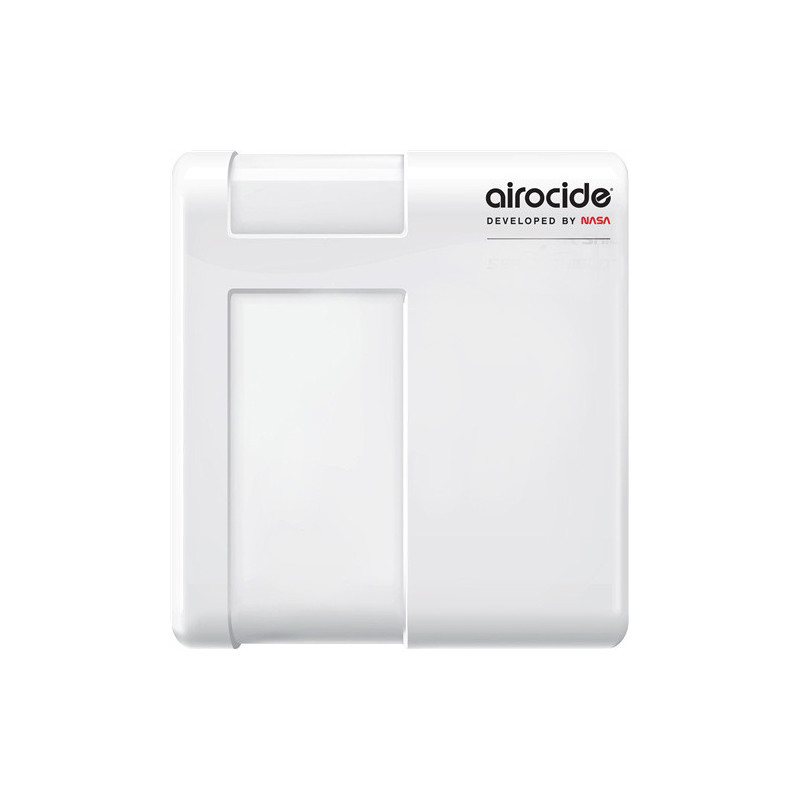
- Small commercial settings with large open spaces: the Airocide GCS-25 Commercial Air Purifier.
- Most commercial rooms: the Airocide GCS-50 Commercial Air Purifier.
- Rooms that need continuous treatment: the Airocide® HD-1200 Air Purifier.
- Large commercial spaces: the GCS-100 for large commercial spaces.
- Industrial, food-processing and storage-scale floors: the Airocide HD-25000 Commercial Air Purifier.
You may also see the Airocide APS-1000XL/GCS-25 Air Purifier listed. It is not a separate tier. The APS-1000XL is the earlier name of the GCS-25, so if you are comparing the two, you are looking at the same unit.
For a small business, the GCS-25 or GCS-50 is usually where the conversation starts, depending on footprint and how the room is used. These units are priced in the thousands of dollars, and prices change, so check each product page for the current figure.
Large Room Commercial Air Purifiers for Open Floors
A large open floor is where the sizing method earns its keep. Run the volume calculation first, then compare the result with the coverage rating on the product pages for the GCS-100 and, for industrial-scale space, the HD-25000.
Sometimes one large unit isn't the right answer. If partitions chop the floor into zones, two smaller units placed on either side of the barrier can circulate air better than a single powerful unit in one corner. Work out which layout fits your plan before you decide.
Airocide's catalog positioning is a guide, not a promise of performance in every building. High ceilings, heavy foot traffic or an unusual pollutant can change the answer, so send those details along when you ask for a recommendation.
Air Purifiers for Waiting Rooms, Dental Offices, and Salons
A waiting room is a sizing problem. People arrive in bunches, sit close together and stay a while, so plan for peak occupancy rather than the average, and place the unit where it reaches the seating area instead of tucking it behind the reception desk. An air purifier for a waiting room should prioritize particle capture near the chairs.
Salon Odor and Dental Office Priorities
A salon has a different problem. Nail products, hair color, bleach and sprays release VOCs and strong odors, and those are gases that HEPA will not touch. For an air purifier for salon odor, lean on the carbon or PCO options described above, and ask for test data on the products your stylists actually use.
A dental office should start from its own infection-control protocols and set contaminant priorities from there. A purifier supports those protocols. It does not replace surface disinfection, instrument sterilization or the ventilation your clinicians already rely on.
For a dental office, that means treating the air purifier as one more layer in a system that already works. If you tell us the treatment rooms, the waiting area and any lab space, we can help you match units to each.
Managing Noise and Maintenance Costs in Shared Workspaces
You live with a purifier all day, so noise and upkeep matter as much as the headline airflow figure.
Noise Levels and Unit Placement
Any unit that moves a lot of air makes some sound, and a higher airflow generally means more of it. Check the specifications on each product page for detail rather than assuming a quiet room from the coverage number.
Placement does a lot of the work. Keep units away from quiet focus zones such as desk clusters, phone booths and meeting rooms, and put them where steady background sound is already normal, like a corridor, a shared print area or a reception space. Don't box a unit into a corner or behind furniture, because blocked intake hurts both noise and performance.
Replacement Schedules and Running Costs
Running costs come mostly from consumables. Consumer Reports says mechanical filters need replacing every six to 12 months and can run from $80 to more than $200, while activated carbon filters often cost up to $50 each. Multiply that by the number of units to get a yearly figure.
PCO units have a different set of service items, such as lamps and reaction chambers, so check each product page for what the unit needs and how often.
A single private office is often close to bedroom scale. If you are filtering one like that with an Austin Air unit, budget for the Austin Air Bedroom Machine Replacement Filter and check the product page for current pricing.
Ordering Commercial Air Purifiers in Bulk for Multi-Room Offices
If you are outfitting several rooms, don't size one at a time and hope the pieces fit. Build a simple schedule with one row per room, and fill in four columns:
- Room type: open floor, private office, waiting room, treatment room, salon floor.
- Volume: floor area times ceiling height.
- Occupancy: peak headcount, not the average.
- Contaminant priority: particles and germs, VOCs, odor, or a mix.
Once the schedule is filled in, group the rooms that call for the same unit and put them on one order. A lobby and a conference room with similar volume and the same priority will often take the same model, while a salon floor or storage area probably won't.
Current prices for the Airocide units change, so please check the product pages instead of working from remembered figures. To start, browse the commercial air purifier lineup and note which models fit your schedule.
Then send us your room sizes, occupancy and the contaminant you are most concerned about, with a bulk quote request for your multi-room or multi-site install. We will use them to group matching units into a single quote.
Frequently asked questions
What is the best air purifier for commercial use?
It is the one sized for your room's volume and your main contaminant. Use HEPA-based units where particles and germs are the concern, and carbon or photocatalytic oxidation where VOCs and odor are. For larger spaces, the Airocide lineup runs from the GCS-25 for large open spaces in small commercial settings up to the HD-25000 for industrial-scale floors.
Which air purifier is best for offices?
For most offices, start with room volume and occupancy rather than a brand. A private office is often close to bedroom scale, while a shared open floor or waiting room needs more capacity. For commercial rooms, the Airocide GCS-50 is positioned for most settings, and the GCS-25 suits large open spaces in smaller commercial settings.
Do commercial air purifiers actually work?
Yes, within limits. A sized unit captures airborne particles, including those that carry germs, and some designs treat certain gases. It does not remove every pollutant, so it works best alongside ventilation and removing the source.
Is the Airocide APS-1000XL the same as the GCS-25?
Yes. The APS-1000XL is the earlier name of the Airocide GCS-25 Commercial Air Purifier. If you see both names, they refer to the same unit rather than two separate tiers.
Can I get one quote for several rooms or locations?
Yes. Send your room sizes, peak occupancy and the contaminant you are most concerned about with a bulk quote request. We group matching units from your room-by-room schedule into one quote for multi-room or multi-site installs.
Recent Posts
-
Commercial Air Purifier for Office: How to Choose & Size
Picking a commercial air purifier for an office comes down to one thing: matching the unit to the r …23rd Nov 2026 -
Best Air Purifier for Mold Spores: Top Home Picks
Mold spores travel through the air, and that is the one part of a mold problem a purifier can actua …22nd Nov 2026 -
HEPA Air Purifiers for Allergies and Asthma: What to Buy
If you wake up stuffy, or your child's asthma flares at night, the air in the bedroom is a fair pla …20th Nov 2026