
HEPA Air Purifiers for Allergies and Asthma: What to Buy
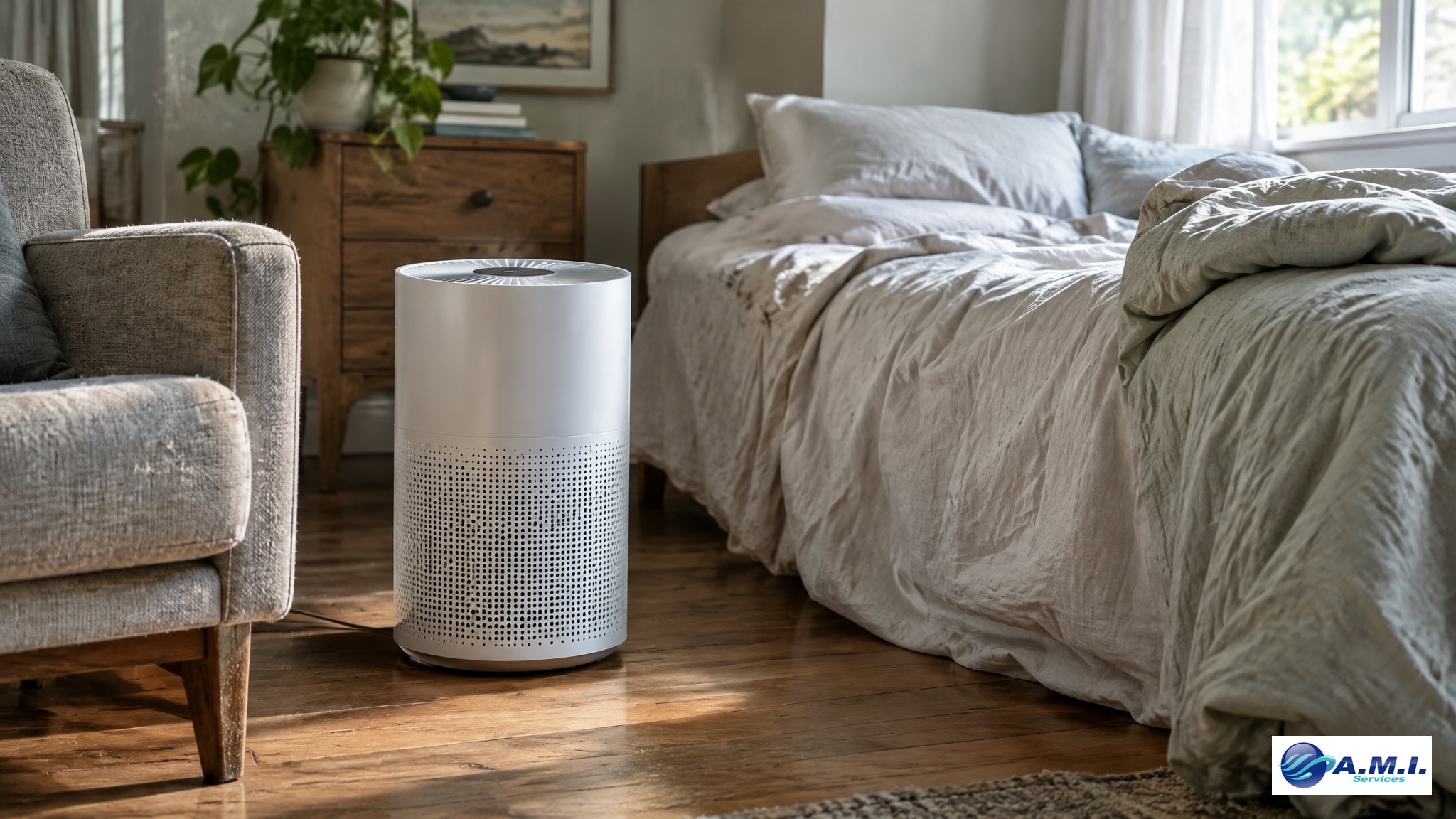
If you wake up stuffy, or your child's asthma flares at night, the air in the bedroom is a fair place to look. A good HEPA air purifier for allergies and asthma can pull airborne triggers out of that air. It can't fix everything, though, and the wrong unit is an expensive way to find that out.
This guide matches each common trigger to the features that matter, shows how to size a unit to your room, and ends with a short list from our catalog.
Which Triggers a HEPA Air Purifier for Allergies and Asthma Can Actually Help With
A purifier only works on what is floating in the air when it passes through the filter. So the useful question is how each trigger behaves in your home: does it hang around in the air, or does it drop onto the sofa and the bedding?
Dust mites, pet dander, pollen, and mold spores: what's airborne and what isn't
Dust mite allergen is the awkward one. It comes from mite droppings and body fragments, and the particles are heavy, so they settle into mattresses, pillows and carpet. They go airborne when you shake out a duvet or climb into bed, then drift back down within a short time. An air purifier for dust mite allergy catches that disturbed cloud, but it won't pull allergen out of the mattress itself.
Pet dander is lighter and stickier. It stays suspended longer, lands on every surface, and gets kicked back into the air whenever someone sits down or walks past. Pollen rides in on open windows, clothing and fur. Mold spores float freely, but they come from a damp source, and a purifier does nothing about the moisture feeding the growth.
Here is the honest limit: a purifier supports your other trigger control and doesn't replace it. You still need to wash bedding, vacuum, fix damp and keep up with whatever your doctor has prescribed. It also won't cure asthma, and it isn't a substitute for medication or medical advice. Doctors generally treat air cleaning as one supplement among several steps, so ask yours how it fits your own triggers.
True HEPA vs. HEPA-Type: What the 99.97% Standard Means
Shoppers see "HEPA" on a lot of boxes, and the word doesn't always mean the same thing. If you're comparing units for an allergic or asthmatic household, this is the label detail worth checking first.
How the 0.3-micron rating works
According to Consumer Reports, HEPA filters are certified to collect 99.97 percent of particles 0.3 micrometers in diameter, a hard-to-capture size, and studies show they can be quite effective at removing common household irritants. That size is chosen on purpose, because 0.3 micrometers is the hardest particle for a filter to catch.
Larger particles, such as pollen, dander and most mold spores, are easier to trap. Smaller ones are caught by other mechanisms in the filter. A filter that clears the hardest size therefore does well on the rest, which is why the 99.97% figure is the benchmark for a true HEPA air purifier.
Why 'HEPA-style' labels and ozone generators deserve caution
Terms like "HEPA-type," "HEPA-style" or "99% HEPA" describe filters that borrow the name without meeting the standard. Look for a plain statement that the unit uses a true HEPA filter, and for a sealed housing so air can't slip around the filter edges.
Ozone is a separate problem. Some ozone generators exceed the FDA's 0.05 ppm ozone limit for medical devices even at low settings, which matters because ozone irritates the airways. For someone with asthma, a machine that adds a lung irritant to the room defeats the purpose. If a product is sold as an "ionizer" or "ozone air cleaner" and doesn't say how much ozone it gives off, skip it.
Matching a Purifier to Your Room Size
A strong filter in an undersized unit still leaves most of your air untouched. Sizing is where most buying mistakes happen, and it takes about a minute to get right.
Reading CADR and air changes per hour
CADR stands for clean air delivery rate. It tells you how much filtered air a unit delivers per minute for a given pollutant, so a higher number means faster cleaning. Manufacturers usually list separate figures for smoke, dust and pollen.
Air changes per hour is the other half of the picture. It describes how many times the unit can filter the full volume of the room in an hour, and a bigger room or a higher ceiling lowers it for the same machine. You want a unit that turns the air over often enough to keep up with the dust and dander you generate through the day.
A simple sizing example
The guidance Fortune cites is that for a 12 by 10 foot room, you should buy a purifier with a tobacco smoke CADR of at least 80. That room is 120 square feet, about the size of a small bedroom.
Measure your own room, then compare that figure to the unit's rating. Size up for bedrooms, nurseries and any room where triggers are concentrated, because you spend long hours there and a stronger unit can run on a quieter setting. If your room is open to a hallway or another room, count that space too. For coverage on specific models, check each product page, or browse our Austin Air HEPA purifiers with your measurements in hand.
Best Air Purifier for Asthma: Features Worth Paying For
There's no single best air purifier for asthma, because the right one depends on your triggers and your room. Some features are worth paying for in almost every case, and some are marketing.
Filtration, noise, and running cost
Start with a sealed true HEPA filter, then look at noise. You will want the unit running all night, so check that the low setting is quiet enough to sleep beside. A purifier that you switch off because it's loud does no good.
Then count the ongoing cost, because that is the main downside of any HEPA unit. Consumer Reports, which has tested more than 180 air purifiers, puts mechanical HEPA replacement filters at $80 to more than $200, and says they need replacing every six to 12 months. Add the electricity for continuous running, and the sticker price is only part of what you'll spend. Ask what a replacement filter costs before you buy, and divide it by the months it lasts.
Upkeep is the second downside. A clogged filter moves less air, so a late swap means worse results, and you have to remember the date.
Carbon filters and what they add for odors and fumes
A HEPA filter catches particles. It doesn't remove gases, so cooking smells, smoke odor and chemical fumes pass straight through it. Activated carbon handles those. If smoke or household chemicals set off your asthma, carbon matters as much as the HEPA layer. Carbon replacements cost up to $50, which is lower than HEPA, though you still need to budget for them.
One more point on wording. "Medical grade air purifier for the home" is a marketing phrase and not a recognized standard for consumer units. Ignore it and check what you can verify instead: a true HEPA filter, a sealed design, an appropriate CADR for your room, no ozone output, and a filter you can afford to replace.
Where to Put a True HEPA Air Purifier in the Bedroom
Placement changes how well a true HEPA air purifier works in the bedroom. Put the unit near the bed, ideally within a few feet of where your head rests, so it cleans the air you actually breathe. Leave space around it so the intake and outlet aren't blocked by curtains, furniture or a wall.
Close the bedroom door. A unit sized for one room can't keep up if it's drawing air from the whole house, and an open window undoes the work completely.
Run it continuously instead of switching it on at bedtime. Dust mite allergen is stirred up every time you move the bedding, and in pollen season particles come in on your hair and clothes and settle on the pillow. Letting the purifier run on a low, quiet setting all day keeps the level steady, and you walk into a room that is already clean.
Air Purifier for Pet Dander and Pollen: Special Considerations
These two triggers behave differently, so the strategy differs slightly. Neither changes the basic rule of true HEPA, correct sizing and continuous running.
Pet dander in shared living spaces
Dander is sticky, so it clings to furniture and fabric and then recirculates whenever it's disturbed. If you share your home with a cat or dog, run the purifier in the main living area where the pet spends most of its time, and keep a second unit in the bedroom if the pet sleeps elsewhere. A purifier removes the airborne dander, but regular vacuuming and washing pet bedding still carry much of the load.
Pollen season and keeping windows closed
For an air purifier for pollen, the single most useful habit is shutting the windows on high-count days. A purifier can filter what gets in, but it can't beat a steady stream of fresh pollen through an open sash. Change clothes after being outside and keep the purifier running through the season.
Recommended HEPA Purifiers for Allergy and Asthma Households
This list comes from the units we carry, and it reflects the questions customers ask us most often about matching Austin Air and Airocide units to a bedroom size and an allergy concern. For exact coverage and specifications, use the product pages.
Bedroom and smaller rooms
The Austin Air Bedroom Machine is the obvious starting point for a sleeping space. The Jr. versions of the Austin Air HealthMate and HealthMate Plus also suit smaller rooms, such as a child's room or a home office.
If your concern is general allergens, such as dust, dander and pollen, the HealthMate is the model to consider. If chemical sensitivity is also on your list, read the HealthMate vs. HealthMate Plus differences before deciding.
Larger rooms and whole-household concerns
For a living room, open-plan space or a larger bedroom, look at the full-size Austin Air HealthMate and HealthMate Plus. The Airocide APS-200 PM 2.5 takes a different approach from a HEPA filter, and it's worth a look if you want something other than a replaceable-filter design. Our Airocide air purifiers page explains the line, and the Austin Air vs. Airocide comparison sets the two brands side by side.
Not sure which unit fits your room? Sign up for our email list and we'll send air purifier buying guidance and room-size matching tips, so you can narrow the choice before you spend anything.
Frequently asked questions
Does a HEPA filter help allergies?
Yes, for the triggers that are airborne. A true HEPA filter captures dust, pet dander, pollen and mold spores as they pass through. It won't remove allergen already settled in bedding or carpet, so keep cleaning alongside it.
Do doctors recommend air purifiers?
Air cleaning is generally treated as a supplement to other trigger control, such as washing bedding, fixing damp and taking prescribed medication. It isn't a replacement for any of those. Ask your own doctor how a purifier fits your triggers and your child's or your asthma plan.
What are the two disadvantages of HEPA filters?
The first is cost: replacement HEPA filters run $80 to more than $200 and need changing every six to 12 months. The second is upkeep, because a clogged filter moves less air and you have to track the swap date. HEPA also doesn't catch gases or odors, which is where a carbon filter helps.
Can an air purifier help with asthma?
It can lower airborne triggers like dander, dust and pollen in the room where it runs, which may ease symptoms for some people. It doesn't treat asthma itself. Choose a sealed true HEPA unit with no ozone output, and size it to the room.
Recent Posts
-
HEPA Air Purifiers for Allergies and Asthma: What to Buy
If you wake up stuffy, or your child's asthma flares at night, the air in the bedroom is a fair pla …20th Nov 2026 -
Best Air Purifier for Wildfire Smoke in Your Home
Wildfire smoke is two problems in one air stream. There are fine particles you can breathe deep int …18th Nov 2026 -
Austin Air HealthMate Vs HealthMate Plus: Key Differences
Choosing between the Austin Air HealthMate and the HealthMate Plus comes down to one question: do y …17th Nov 2026