
Radon Detectors & Monitoring Equipment
- Product
- Qty in Cart
- Quantity
- Price
- Subtotal
-
On Sale

Portable Home Radon Detector/Monitor
A.M.I. Services
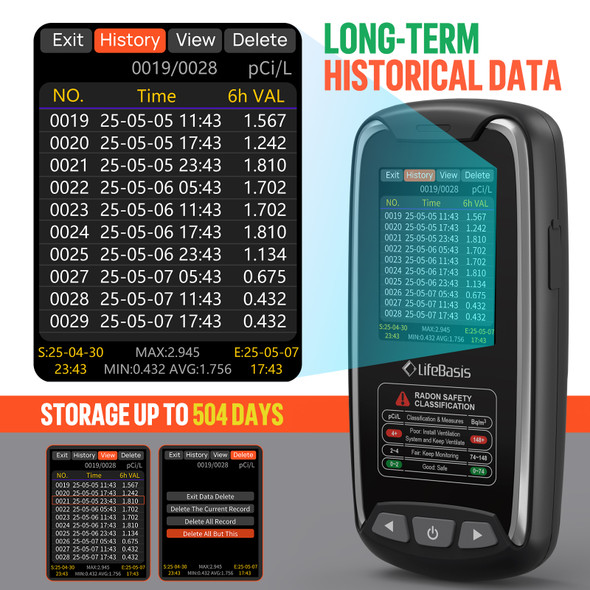
MSRP: $179.99Now: $139.95Was: $179.99Portable Radon Detector & Monitor for Home – Continuous Radon Monitoring Portable Radon Detection You Can Use at Home or Anywhere Want a better way to monitor indoor radon? The RM62 Portable Radon...MSRP: $179.99Now: $139.95Was: $179.99 -


Short Term Radon Test Kit
A.M.I. Services
$19.95Short Term Radon Test Kit – Fast, Accurate Home Radon Testing Protect your home and family with a convenient, affordable Short Term Radon Test Kit. The Air-Chek Short Term Radon Test Kit makes it...$19.95 -

Long Term radon test kit
A.M.I. Services
$38.55The Alpha Tack Long Term Radon Test Kit for Air *These are not allowed to be sold in the state of New Jersey The EPA states that a long-term test is the best approach to measure your radon exposure...$38.55
Radon Detection & Monitoring Equipment
Protect your indoor environment with reliable radon detection and monitoring equipment from A.M.I. Services. Whether you're testing your home, checking a basement, evaluating a rental property, or monitoring a commercial building, we offer radon detectors, radon monitors, and test kits to help you measure indoor radon levels and make informed decisions about your air quality.
Radon is a naturally occurring radioactive gas that can enter buildings through cracks, foundations, and other openings. Because radon is colorless and odorless, it cannot be detected by human senses. Testing is the only way to determine whether radon is present and measure its concentration.
Radon Detectors, Monitors & Test Kits for Home and Professional Use
Choosing the right radon testing equipment depends on whether you need a one-time test or ongoing monitoring. A.M.I. Services offers radon detection solutions for homeowners, home inspectors, contractors, property managers, and indoor air quality professionals.
Portable Radon Detectors & Monitors: Monitor radon levels and track changes over time with convenient portable radon monitoring devices.
Short-Term Radon Test Kits: Test indoor radon concentrations over a shorter testing period when you need an initial assessment.
Long-Term Radon Test Kits: Measure radon over an extended period to help provide a better picture of average radon exposure.
Find the Right Radon Testing Equipment
If you're looking for a radon detector for your home, a continuous radon monitor for ongoing measurements, or a radon test kit for a property inspection, selecting the right equipment makes testing more convenient. Continuous radon monitors allow you to observe changing readings over time, while radon test kits provide a simple option for conducting designated testing periods.
Our selection of radon detection and monitoring equipment is suitable for a variety of applications, including homes, basements, offices, rental properties, real estate inspections, commercial buildings, and indoor environmental assessments.
Shop Radon Detection & Monitoring Equipment at A.M.I. Services
Don't leave indoor radon levels to guesswork. Explore our selection of radon detectors, continuous radon monitors, and radon test kits to find the right solution for your testing needs. A.M.I. Services makes it easy to shop for dependable indoor air quality and environmental monitoring equipment.
Shop our radon detection and monitoring equipment today and take the next step toward understanding the indoor environment where you live or work.
Frequently Asked Questions About Radon Detection & Monitoring Equipment
What is the best way to detect radon in a home?
The best way to detect radon is by using a radon test kit or radon detector designed to measure radon gas in indoor air. A short-term test can provide an initial assessment, while a continuous radon monitor allows you to track readings over time.
What is the difference between a radon detector and a radon monitor?
A radon detector measures the concentration of radon in the air. A radon monitor may provide ongoing measurements, allowing you to track changing radon levels over hours, days, weeks, or longer, depending on the device.
Do I need a continuous radon monitor?
A continuous radon monitor is useful if you want to observe how indoor radon levels change over time rather than relying on a single test result. It can be particularly helpful for homeowners, property managers, home inspectors, and professionals who need repeated measurements.
How often should I test my home for radon?
Radon testing is recommended even if your home has been tested previously because radon levels can change due to weather, ventilation, building renovations, and other conditions. Retesting periodically and after significant renovations is a good practice.
Where should I place a radon detector?
Radon detectors should be placed in an appropriate occupied area or testing location following the manufacturer's instructions and applicable testing guidelines. Avoid placing the device in areas where airflow, humidity, temperature, or other environmental conditions could affect measurements.
Are portable radon detectors suitable for home inspectors?
Yes. Portable radon detectors and monitors can be useful for home inspectors and other professionals who need to measure radon at multiple properties. Select equipment based on your testing requirements, measurement capabilities, and applicable professional standards.
What is the difference between a short-term and long-term radon test?
A short-term radon test measures radon over a relatively brief period, typically lasting several days. A long-term radon test measures radon over a longer period, helping account for fluctuations and providing a better understanding of average radon concentrations.
What radon level is considered high?
The EPA recommends taking action to reduce radon when levels are at or above 4.0 pCi/L. Radon levels between 2.0 and 4.0 pCi/L may also warrant consideration of mitigation. If your test results are elevated, consult qualified radon professionals about confirmation testing and mitigation options.
Can radon be detected without a radon test?
No. Radon is colorless, odorless, and tasteless. You cannot reliably determine whether radon is present or how much is in your home without testing with appropriate radon detection equipment.
Where can I buy radon detectors and radon test kits?
A.M.I. Services offers radon detection and monitoring equipment, including portable radon monitors and short-term and long-term radon test kits for home and professional applications. Browse our selection to find the radon testing equipment that best fits your needs.
Air Purifiers for Germs, Bacteria & Airborne Contaminants
Airborne contaminants can circulate throughout indoor spaces, making indoor air quality an important consideration for homes, offices, and businesses. Air purifiers use different technologies to capture, filter, or treat airborne contaminants that pass through the unit. Choosing the right air purifier depends on the size of your room, the type of contaminants you want to address, and the air-cleaning technology that best fits your needs.
Some air purifiers use high-efficiency filtration to capture airborne particles, while other systems incorporate specialized air-treatment technologies designed to address airborne microorganisms and certain pollutants. Selecting an air purifier with the appropriate technology, airflow capacity, and room coverage can help you make a more informed decision.
Air Purification Solutions for Home and Commercial Use
From bedrooms and living rooms to offices and larger commercial environments, the right air purifier can help support better indoor air quality. Portable air purifiers are ideal for targeted spaces, while larger air-cleaning systems may be better suited for high-traffic areas or commercial applications.
A.M.I. Services carries air purification products designed for a variety of applications, helping customers find solutions for their specific indoor air quality concerns.
Shop Air Purifiers for Cleaner Indoor Air
If you're looking for an air purifier to help address airborne germs, bacteria, and other indoor air contaminants, explore our selection of air purification equipment. Compare technologies, features, and applications to find an air cleaner that fits your environment and indoor air quality goals.
Shop A.M.I. Services for air purifiers designed for home, personal, and commercial use.
Frequently Asked Questions About Air Purifiers for Germs and Bacteria
Do air purifiers help reduce airborne germs and bacteria?
Air purifiers can help reduce airborne particles, including some bacteria and other microorganisms, depending on the filtration system and air-cleaning technology used. Certain air purification systems are specifically designed to address airborne biological contaminants and help improve indoor air quality.
What is the best air purifier for germs and bacteria?
The best air purifier depends on your room size, indoor air quality concerns, and the type of technology you need. Air purifiers featuring HEPA filtration or specialized technologies designed to address airborne microorganisms may be suitable for different environments. Airocide and Austin Air offer air purification solutions for residential and commercial applications.
Can an air purifier remove bacteria from the air?
Air purifiers equipped with appropriate filtration or air-treatment technologies can help reduce certain airborne bacteria. Performance depends on the technology, airflow, operating conditions, and the characteristics of the microorganisms being addressed.
Do air purifiers help with airborne viruses?
Some air purifiers can reduce airborne particles that may carry viruses. Properly sized and operated air-cleaning equipment can help reduce airborne particle concentrations indoors, but air purification should be used alongside other recommended infection-control practices.
What is the difference between a HEPA air purifier and an air sanitizer?
HEPA air purifiers use high-efficiency filters to capture airborne particles as air passes through the filter. Air sanitizing systems may use other technologies designed to inactivate or reduce certain microorganisms. The technologies work differently, so it's important to understand the capabilities of each system when choosing an air purifier.
Are air purifiers for germs and bacteria suitable for homes?
Yes. Air purifiers can be used in bedrooms, living rooms, kitchens, home offices, and other residential spaces. Choosing a unit with appropriate room coverage and air-cleaning performance is important for effective operation in your intended space.
What is the best air purifier for commercial spaces?
Commercial air purifiers are designed for environments that may require higher airflow capacity or continuous operation, including offices, businesses, waiting rooms, and other occupied spaces. The best model depends on room size, occupancy, ventilation, and the specific indoor air quality concerns you want to address.
Do air purifiers need to run continuously to reduce airborne contaminants?
Running an air purifier consistently can help maintain lower airborne particle levels while the unit is operating. The appropriate operating schedule depends on the room, airflow, air quality conditions, and the manufacturer's recommendations.
How do I choose the right air purifier for bacteria?
When choosing an air purifier for bacteria, consider the unit's air-cleaning technology, airflow capacity, room size, maintenance requirements, and the manufacturer's documented performance. Selecting the right system for your space can help you get the most out of your air-cleaning equipment.
Where can I buy air purifiers for germs and bacteria?
A.M.I. Services offers a selection of air purifiers designed for a variety of indoor air quality needs. Browse our air purification products to compare residential, portable, and commercial air-cleaning solutions and find the right system for your environment.