
Best Air Purifier for Mold Spores: Top Home Picks
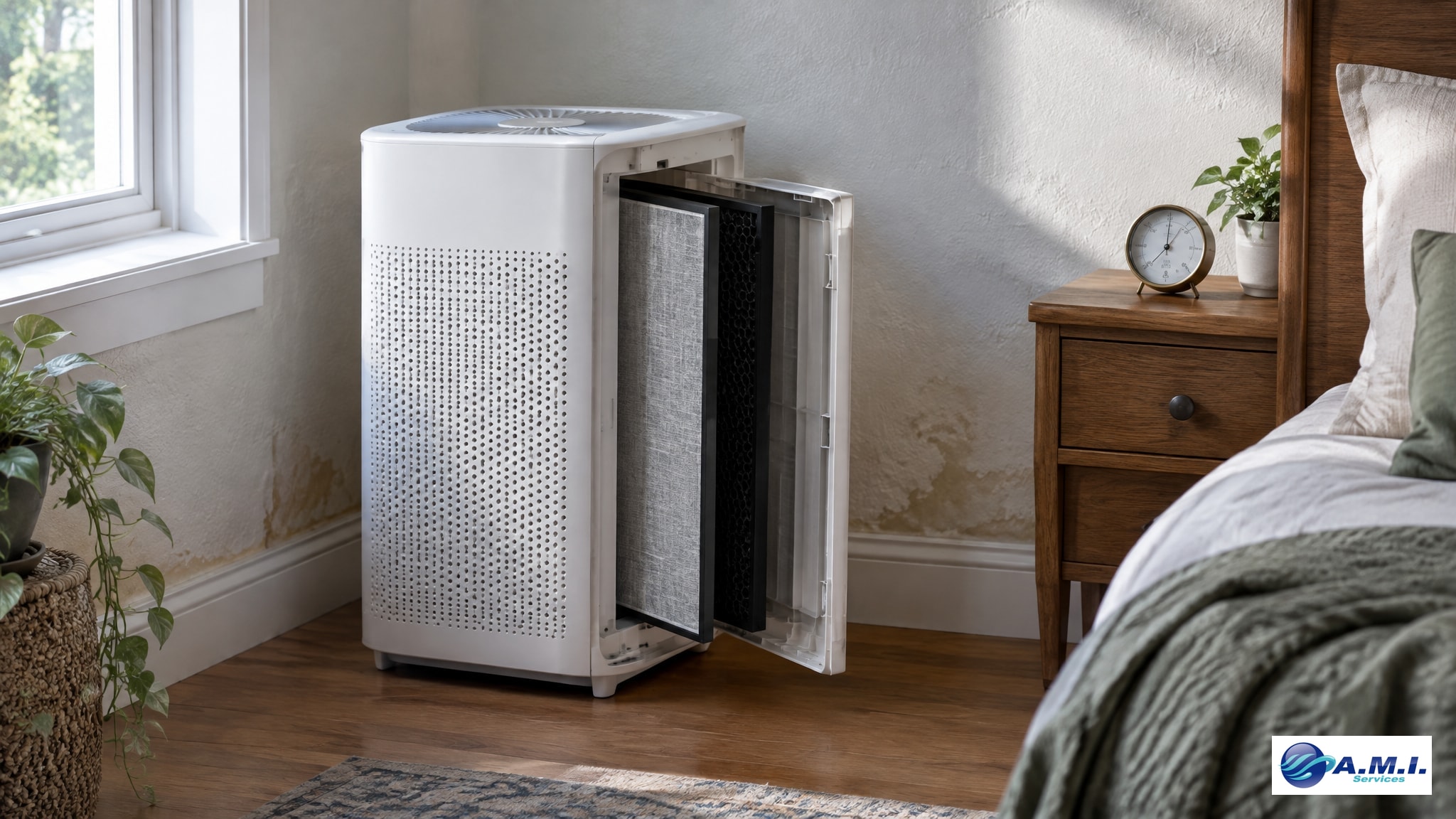
Mold spores travel through the air, and that is the one part of a mold problem a purifier can actually help with. Choosing the best air purifier for mold spores comes down to three checks: true HEPA filtration, carbon for the musty smell, and enough output for the size of your room.
This guide ranks the options by those criteria. It also says plainly what no purifier will do, because the unit you buy is only half of the answer.
What an air purifier can and can't do about mold spores
Yes, a HEPA air purifier takes airborne mold spores out of the air. Room air passes through the filter, and the spores stay in it.
What it leaves alone is the mold itself. The colony on the wall, the damp carpet and the leak behind the drywall all keep going, and so does the moisture feeding them. University environmental health guidance, such as the UMass air purifier fact sheet, takes the same view: portable air cleaners capture airborne particles, but they don't replace controlling the moisture or source behind the problem.
Three quick notes on related questions. An N95 respirator protects the person doing the cleanup, not the room. Houseplants are not a mold-removal method, whatever the listicles claim. And if you or your child have asthma or allergy symptoms that flare at home, see a clinician, because a purifier is neither a diagnosis nor a treatment.
Why a HEPA air purifier is the first test for mold spores
Start with the filter, because everything else a purifier does is secondary to how well it traps particles. If the filter can't hold spores, the rest of the spec sheet doesn't matter.
What the 99.97 percent HEPA rating covers
Consumer Reports says HEPA filters are certified to collect 99.97 percent of particles at 0.3 micrometers, a size it calls hard to capture. Mold spores are generally larger than that, so a true HEPA filter is the right first thing to check.
The rating describes the filter, though, not the whole machine. A filter only helps if enough air moves through it, so you need to pair the HEPA spec with the room-coverage check below. A strong filter in an undersized unit will clean the air around the machine and barely touch the rest of the room.
True HEPA versus HEPA-type labels
"True HEPA" is a specific claim. "HEPA-type," "HEPA-like" and "HEPA-style" are different claims, and they don't promise the 99.97 percent figure.
When you compare listings, look for the words "True HEPA" and for the efficiency figure on the product page. If a seller won't state it, assume the filter doesn't meet it.
Carbon for mold odor: what it removes and what it misses
Growing mold gives off gases, and those gases are what you smell as a musty odor. HEPA filters pass gases straight through, so a unit with HEPA alone can clear the spores and still leave the basement smelling like a damp towel.
Activated carbon fills that gap. It adsorbs gas molecules onto its surface, which is why an air purifier for mold odor needs a carbon stage as well as a HEPA one. The simple split is that carbon handles the smell and HEPA handles the spores.
Carbon has limits, and you should know them before you buy. It does not stop mold from growing, and a smell that keeps returning is a sign that something is still producing it. Carbon also fills up, so it needs replacing, and Consumer Reports notes that activated carbon filters often cost up to $50 each. Build that into your yearly budget rather than discovering it after the first filter is spent.
Room coverage: matching the purifier to the room's size
CADR, short for clean air delivery rate, is the clean-air output rating on a purifier's box. A higher number means the unit cleans a given volume of air faster. Manufacturers publish separate CADR figures for different particle types, so the number only means something when you know which particle it refers to.
Worked example: a 12-by-10-foot room
Fortune's sizing example is easy to follow. A room 12 feet by 10 feet is 120 square feet, and that points to a tobacco-smoke CADR of at least 80. Multiply the room's length by its width, then look for a CADR that meets the rule of thumb for that floor area.
Two cautions apply. No standard CADR rating is specific to mold, so note which particle rating you are reading and treat it as a sizing guide rather than a mold score. And an open basement, where air flows into other areas, may need a higher rating or a second unit to keep up.
Basement and bedroom: where to run an air purifier for mold
These are the two rooms where mold complaints cluster, and they call for different priorities.
Air purifier for mold in a basement
A basement is usually damp and often poorly ventilated, which makes it the toughest test for any unit. Put the purifier in the open part of the room, not behind boxes or tucked into a corner, so air can reach it from every side.
Match the rating to the basement's square footage, as in the example above. If the space is open-plan, size up or plan on two units.
Then deal with the wet spot itself. A purifier running beside an active leak is just catching spores as fast as the leak produces them.
Mold air purifier for the bedroom
In a bedroom, noise matters as much as output, because you will run the unit all night. Look for a model that is quiet at the setting you will actually use, and size it to the room rather than hoping a small unit will cope.
Run it with the door closed so it cleans the air you are breathing instead of the whole hallway. Keep clear space around it, and place it where you sleep rather than across the room. If you want a starting point, bedroom-sized Austin Air units are built for exactly this use.
Austin Air or Airocide for mold: how the two lines compare
A.M.I. Services sorts its air purifiers by concern, including mold, and carries HEPA room units from two lines. "Top-rated" here is the store's own selection standard, not a third-party score, so this comparison stays at the line level and leaves individual model specs to each product page.
How each line handles spores and odor
Austin Air. Austin Air purifiers are the more direct match for the three mold criteria. They are HEPA room units, and the running costs on this side are HEPA and carbon filter changes. Consumer Reports says mechanical filters need replacing every six to 12 months, so plan for that cycle. For a musty basement or bedroom, where you want spores and smell handled together, this is the line to check first.
Airocide. Airocide air purifiers work differently, and the running cost is reaction-chamber replacement kits rather than the usual filter swaps. Check each model's page for its filtration and room coverage. The line also makes oxidation claims, and you should look for independent test data on spore reduction before accepting any of them. A manufacturer's description of how a unit works is not the same as measured results in a mold-affected room.
Neither line is a cure for a wet building. Both are for the air, and both cost money to keep running, so compare the yearly replacement cost as well as the sticker price.
Fix the moisture source, then monitor it
Why no purifier stops mold from growing
A purifier cannot dry a wall, seal a leak or stop growth on a surface. Mold keeps growing wherever moisture persists, and it will keep releasing spores into the room for as long as it does.
The real fix has three parts: find and stop the water, dry the area, and improve ventilation. The purifier handles the spores already in the air while you do that work, and afterward it catches whatever disturbance during cleanup stirs up.
Pair the purifier with a humidity monitor
Put a humidity monitor near the purifier so you can see conditions in the same part of the room. A reading tells you about conditions, not about confirmed mold, so a high number means "look for the cause" rather than "mold is here."
The more useful signal comes after the fix. If readings stay high after cleanup and drying, the source is probably still active, and you should keep looking before you trust the room again. Air quality monitors give you that running record without guesswork.
If you are still choosing a unit for a basement or bedroom, sign up for A.M.I. Services updates and we'll help you match a purifier to your room and your mold concern.
Frequently asked questions
What plant removes 78% of airborne mold?
No houseplant is a reliable way to remove airborne mold. Claims like that don't translate into a real home, and plants add moisture to the soil, which is the opposite of what a mold problem needs. Use a True HEPA purifier for the air and fix the moisture source.
Is an N95 enough for black mold?
A well-fitted N95 protects you while you clean up a small area, but it does nothing for the room's air or the mold itself. Large areas of growth are a job for a professional. If you have asthma or allergy symptoms, talk to a clinician before doing the cleanup yourself.
How do you test for mold in your home?
Start with what you can see and smell: visible growth, a musty odor, and areas that stay damp after rain or showers. A humidity monitor shows whether conditions favor mold, though it can't confirm mold is present. If you suspect hidden growth behind walls or under floors, an inspector can check where a home test kit can't.
Will a purifier get rid of a musty smell?
A purifier with activated carbon can reduce the smell, because carbon adsorbs the gases mold gives off. HEPA alone won't do it, since gases pass through. If the smell keeps coming back, mold is still growing somewhere, and the moisture behind it needs fixing.
Recent Posts
-
Best Air Purifier for Mold Spores: Top Home Picks
Mold spores travel through the air, and that is the one part of a mold problem a purifier can actua …22nd Nov 2026 -
HEPA Air Purifiers for Allergies and Asthma: What to Buy
If you wake up stuffy, or your child's asthma flares at night, the air in the bedroom is a fair pla …20th Nov 2026 -
Best Air Purifier for Wildfire Smoke in Your Home
Wildfire smoke is two problems in one air stream. There are fine particles you can breathe deep int …18th Nov 2026