
How to Reduce Airborne Bacteria in Your Home
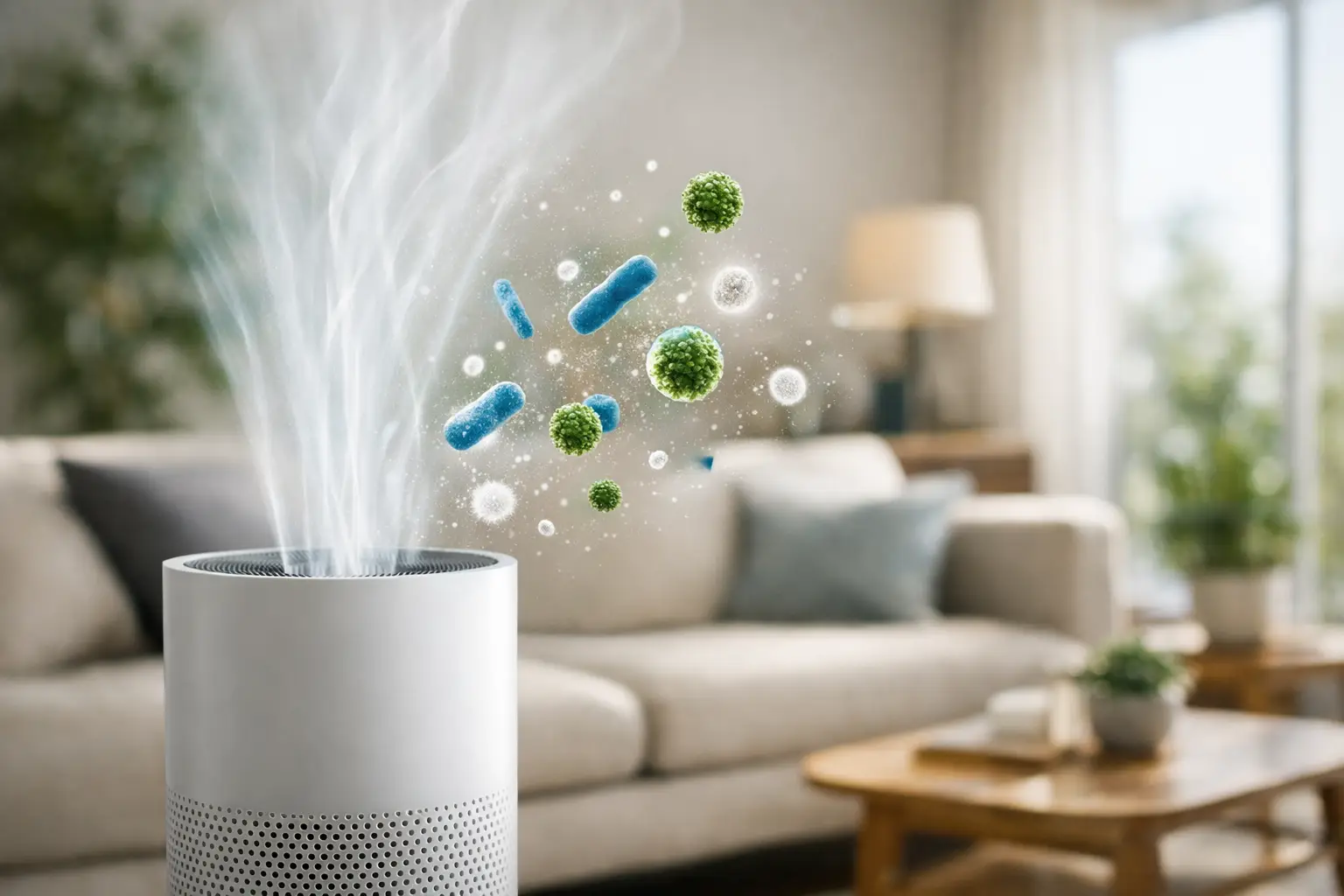
A closed bedroom after a night of sleep, a busy family kitchen, a packed waiting room, and a break room with little fresh air have one thing in common: people continually add particles and microorganisms to the air. Knowing how to reduce airborne bacteria starts with a realistic goal. You cannot make an occupied home or workplace sterile, nor do you need to. The practical objective is to lower the concentration of airborne particles that can carry bacteria, limit the conditions that support microbial growth, and improve the quality of the air people breathe.
Airborne bacteria are only one part of indoor air quality. Viruses, mold spores, dust, pollen, smoke, pet dander, and chemical vapors can also affect comfort and health. That is why the best plan combines source control, ventilation, cleaning, humidity management, and air purification instead of relying on one product or habit.
How to Reduce Airborne Bacteria With Source Control
The most effective particles are the ones that never enter the air. People are a normal source of airborne bacteria through breathing, talking, coughing, sneezing, and shedding skin cells. Pets, dirty fabrics, damp materials, food waste, and poorly maintained HVAC equipment can add to the overall microbial load.
When someone is sick, give them space where possible and increase fresh-air exchange in shared rooms. Covering coughs, washing hands before food preparation, and cleaning high-touch surfaces remain sensible steps. These practices do not directly clean the air, but they reduce the spread of material that can become airborne or move from surfaces to hands and then to the face.
Pay special attention to moisture. Bacteria need water and nutrients to multiply, so wet towels left in a pile, damp rugs, dirty humidifiers, standing water in drain pans, and plumbing leaks can create avoidable problems. Dry wet materials promptly, repair leaks, and clean appliances according to their manufacturer instructions. If you use a humidifier, empty, rinse, and refill it with fresh water regularly. A neglected humidifier can send mineral dust and microorganisms into the room it is meant to make more comfortable.
Improve Ventilation Without Creating New Problems
Ventilation dilutes indoor contaminants by replacing some stale indoor air with outdoor air. Opening windows for a short period can help when outdoor conditions are favorable. Using bathroom and kitchen exhaust fans during showers and cooking also removes moisture, odors, and particles where they are produced.
The trade-off is outdoor air quality. On high-pollen days, during wildfire smoke, near heavy traffic, or in very humid weather, an open-window strategy may make indoor air worse. In those conditions, keep windows closed and use a properly filtered central HVAC system or a room air purifier. A mechanical ventilation system can be especially valuable in tightly built homes, apartments without operable windows, offices, and commercial spaces with steady occupancy.
Make sure supply and return vents are not blocked by furniture, boxes, or curtains. Air needs a clear path through the room and back to the HVAC return. If your building uses central heating and cooling, ask a qualified HVAC professional which filter efficiency is appropriate for the equipment. A higher-efficiency filter can capture more fine particles, but a filter that is too restrictive for the system may reduce airflow and strain the equipment.
Use a HEPA Air Purifier in the Rooms That Matter Most
A portable air purifier with a true HEPA filter is one of the most direct tools for reducing airborne particle levels in a specific room. HEPA filtration is designed to capture very small airborne particles, including many particles that bacteria may travel on. It does not matter whether a purifier is labeled for a bedroom, office, nursery, or living room as much as whether it is correctly sized for the space and used consistently.
Look at the unit's recommended room coverage and clean air delivery performance rather than choosing by appearance alone. A small purifier running in a large open-concept area may offer limited improvement. For bedrooms, place the purifier where air can circulate freely, not behind a nightstand, under a desk, or pressed against a wall. Keep doors and windows closed when you want the purifier to have the strongest effect in that room.
Run the purifier continuously or at least for extended periods when the room is occupied. Lower fan settings are quieter and may be appropriate for sleep, while higher settings clean the air more quickly after visitors, cooking, cleaning, or illness. Many households benefit from starting with the bedroom because it is where one person may spend seven to nine hours each day.
For bacteria, odors, smoke, and certain chemical concerns, consider a purifier that combines HEPA filtration with substantial activated carbon or another appropriate technology. Carbon is not a substitute for HEPA when particle capture is the goal, but it can help address gaseous pollutants and odors that a particle filter does not remove.
Be Careful With Ozone-Producing Devices
Avoid relying on ozone generators or air cleaners that intentionally produce ozone for occupied spaces. Ozone can irritate the lungs and may worsen respiratory symptoms, particularly for people with asthma or other sensitivities. Claims that an ozone device "sanitizes" a room should not outweigh the health concern of adding a reactive gas to the air you breathe.
Some air treatment systems use UV light or photocatalytic technologies. These may have a role in carefully engineered commercial systems, but performance depends on airflow, exposure time, lamp condition, and system design. For a straightforward residential purchase, a correctly sized HEPA air cleaner is usually the clearest starting point for reducing airborne particles.
Clean Surfaces So Dust Does Not Return to the Air
Air and surfaces constantly exchange particles. Dust settles, then becomes airborne again when people walk through the room, make the bed, vacuum with poor filtration, or disturb upholstered furniture. Regular cleaning reduces this reservoir.
Use a damp microfiber cloth on hard surfaces rather than dry dusting, which can send fine particles back into the room. Vacuum carpets, rugs, upholstered furniture, and pet areas with a sealed vacuum equipped with a HEPA filter if possible. Wash bedding regularly, especially if household members have allergies, asthma, or respiratory concerns.
Focus on areas that collect moisture and organic residue: kitchen counters, bathroom surfaces, trash containers, pet bowls, and laundry areas. Disinfectants have a place when a surface is visibly soiled or there has been illness, but more chemical is not always better. Follow the product label, ventilate as directed, and never mix cleaning products. Routine physical cleaning with soap or detergent and water often removes a large amount of contamination without adding strong fumes to the air.
Keep Indoor Humidity in a Healthy Range
Humidity affects both comfort and microbial conditions. Very high humidity encourages dampness, mold growth, musty odors, and dust mite activity. Air that is excessively dry can irritate the nose, throat, and eyes, making people feel less comfortable even when the air is clean.
For most homes, aim to keep relative humidity roughly between 30% and 50%. A simple indoor humidity monitor makes it easier to see whether a basement, bathroom, or bedroom needs attention. Use exhaust fans, air conditioning, a dehumidifier, or moisture repairs when humidity stays high. In dry winter climates, add humidity carefully and monitor the level instead of running a humidifier continuously.
Basements deserve extra attention because they often have cooler surfaces and hidden moisture. If a basement smells musty or has visible water staining, solve the moisture issue first. An air purifier can help capture particles, but it cannot correct an active leak, poor drainage, or wet building materials.
Maintain Filters and Equipment on Schedule
An air purifier works only as well as its filters and airflow allow. Replace pre-filters, HEPA filters, and carbon filters on the manufacturer-recommended schedule, adjusting sooner when the unit runs in a smoky, dusty, pet-heavy, or high-occupancy environment. A visibly loaded pre-filter can reduce airflow long before the main filter reaches the end of its expected life.
The same principle applies to central HVAC filters. Check them regularly, especially during heating and cooling seasons. Also keep portable purifier air intakes and outlets free of dust buildup. Replacement filters are not an accessory purchase - they are part of maintaining the system's performance.
For offices, classrooms, clinics, and other shared spaces, calculate needs room by room. Ceiling height, occupancy, open doors, and activities such as meetings or customer traffic all affect results. A commercial air purification system may be a better fit than several small consumer units when the space is large or the air quality concern is persistent.
Know When to Look Beyond Air Cleaning
If respiratory symptoms, repeated odors, visible mold, frequent condensation, or unexplained dampness continue despite better cleaning and filtration, investigate the underlying cause. A building inspection, moisture assessment, HVAC service visit, or indoor air quality monitor can provide useful direction. Air cleaning is highly effective for lowering airborne particles, but it is not a replacement for repairing water damage or addressing a contaminated ventilation system.
The most reliable approach is also the most manageable: keep moisture under control, bring in cleaner outdoor air when conditions allow, remove settled dust, and run a properly sized HEPA purifier where people spend the most time. Start with one high-priority room, maintain the filters that protect it, and build from there as your household's needs become clearer.
Recent Posts
-
How a Mold Prevention Air Purifier Helps
July 31, 2026 A mold prevention air purifier can be a useful part of a healthier indoor-air …30th Oct 2026 -
How to Reduce Airborne Bacteria in Your Home
July 29, 2026 A closed bedroom after a night of sleep, a busy family kitchen, a packed waiting roo …30th Oct 2026 -
How to Reduce Mold Odors and Keep Them Away
July 27, 2026 That musty smell in a basement, bathroom, closet, or office is not just an annoyance …30th Oct 2026