
Hard Water Treatment Guide for Cleaner Homes
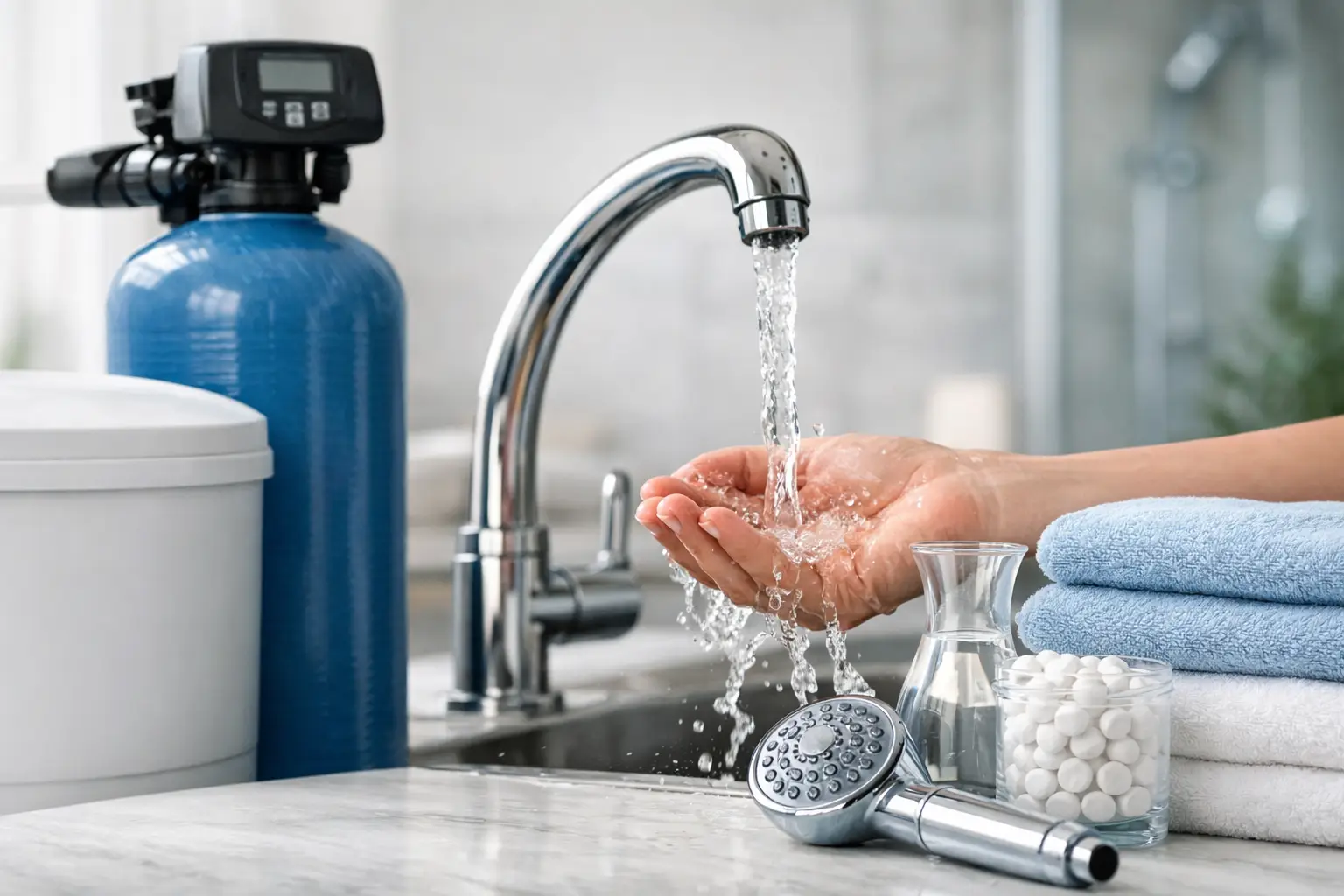
A white crust around faucets, cloudy spots on clean glasses, and a water heater that seems to work harder than it should are not just cleaning frustrations. They are common signs of mineral-heavy water. This hard water treatment guide explains what those minerals do, when treatment makes sense, and how to select a practical system for your home or workplace.
Hard water is not usually a drinking-water safety emergency. The concern is performance: mineral scale can reduce the efficiency of water-using equipment, make soap less effective, and leave surfaces looking unfinished even after you clean them. The right solution depends on your water hardness level, the equipment you want to protect, and whether you want to remove hardness minerals or control their ability to form scale.
What Hard Water Does Around the Home
Hard water contains elevated levels of dissolved calcium and magnesium. As water evaporates or is heated, those minerals can be left behind as a hard, chalky deposit called limescale. You may see it first on shower doors, coffee makers, faucets, and dishwasher interiors. Behind the scenes, the same buildup can occur in water heaters, tankless systems, humidifiers, ice makers, and pipes.
The impact is often gradual. A showerhead may lose spray strength. Soap can leave a film on skin, hair, dishes, and laundry because it does not rinse as freely in hard water. Water heaters may require more energy when scale creates an insulating layer between the heating element and the water. For homeowners and facility managers, treatment is often about protecting equipment and reducing recurring cleaning work.
Hardness is typically reported in grains per gallon or milligrams per liter. Water above about 7 grains per gallon is generally considered hard, while very hard water may exceed 10. Local water reports can provide a useful starting point, but a direct water test gives a better picture of what is entering your property.
Start With a Simple Water Assessment
Before choosing equipment, confirm that hardness is the problem. Mineral spotting alone is a clue, but it does not tell you how severe the issue is or whether other conditions are present. A basic hardness test can help you compare options without guessing.
Also consider where the water comes from. Municipal water can vary by season and source, while private well water may have additional concerns such as iron, manganese, sediment, sulfur odor, or bacteria. A standard hard water treatment system may not address every one of these issues. If water has an unusual color, odor, staining pattern, or laboratory result, identify those concerns before purchasing treatment equipment.
Think about your goals, too. If your primary concern is protecting a tankless water heater and reducing scale on fixtures, a scale-control system may be a good fit. If you want the classic feel of softened water and less soap use throughout the house, an ion-exchange water softener may better match your expectations.
Hard Water Treatment Options Explained
There is no single best choice for every property. The most useful comparison is between traditional water softening and salt-free scale treatment, because they work differently and deliver different results.
Ion-Exchange Water Softeners
A conventional water softener removes calcium and magnesium from the water through ion exchange. The system uses resin media that exchanges hardness minerals for sodium or potassium. When the resin is full, it regenerates with a salt brine solution.
This approach is effective when your goal is to reduce hardness itself. Many households notice easier lathering, softer-feeling laundry, less spotting, and less scale. However, softeners require salt, periodic maintenance, drainage for regeneration, and adequate space for the equipment. They also add sodium to the treated water, which can matter for people following sodium-restricted diets or for households that prefer not to use salt-based treatment.
Sizing matters. A softener that is too small may regenerate frequently and waste water and salt. One that is oversized may cost more than necessary. Consider household size, daily water use, incoming hardness, and peak demand when evaluating capacity.
Salt-Free Electronic Scale Control
Electronic scale-control systems are designed to help reduce the tendency of hardness minerals to form stubborn scale. Rather than removing calcium and magnesium, they alter the conditions that encourage minerals to attach to pipe and equipment surfaces. This makes them particularly useful for homeowners who want scale protection without salt, chemicals, brine discharge, or major plumbing changes.
Systems such as Scalewatcher are commonly considered for homes where installation simplicity and low ongoing maintenance are priorities. They are also useful where a conventional softener is impractical because of space limitations, drainage concerns, or local preferences around salt discharge.
The trade-off is straightforward: salt-free systems do not produce softened water. You may still have minerals in the water, and you may still see some spotting when droplets dry. Their value is centered on scale management and equipment protection, not on changing the mineral content or creating the slippery feel associated with a traditional softener.
Point-of-Use Protection
Sometimes whole-property treatment is not necessary. If a single appliance is the main concern, targeted protection and routine maintenance may be enough. For example, a coffee maker, humidifier, or small ice machine may benefit from regular descaling based on the manufacturer’s schedule.
This approach costs less upfront, but it does not protect showers, dishwashers, laundry equipment, or the water heater. It makes sense when the hard water problem is mild, the property is temporary, or budget limits a whole-home system.
How to Choose the Right System
A practical buying decision comes down to water conditions and desired outcomes. Begin with the measured hardness level and then look at your home’s plumbing layout, water use, and the equipment you want to protect.
Choose a traditional softener if you want to remove hardness minerals and are comfortable maintaining a salt-based system. It is often the stronger choice for very hard water, large households, and homeowners who prioritize laundry feel, soap performance, and reduced spotting.
Choose electronic or salt-free scale control if you want a simpler approach to protecting pipes and water-using equipment without adding salt or managing regeneration. It can be especially appealing for apartments, homes with limited installation space, vacation properties, and households that prefer low-maintenance operation.
For commercial settings, look beyond square footage. A small office with a breakroom may have modest demand, while a salon, restaurant, dental office, or rental property may put heavy use on water heaters and fixtures. Review flow requirements and the number of water-using appliances before selecting a system. Equipment that cannot handle peak flow may not provide the protection you expect.
Installation and Maintenance Matter
Even a well-chosen system needs correct installation. A water softener is generally installed where water enters the building so it can serve the plumbing system, but outdoor spigots are sometimes left untreated to avoid wasting softened water on irrigation. It needs an electrical connection, a drain, and access for salt loading.
Electronic scale-control systems are often easier to install because they can be placed around the main incoming water pipe without cutting into plumbing. Pipe material, pipe diameter, available access, and nearby electrical power still matter. Follow the manufacturer’s placement instructions carefully, especially where water lines branch.
Maintenance should remain part of the plan. For a softener, check salt levels, clean the brine tank when needed, and make sure regeneration settings still fit your water use. For any hard water solution, continue inspecting fixtures and appliances. Existing scale does not always disappear immediately, and heavily scaled equipment may need cleaning or service before you can judge the improvement.
Keep Expectations Realistic
Hard water treatment is most successful when you match the technology to the problem. A salt-free scale-control system should not be judged by whether it makes water feel soft, because that is not its purpose. Likewise, a water softener will not remove contaminants such as lead, bacteria, radon, or chemical compounds unless it is paired with treatment designed for those specific concerns.
If you are buying to protect a water heater, monitor its performance after installation. If cleaner glassware matters most, compare results after several wash cycles and use the appropriate dishwasher rinse aid. If you have well water, retest periodically because mineral levels can change.
Hard water does not have to dictate how often you scrub fixtures or how quickly equipment loses efficiency. Start with a water test, choose treatment based on the result, and give the system enough time to protect the appliances and plumbing you rely on every day.
Recent Posts
-
How a Mold Prevention Air Purifier Helps
July 31, 2026 A mold prevention air purifier can be a useful part of a healthier indoor-air …30th Oct 2026 -
How to Reduce Airborne Bacteria in Your Home
July 29, 2026 A closed bedroom after a night of sleep, a busy family kitchen, a packed waiting roo …30th Oct 2026 -
How to Reduce Mold Odors and Keep Them Away
July 27, 2026 That musty smell in a basement, bathroom, closet, or office is not just an annoyance …30th Oct 2026