
Commercial Air Cleaning System Guide for Buyers
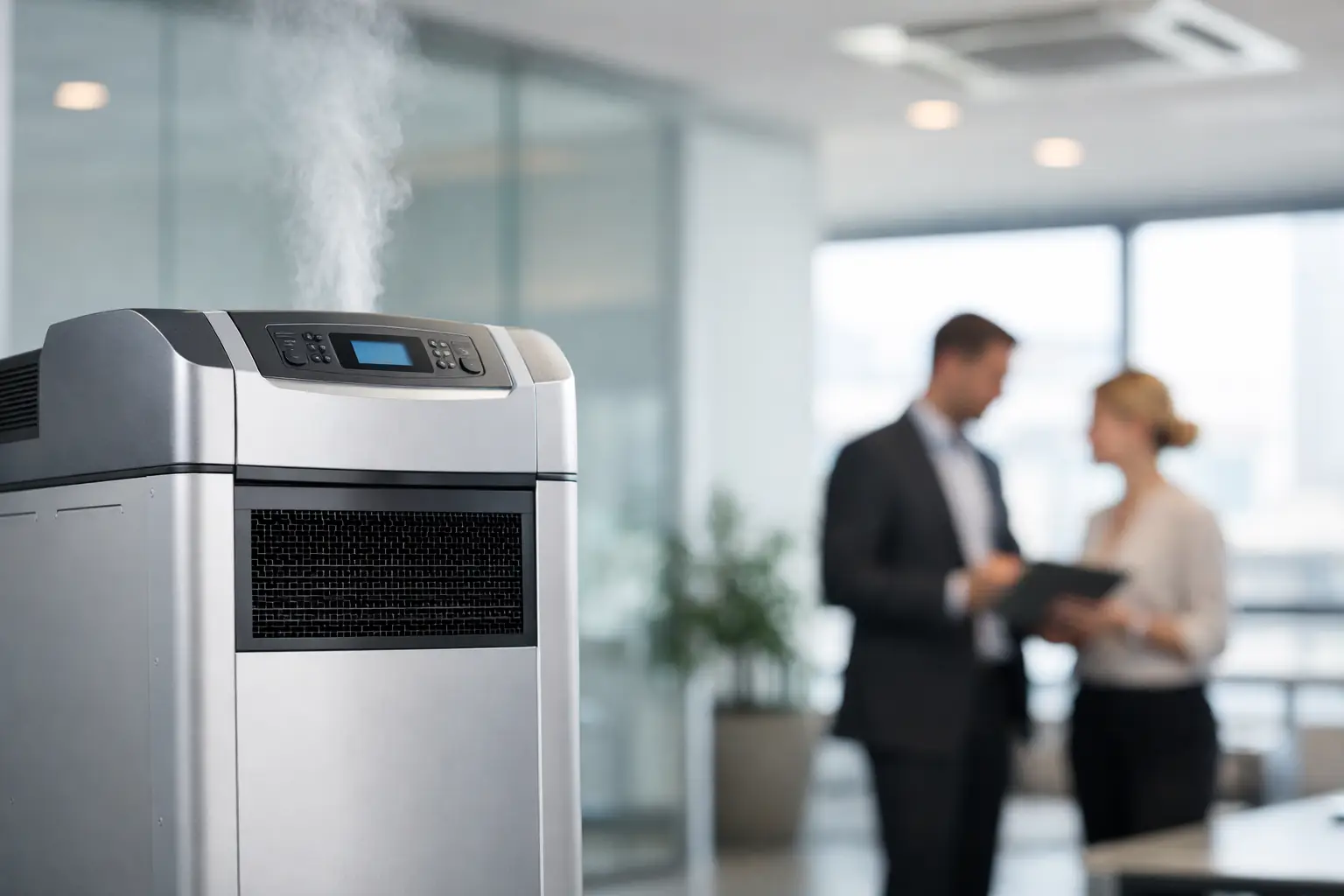
A stale conference room, lingering restroom odor, dusty reception area, or staff complaints about headaches can quickly become a business problem. This commercial air cleaning system guide helps facility owners and office buyers choose equipment based on the air concern, room size, occupancy, and maintenance capacity - not just a large coverage number on a product page.
Commercial air cleaners can reduce airborne particles and improve comfort in offices, clinics, classrooms, retail spaces, salons, waiting rooms, and other shared environments. The right system depends on what is in the air. A unit that performs well for dust and pollen may not be the best fit for smoke, chemical odors, or spaces with higher germ-control expectations.
Start With the Problem You Need to Solve
The most useful way to shop for commercial air cleaning is by concern. Before comparing models, identify what occupants notice and what your facility needs to control.
For allergies, asthma triggers, dust, pet dander, and mold spores, high-efficiency particulate filtration is usually the priority. A true HEPA filter is designed to capture very small airborne particles and is often the practical foundation for cleaner air in occupied spaces.
For smoke, cooking odors, renovation fumes, cleaning-product vapors, and other VOC concerns, particle filtration alone is not enough. Look for a system with a meaningful amount of activated carbon or another gas-phase media. Carbon can adsorb many odors and chemical vapors, but its performance depends heavily on the amount and quality of the media. A thin carbon sheet may help with light odors, while persistent smoke or strong chemical exposure generally calls for more substantial carbon filtration.
For clinics, schools, fitness centers, and crowded workplaces, buyers may also want technology aimed at biological contaminants. HEPA filtration remains a dependable way to capture airborne particles that can carry bacteria and viruses. Some commercial systems add UV or photocatalytic technology, which may support a broader air-cleaning approach. These features should complement adequate airflow and filtration, not replace them.
Size the System for the Actual Room
A commercial air cleaner needs enough airflow to clean the room repeatedly each hour. Coverage claims can be useful, but they are only meaningful when you know the fan speed and air changes behind the number.
Start with the room's square footage, then consider ceiling height. A 1,000-square-foot office with an 8-foot ceiling contains far less air than a 1,000-square-foot training room with a 16-foot ceiling. High ceilings, open floor plans, frequent door traffic, and heavy occupancy all increase the demand on the system.
For a typical office or waiting room, the goal is often multiple air changes per hour. Spaces with more vulnerable occupants, higher occupancy, or greater particle concerns may need a higher cleaning rate. Rather than stretching one unit to cover a large area at its highest fan setting, it is often better to use multiple properly sized units. This gives you more even cleaning throughout the space and lets the equipment run at quieter, more practical speeds.
Do Not Rely on Maximum Coverage Alone
Manufacturers may list a maximum room size based on one air change per hour or a low cleaning target. That can be acceptable for light background filtration, but it may not be enough for allergy relief, smoke control, or a busy commercial environment.
Ask how much clean air the unit delivers at the speed you plan to use. A cleaner that is rated for a large room only on high may be too loud for daily use in an office, classroom, or patient area. The useful capacity is the capacity you can operate consistently.
Choose Filtration That Matches the Facility
Most effective commercial air cleaning systems use stages of filtration. The first stage is often a prefilter that captures larger debris such as lint, hair, and coarse dust. This protects the main filter and can reduce replacement costs.
The next stage is commonly HEPA or another high-efficiency particle filter. This is the essential stage for fine dust, pollen, dander, smoke particles, and many other airborne particulates. If particulate control is your main concern, prioritize a system with proven high-efficiency filtration and a fan powerful enough to move air through it.
Gas and odor control requires activated carbon or specialized adsorption media. This matters in break rooms, salons, print areas, veterinary settings, facilities near traffic, and buildings affected by wildfire smoke. Carbon filters do not last forever. Once the media becomes saturated, odor reduction drops, even if the filter still looks clean.
Some buyers consider ionizers or electronic air cleaners because they can collect fine particles. If evaluating these options, confirm how the system handles ozone and whether it is appropriate for occupied spaces. For many workplaces, a mechanical filtration approach with HEPA and carbon is the simplest path to clear expectations and predictable maintenance.
Plan for Placement, Noise, and Daily Use
Even an excellent air cleaner cannot perform well if it is blocked behind furniture or placed in a corner with poor circulation. Position units where they can pull in room air freely and discharge cleaned air without blowing directly into a person's face. Keep the intake and outlet clear of walls, curtains, cabinets, and stacks of boxes.
In a larger room, place units apart rather than grouping them together. One unit near the entrance can help with outside air and hallway traffic, while another near the center or far end improves circulation. In spaces with a known source, such as a copier area or break room, place additional cleaning capacity nearby without obstructing walkways.
Noise is a real purchasing factor. A unit that creates distracting fan noise will be turned down or switched off, defeating the purpose of the purchase. Review decibel ratings, but also consider where the equipment will operate. A reception desk, counseling office, classroom, and executive meeting room may need quieter operation than a warehouse or workshop.
Account for HVAC Limitations
Portable commercial air cleaners work alongside the building HVAC system. They are especially helpful where central filtration is limited, where a specific room needs extra support, or where the HVAC system cannot be upgraded easily.
They do not fix every indoor air problem. If humidity is high, visible mold is present, outdoor pollutants are entering through a damaged building envelope, or there is an active source of fumes, address the source as well. Air cleaning can reduce what is airborne, but it cannot replace moisture control, ventilation, housekeeping, or proper building maintenance.
For facilities with central HVAC, check the existing filter rating and whether the system can safely accommodate a higher-efficiency filter. Increasing filter efficiency can increase resistance to airflow. A portable unit may be the more practical answer when an HVAC upgrade would strain the equipment or require major changes.
Budget for Filters Before You Buy
The purchase price is only part of the cost. Commercial air cleaners require filter replacement, and the replacement schedule changes based on operating hours and pollutant load. A unit running continuously in a busy office will use filters faster than the same model in a lightly used conference room.
Before choosing a system, confirm the cost and availability of replacement prefilters, HEPA filters, and carbon filters. A lower-priced unit can become expensive if replacement filters are difficult to source or need frequent changes. Conversely, a higher-quality system with readily available filter kits may provide better long-term value and more dependable performance.
Create a simple maintenance record for each unit. Note installation date, filter changes, unusual odors, changes in noise, and any occupant concerns. This helps prevent missed replacement intervals and gives facility managers useful information when comparing air quality complaints over time.
Use Monitoring to Make Better Decisions
An air quality monitor can help you understand whether a concern is particle-related, ventilation-related, or connected to VOCs. Particle readings may rise during cleaning, high occupancy, outdoor smoke events, or nearby construction. VOC readings can point to cleaning products, fragrances, new furnishings, or other chemical sources.
Monitoring does not replace professional investigation when there is a serious health or building issue, but it can make routine decisions more informed. It can also show whether moving an air cleaner, increasing fan speed, or replacing a filter produces a measurable improvement.
When One System Is Not Enough
A single large air cleaner may be a good fit for an open showroom or warehouse zone. Separate rooms, long hallways, enclosed offices, and areas with different pollutant sources usually benefit from a distributed approach. Use the right number of units for the layout rather than treating the facility as one open box.
For buyers who need help comparing HEPA filtration, carbon capacity, room coverage, and replacement requirements, A.M.I. Services can help narrow the options around the concern you are trying to solve. Clean air equipment works best when it is sized realistically, placed carefully, and maintained on schedule.
The most helpful next step is to walk through the space at its busiest time. Notice where odors collect, where dust returns first, which rooms have the most complaints, and where people spend the longest hours. Those details will point you toward an air cleaning system that earns its place in the facility every day.
Recent Posts
-
How a Mold Prevention Air Purifier Helps
July 31, 2026 A mold prevention air purifier can be a useful part of a healthier indoor-air …30th Oct 2026 -
How to Reduce Airborne Bacteria in Your Home
July 29, 2026 A closed bedroom after a night of sleep, a busy family kitchen, a packed waiting roo …30th Oct 2026 -
How to Reduce Mold Odors and Keep Them Away
July 27, 2026 That musty smell in a basement, bathroom, closet, or office is not just an annoyance …30th Oct 2026