
How to Choose an Air Purifier That Works
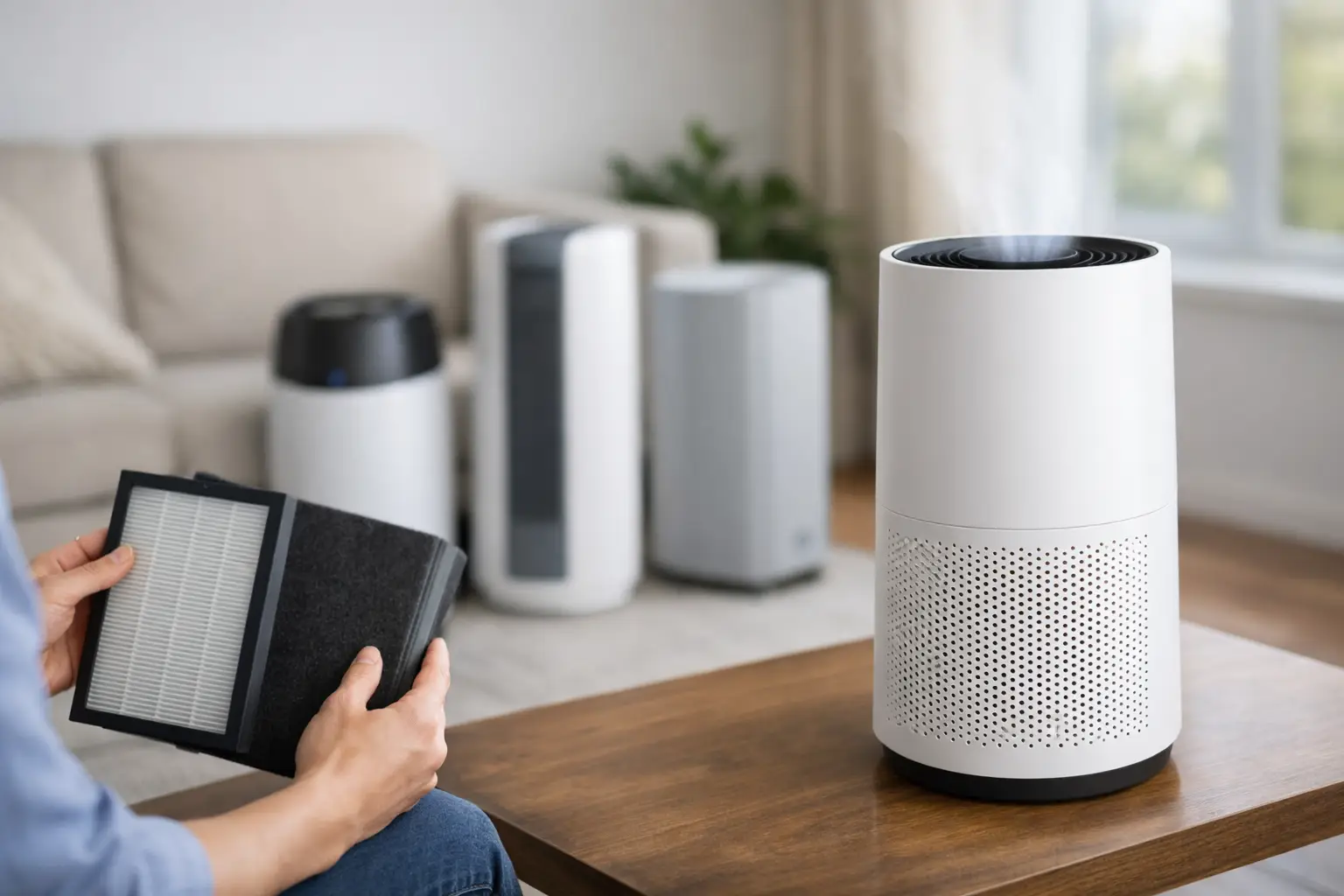
A bedroom air purifier that runs too slowly for the room, sits behind a curtain, or has an overdue filter may do far less than the box promised. Cleaner indoor air comes from matching the unit to the problem, the space, and the way your household actually lives. Whether you are dealing with seasonal allergies, pet dander, wildfire smoke, cooking odors, or chemical sensitivity, the right choice starts with understanding what needs to be removed from the air.
Start With the Air Problem You Want to Solve
Not every air cleaner addresses the same pollutants. The most useful question is not simply, “What is the best unit?” It is, “What is in my air, and where is it coming from?” A purifier can reduce airborne particles and certain gases, but it cannot repair a moisture problem, stop smoke from entering a home, or remove the source of a persistent chemical odor.
For allergies, asthma concerns, dust, pollen, mold spores, and pet dander, focus on particle filtration. These contaminants are small enough to remain airborne, especially after cleaning, walking through a room, or changing bedding. A high-efficiency particulate air, or HEPA, filter is the standard choice for this type of concern because it captures very fine particles rather than simply collecting visible dust.
Smoke requires more than particle filtration. Wildfire smoke, tobacco smoke, and burned food produce fine particulate matter along with gases and odors. A HEPA filter helps with the particle side of smoke, while substantial activated carbon or another effective gas-phase media is needed for odor and gaseous compounds. The same approach applies to VOCs, which may be released by paint, new furniture, cleaning products, fragrances, and building materials.
Odors deserve a practical expectation check. If a litter box, mildew, cooking activity, or attached garage is continuously producing odors, an air purifier can help reduce airborne odor compounds but will not replace cleaning, ventilation, moisture control, or source removal. Solve the source whenever possible, then use filtration to improve the air that remains.
Choose an Air Purifier by Room Size, Not Marketing Claims
A purifier needs enough cleaning capacity for the room where it will operate. A compact desktop unit may be appropriate beside a workstation, but it is unlikely to make a meaningful difference in an open living room. Measure the room’s length and width, then account for ceiling height. Open floor plans, high ceilings, frequent door opening, pets, and outdoor smoke exposure all increase the workload.
Look for the manufacturer’s recommended room size and compare it with your actual space. For allergy or smoke concerns, it is often wise to choose a unit rated for a larger room than yours. That lets it provide useful air cleaning at a quieter, lower fan speed instead of needing to run at maximum speed all day.
Air changes per hour provide another useful way to think about capacity. This refers to how many times a purifier can process the room’s air in an hour. More air changes generally mean faster particle reduction, assuming the unit is properly sized and the room is not constantly receiving new pollution. For a bedroom used by someone with allergies or asthma, higher cleaning capacity can be especially valuable during sleep.
Be cautious when comparing airflow numbers alone. High airflow is helpful, but it does not tell the whole story unless effective filtration is included. Likewise, a unit with excellent particle performance may not be the right answer for chemical odors if it has very little carbon media.
What about larger spaces and offices?
For a large great room, classroom, waiting room, salon, or office, one small room purifier is rarely enough. You may need multiple units placed across the area or a commercial air purification system designed for the room volume and occupancy. Commercial buyers should also consider noise during meetings, maintenance access, operating hours, and whether the setting has elevated challenges such as dust, odor, or frequent customer traffic.
Understand the Filter System Before You Buy
The filter arrangement determines what an air purifier can capture and what it will cost to maintain. A strong system commonly uses more than one stage.
A pre-filter captures larger debris such as hair, lint, and larger dust particles. It protects the more expensive inner filters and may be washable or replaceable. Regularly cleaning or changing this layer can help maintain airflow.
A HEPA filter is the main workhorse for fine particles. It is the right technology to prioritize when your concern is pollen, dust mites, pet dander, mold spores, bacteria-carrying particles, and fine smoke particles. Replacement timing varies by model and conditions. A home with several pets or ongoing smoke exposure may need filters sooner than a lightly used guest room.
Activated carbon handles many odors and gases through adsorption. The amount of carbon matters. A thin carbon sheet may provide limited odor reduction, while a system with a deeper carbon bed is usually better suited to stronger odors, smoke, and VOC concerns. Carbon eventually becomes saturated, so it needs replacement even when it still looks clean.
Some systems also use photocatalytic oxidation or other specialized technologies. These can be useful in the right application, particularly for certain odor or organic-compound concerns, but they should not be viewed as a substitute for adequate particle filtration. Evaluate the entire system, including its intended use, filter design, maintenance requirements, and output claims.
Avoid treating an ionizer as the primary answer to indoor air quality. Ionization can cause particles to settle on surfaces rather than reliably capturing them in a filter. If a unit offers this feature, make sure it can be turned off and that its core filtration is appropriate for your concern.
Placement Makes a Noticeable Difference
Put the unit where people spend the most time breathing the affected air. For sleep-related allergy relief, that is usually the bedroom. For pet dander or cooking particles, it may be the living area or kitchen-adjacent space. If smoke is entering through one side of the home, placement near that entry zone can help, provided the unit still has clear airflow.
Leave open space around the intake and outlet. Do not tuck a purifier behind a sofa, under a table, or against drapes. Keep doors and windows closed when trying to clean a specific room, particularly during pollen peaks or wildfire smoke events. If the HVAC system is running, a quality central filter can support whole-home particle control, while a portable unit provides focused cleaning where it matters most.
Run the purifier consistently. Indoor pollutants are generated throughout the day, and particles can become airborne again with normal activity. Auto mode can be convenient when a unit has a responsive particle sensor, but manual operation at a steady, suitable speed is often more predictable for ongoing allergy or smoke concerns.
Budget for Filter Replacements, Not Just the Machine
The purchase price is only part of the decision. Replacement filters are a normal cost of effective air cleaning, and choosing a model with readily available, properly matched replacement kits protects your investment. A purifier with low upfront cost can become frustrating if filters are difficult to find, unusually expensive, or need replacement far more often than expected.
Check how many filters the system uses, how often each is typically changed, and whether the manufacturer provides an indicator. Then consider your environment honestly. Households with pets, active cooking, nearby traffic, wood smoke, or chemical sensitivities may use up filters faster. A sudden increase in noise, reduced airflow, lingering odors, or a filter indicator can signal that service is due.
Do not try to wash a HEPA or carbon filter unless the manufacturer specifically says it is washable. Water can damage filter media, and a damp filter can create its own problems. Use the correct replacement part so the filter seals properly inside the housing. Air that bypasses the filter is air that is not being cleaned.
Pair Purification With Better Indoor Air Habits
An air purifier works best as part of a practical indoor air plan. Vacuum with a sealed or HEPA-equipped vacuum, damp-dust surfaces, wash bedding regularly, and keep pets out of the bedroom if dander is a major trigger. Use kitchen exhaust when cooking, and address leaks, damp materials, and visible mold promptly.
For VOC concerns, reduce the products releasing the chemicals whenever possible. Choose lower-odor cleaning products, allow new furnishings to off-gas in a ventilated area when practical, and avoid adding strong fragrances to the air you are trying to clean. If you suspect radon, testing is essential because radon cannot be managed by a standard room air cleaner.
The best air purifier is not necessarily the smallest, quietest, or least expensive option. It is the one with the right filtration, enough capacity for your room, and filters you will replace on schedule. Choose for the air you need to breathe every day, then give the unit the space and maintenance it needs to do its job.
Recent Posts
-
How a Mold Prevention Air Purifier Helps
July 31, 2026 A mold prevention air purifier can be a useful part of a healthier indoor-air …30th Oct 2026 -
How to Reduce Airborne Bacteria in Your Home
July 29, 2026 A closed bedroom after a night of sleep, a busy family kitchen, a packed waiting roo …30th Oct 2026 -
How to Reduce Mold Odors and Keep Them Away
July 27, 2026 That musty smell in a basement, bathroom, closet, or office is not just an annoyance …30th Oct 2026