
8 Best VOC Air Monitors for Healthier Homes
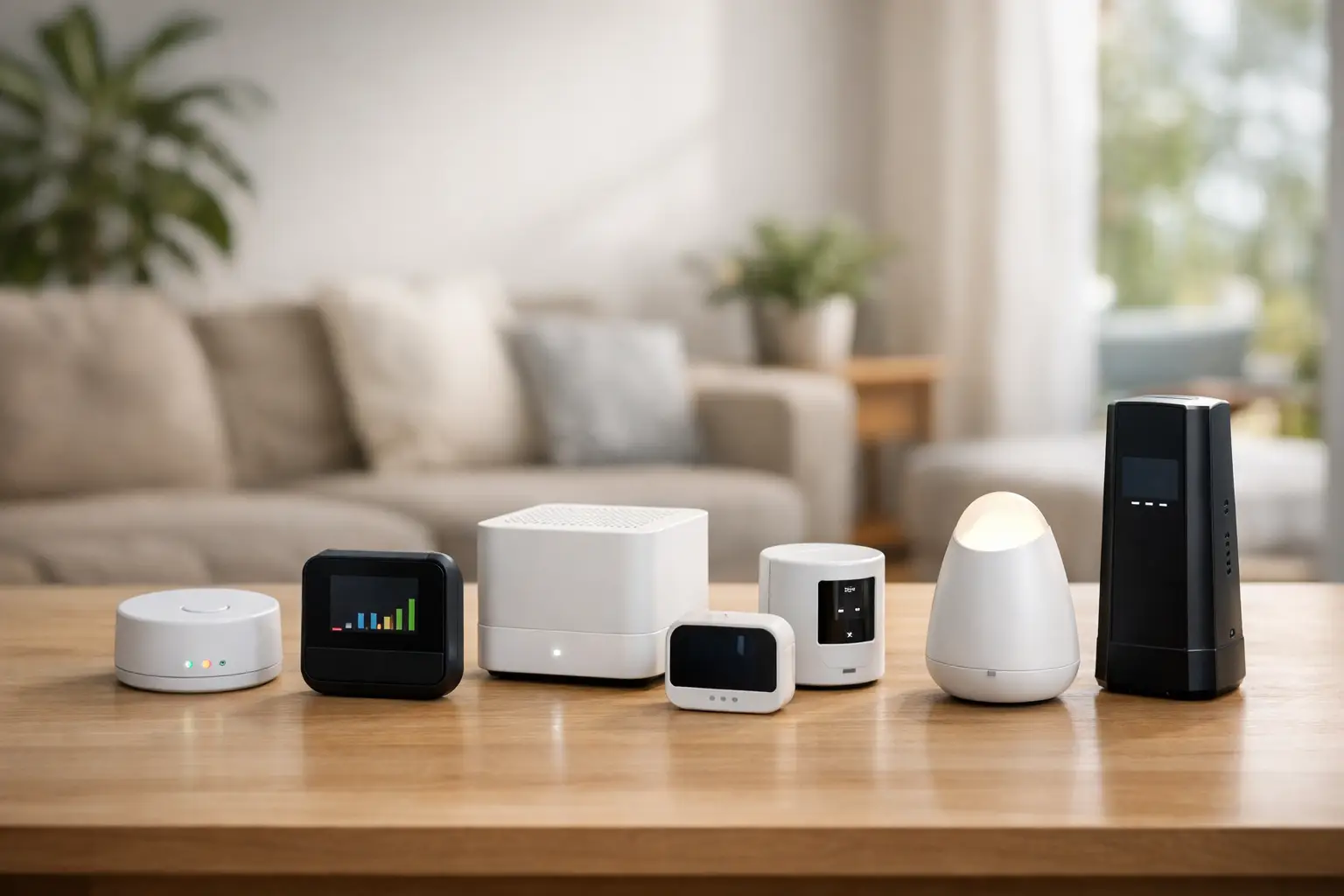
A room can look clean and still hold chemical pollutants from new flooring, paint, cleaning sprays, candles, furniture, cooking, and stored household products. The best VOC air monitors make those otherwise invisible changes easier to see, so you can respond before odors, irritation, headaches, or asthma symptoms become a daily concern.
A VOC monitor is not a replacement for an air purifier, ventilation, or sensible product choices. It is a decision-making tool. It shows when indoor conditions change and helps you determine whether opening windows, removing a source, increasing ventilation, or using the right air cleaner is making a real difference.
What a VOC Air Monitor Actually Measures
VOC stands for volatile organic compounds. This broad group includes gases released by many common materials and products. Some VOCs have a noticeable smell, while others do not. Individual compounds can vary greatly in health significance, which is why a consumer monitor reading should be treated as a useful signal, not a medical diagnosis or laboratory-grade chemical identification.
Most home monitors report TVOC, or total volatile organic compounds. The number represents an estimated combined level of gases detected by the sensor. It cannot reliably tell you whether the source is formaldehyde, a fragrance ingredient, a solvent, or another specific compound. That limitation matters, but it does not make the information useless.
A TVOC trend can show that the air quality worsens after mopping with a fragranced cleaner, bringing home new furniture, using an aerosol product, or closing up a room overnight. It can also show whether the level falls after source control and ventilation. For most households, those trends are more actionable than chasing a single perfect number.
The Best VOC Air Monitors by Use Case
The right choice depends on what you need the monitor to do after it detects a problem. A basic display can be enough for a single room, while families managing asthma, chemical sensitivity, or radon concerns may benefit from a more complete indoor air quality station.
1. Best for whole-home awareness: Airthings View Plus
The Airthings View Plus is a strong choice for households that want one device to track several indoor concerns in addition to VOCs. It is designed to monitor TVOCs alongside factors such as particulate matter, carbon dioxide, temperature, humidity, pressure, and radon. That broader view is valuable because indoor air problems often overlap.
For example, an elevated VOC reading after a cleaning session may call for ventilation. High carbon dioxide in a closed bedroom can point to insufficient fresh-air exchange. Rising humidity may increase the risk of mold growth. Seeing these conditions together gives homeowners a more useful picture than a VOC reading alone.
The trade-off is cost and complexity. If you only need to check whether a workshop, nursery, or recently renovated room has recurring chemical odors, a simpler device may be a better fit.
2. Best for chemical-sensitivity concerns: Eco Sensors VOC detectors
A dedicated Eco Sensors VOC detector is a practical option when chemical exposure is the main concern. These monitors are especially useful for investigating strong odors, fresh paint, new cabinetry, adhesives, cleaning supplies, or suspected off-gassing from furnishings. A direct-reading instrument can help you compare one location with another and see whether moving a product, ventilating, or removing the source changes the result.
This type of monitor suits buyers who want a more focused tool rather than an app-centered home dashboard. It can also be useful for property managers, facility staff, and small-business owners checking rooms before occupancy. Keep expectations realistic: a detector can show that VOC conditions have changed, but it does not replace professional testing when there is a serious health complaint or a need to identify a particular chemical.
3. Best for connected room monitoring: uHoo indoor air sensors
A connected multi-sensor monitor such as uHoo works well for people who want ongoing room-by-room tracking and alerts. Rather than taking a reading only when an odor appears, you can watch patterns over days and weeks. That can be helpful in bedrooms, home offices, nurseries, apartments with limited ventilation, and spaces near attached garages.
The primary advantage is context. You may find that TVOC levels rise at a predictable time after cooking, during laundry, when a diffuser runs, or when outdoor air is unable to circulate through the home. The trade-off is that app-based monitors require reliable Wi-Fi, regular attention to notifications, and some patience while the sensor establishes normal patterns in your space.
4. Best for offices and commercial spaces: a multi-point monitoring plan
For an office, classroom, salon, clinic, or other occupied commercial setting, the best answer is rarely one monitor on a wall. VOCs can be much higher near a storage closet, printer area, janitorial supplies, new carpet, or renovation zone than they are at reception. A multi-point plan using several monitors, or rotating a portable VOC detector through likely problem areas, provides more useful information.
Commercial buyers should also prioritize monitors that report temperature, humidity, carbon dioxide, and particulate matter. Employees may describe a room as stuffy, dusty, or chemical-smelling, but these different pollutants require different solutions. A monitor that only reports TVOC can identify one piece of the problem, not the full indoor environment.
Features That Matter More Than a Perfect Score
When comparing the best VOC air monitors, focus on how the device will fit into your routine. A monitor that is technically impressive but stays in a drawer will not protect your indoor air.
Look for a clear display or easy-to-read app that shows trends over time. A single reading can be affected by recent activity, humidity, and sensor warm-up. Hourly and daily trends are more valuable because they reveal repeat sources and help confirm whether corrective steps worked.
Placement flexibility matters as well. A portable unit is useful for investigating a suspicious room, while a plug-in or tabletop monitor is better for continuous monitoring. If you are buying for a bedroom, choose a unit with a display that is not overly bright or a screen that can be dimmed.
Also consider what else you want to measure. Carbon dioxide readings can help identify poor ventilation. PM2.5 monitoring is useful for smoke, cooking particles, dust, and outdoor pollution. Humidity monitoring supports mold prevention. Radon monitoring is essential in areas where radon is a concern, but it is a separate measurement from VOCs and requires a monitor built for that purpose.
Finally, check the power and data requirements before buying. Battery-operated monitors are convenient to move, while plug-in units are better for uninterrupted tracking. Cloud-connected apps can offer useful history and alerts, but some buyers prefer a device that provides readings directly without relying on a phone.
How to Use a VOC Monitor for Useful Answers
Place the monitor where people breathe, generally three to six feet above the floor and away from direct airflow. Do not place it beside an open window, directly over a stove, next to an air purifier exhaust, or against a wall. Give a new monitor time to stabilize according to the manufacturer’s instructions before treating its readings as a baseline.
Then use it to answer specific questions. Record the normal reading in a room, use a suspected product or complete a routine activity, and watch what happens. Repeat the test on another day if needed. If the level rises, remove the source when possible, ventilate with outdoor air when conditions allow, and run an air purifier designed to address gases and odors. Recheck the trend after these steps.
Avoid relying on a purifier alone when a clear source is present. Removing or sealing the source and increasing ventilation usually deliver the most direct improvement. Mechanical filtration is excellent for particles, but VOC reduction often requires substantial activated carbon or another gas-phase treatment media. A small air cleaner with a thin carbon sheet may help with light odors but may not be enough for ongoing off-gassing or heavy chemical use.
When a High Reading Needs More Than a Monitor
A sudden spike after cooking, cleaning, or using paint may be expected, especially in a tightly closed home. If the reading returns toward normal after ventilation, the monitor has done its job by showing you the impact of the activity. Persistent elevation with no obvious cause deserves more investigation.
Start by checking common sources: air fresheners, scented laundry products, candles, hobby supplies, stored fuels, attached garages, new pressed-wood furniture, and cleaning products. If symptoms are severe, multiple occupants are affected, or you suspect a specific hazardous contaminant, contact a qualified indoor air quality or environmental professional. Consumer monitors are excellent screening tools, but they cannot replace validated sampling when health or building-safety decisions are at stake.
Choose a monitor that helps you notice patterns, not one that creates anxiety over every temporary change. The most useful device is the one that turns an invisible concern into a practical next step: find the source, improve ventilation, clean the air, and keep checking whether the room is becoming a healthier place to live or work.
Recent Posts
-
How a Mold Prevention Air Purifier Helps
July 31, 2026 A mold prevention air purifier can be a useful part of a healthier indoor-air …30th Oct 2026 -
How to Reduce Airborne Bacteria in Your Home
July 29, 2026 A closed bedroom after a night of sleep, a busy family kitchen, a packed waiting roo …30th Oct 2026 -
How to Reduce Mold Odors and Keep Them Away
July 27, 2026 That musty smell in a basement, bathroom, closet, or office is not just an annoyance …30th Oct 2026