
Air Purifier for Lingering Odors That Works
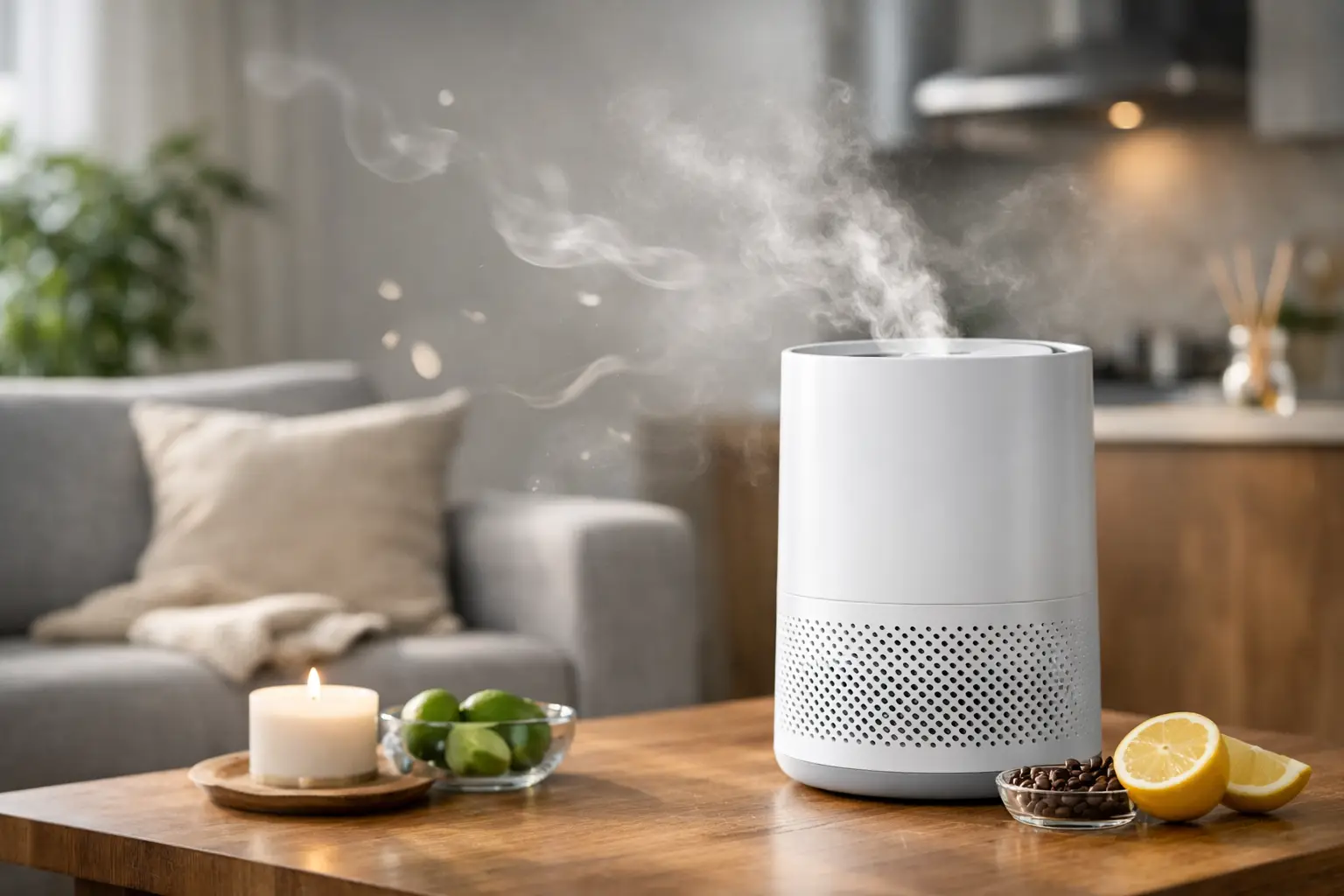
That smell from last night's fish dinner, a former smoker's room, a wet dog, or new flooring can stay in the air far longer than expected. An air purifier for lingering odors can make a meaningful difference, but only when it is designed to capture gases, vapors, and odor-causing compounds - not just dust.
For odor problems, the filter material matters as much as the machine's size. A purifier with a strong HEPA filter may be excellent for allergy particles, pet dander, and smoke particles, yet still do little to remove the smell of smoke or cooking. The right solution usually combines particle filtration with substantial activated carbon or another gas-phase filtration method.
Why odors linger indoors
Lingering odors are often more than an inconvenience. They can point to smoke residue, moisture, pet contamination, mold activity, chemical off-gassing, or inadequate ventilation. Odor molecules are gases, commonly called volatile organic compounds or VOCs, that move through the air and can settle into carpet, upholstery, drywall, curtains, and clothing.
Once an odor has absorbed into surfaces, opening a window may help temporarily but may not solve the issue. As the room warms up or humidity rises, those stored compounds can release back into the air. This is why a space may smell fine for a day, then suddenly smell stale again.
Air purification works best as part of a source-control plan. Clean fabrics and hard surfaces, remove spoiled materials, repair leaks, improve ventilation when outdoor conditions allow, and address mold or smoke damage at its origin. A purifier helps reduce what remains airborne and can provide ongoing relief while deeper cleaning or repairs are underway.
What an air purifier needs to remove odors
Activated carbon is the key filter for smells
Activated carbon is the primary filter media for many household odor concerns. Its porous structure adsorbs many gases and VOCs onto the surface of the carbon. This is different from a HEPA filter, which physically traps airborne particles.
For persistent odors, look beyond the phrase "carbon filter." Many standard room purifiers use a thin carbon sheet or a lightly coated pre-filter. That can help with mild, short-term odors, but it has limited capacity. A thicker bed of granular activated carbon, measured in pounds rather than a thin panel, is generally a better choice for tobacco smoke, pet odors, cooking odors, and chemical smells.
More carbon is not automatically better in every situation. A larger carbon bed can make a unit heavier and more expensive, and it will eventually need replacement. Still, for a room with an established odor issue, meaningful carbon capacity is often the difference between masking a smell and actually reducing it.
HEPA filtration handles the particles that travel with odors
Odor molecules are gases, but many odor sources also release particles. Smoke is the clearest example: it includes very fine particulate matter along with gases and sticky residues. Pets contribute dander, hair, and dust alongside their characteristic smells. Mold concerns may involve spores and fragments as well as musty VOCs.
A true HEPA filter is valuable because it captures fine airborne particles that can affect respiratory comfort. For households managing allergies, asthma, smoke exposure, or pet dander, a unit that pairs HEPA filtration with a substantial carbon stage is usually the most practical approach.
Do not expect HEPA alone to neutralize a strong chemical or smoke smell. It may improve the air and reduce the visible haze, while the odor remains because the gaseous compounds are passing through the filter.
Specialized technologies can help in specific cases
Some air cleaners use photocatalytic oxidation, ultraviolet treatment, or other technologies intended to break down certain airborne contaminants. These systems may be useful for particular VOC, odor, or microbial concerns, depending on the technology and room conditions.
The trade-off is that performance can be harder to judge than with a straightforward HEPA-and-carbon system. For most buyers, start with proper airflow, a quality particle filter, and enough activated carbon. Consider specialized technology when the odor source is chemical-heavy, commercial, or persistent after source control and standard filtration have been addressed.
Match purifier capacity to the room, not just the odor
An undersized purifier cannot keep up with a large room, an open floor plan, or an active odor source. Before choosing a model, estimate the square footage of the room and consider ceiling height. A 12-by-15-foot bedroom has very different needs from an open kitchen and living area.
For ongoing odor reduction, choose a unit rated for at least the room size at a usable fan speed. A purifier may advertise coverage based on its highest setting, but that setting can be too loud for sleep or daily work. It is usually smarter to select a model with extra capacity so it can circulate air effectively on a medium setting.
Air changes per hour also matter. A purifier that cleans the full room volume several times per hour will respond more quickly to smoke, cooking, and pet-related air quality issues than one barely sized for the space. Commercial spaces, waiting rooms, salons, offices, and rental properties may need multiple units or a commercial air purification system rather than one portable room cleaner.
Choose by the type of lingering odor
The odor source helps determine how much carbon and airflow you need. Mild pet smells in a maintained bedroom may respond well to a room purifier with HEPA and a replaceable carbon filter. A home with multiple pets, litter boxes, or upholstered furniture may need a larger unit with deeper carbon media.
For cooking odors, placement is especially important. Run the purifier near the kitchen opening or in the adjoining living area, not directly next to a hot stove or where grease can rapidly load the filters. Use the range hood whenever possible, then keep the purifier running after the meal to capture what remains in the air.
Tobacco and wildfire smoke demand both strong particle filtration and substantial carbon. Smoke residue can persist in walls, carpeting, HVAC systems, and furniture, so air cleaning should be paired with thorough cleaning and, in severe cases, professional restoration. If the smoke source is still active indoors, no purifier can fully compensate for continued exposure.
Musty odors require extra caution. A purifier can reduce airborne particles and some odor compounds, but it cannot correct a hidden water intrusion problem. Investigate damp basements, plumbing leaks, wet insulation, roof leaks, and HVAC drain issues. If mold is visible or the odor is persistent after drying and cleaning, professional assessment may be appropriate.
New furniture, paint, flooring, and cleaning products can release VOCs. In these situations, ventilate with outdoor air when conditions are safe, avoid adding more fragranced products, and use an air purifier with a substantial carbon component. Chemical sensitivity varies widely, so a unit that helps one household may need to be supplemented with stronger source control for another.
Placement and operation make a measurable difference
Put the purifier where people spend the most time, especially bedrooms, home offices, and living rooms. Keep several inches of clearance around the intake and outlet. Do not tuck it behind furniture, place it inside a cabinet, or block airflow with curtains.
For a single problem room, close doors and windows while the unit is working unless ventilation is part of the solution. Run the purifier continuously at a comfortable setting rather than only turning it on when the smell becomes noticeable. Odors are easier to manage when filtration is consistent.
If an odor moves through central HVAC ducts, a portable purifier can still improve the room where it operates, but it will not clean every area of the home. Consider whether the odor is localized, whether the HVAC filter needs attention, and whether separate purifiers are needed for bedrooms or other occupied spaces.
Replace filters before odor breakthrough
Carbon does not last forever. Once its adsorption sites are filled, odors can return even though the purifier still sounds as if it is running normally. Heavy smoke, pets, cooking, and chemical exposure can shorten carbon filter life significantly.
Follow the manufacturer’s replacement schedule, but use your environment as the final guide. If a familiar odor returns sooner than expected, the carbon stage may be exhausted. A clogged HEPA filter can also reduce airflow, making the entire unit less effective.
Replacement filter availability matters when comparing air cleaners. A high-performing purifier is only useful over the long term if the correct filters are easy to identify and replace. Keep a record of installation dates, and consider keeping a spare filter on hand if odors are a frequent concern.
When an air purifier is not enough
An air purifier is a practical tool, not a substitute for fixing a contamination source. Call attention to odors that are sharp, burning, sewage-like, gasoline-like, or associated with headaches, dizziness, breathing trouble, visible mold, or a suspected gas leak. Leave the area and seek appropriate professional help when safety may be involved.
For everyday lingering odors, choose a purifier with enough airflow for the room and enough activated carbon for the problem. Then give it the cleanest possible starting point: remove the source, clean the surfaces holding the smell, and let the purifier do the steady work of keeping the air more comfortable to breathe.
Recent Posts
-
How a Mold Prevention Air Purifier Helps
July 31, 2026 A mold prevention air purifier can be a useful part of a healthier indoor-air …30th Oct 2026 -
How to Reduce Airborne Bacteria in Your Home
July 29, 2026 A closed bedroom after a night of sleep, a busy family kitchen, a packed waiting roo …30th Oct 2026 -
How to Reduce Mold Odors and Keep Them Away
July 27, 2026 That musty smell in a basement, bathroom, closet, or office is not just an annoyance …30th Oct 2026