
Home Radon Testing Guide for Safer Air
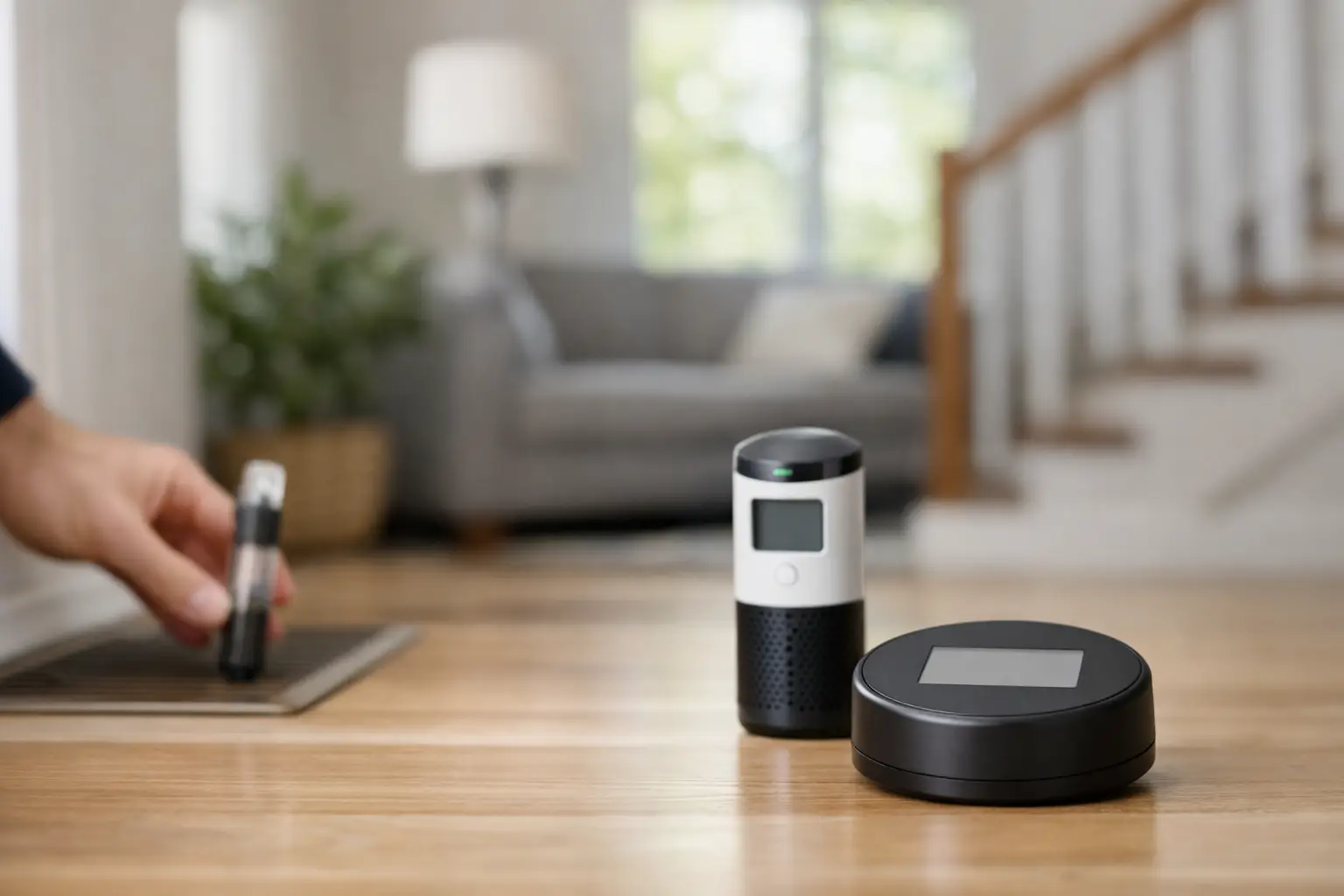
A radon problem usually gives you no warning. You cannot see it, smell it, or feel it, which is exactly why a clear home radon testing guide matters. If you are trying to protect your family, verify a real estate decision, or figure out whether a basement is safe for daily use, the right test process gives you answers you can act on.
Why a home radon testing guide matters
Radon is a radioactive gas that forms naturally in soil and rock. It can move through foundation cracks, sump pits, crawl spaces, gaps around pipes, and other openings, then collect indoors. Because many homes are built tighter than they used to be, radon can stay trapped and build up over time.
The health concern is straightforward. Long-term exposure to elevated radon increases lung cancer risk. That does not mean every home has a severe problem, and it does not mean one high reading automatically tells the whole story. It does mean testing is the only reliable way to know what you are dealing with.
That is where many homeowners get stuck. They know they should test, but they are not sure whether to use a short-term kit, a long-term test, or a continuous radon monitor. The best choice depends on how quickly you need answers and how confident you want to be in the result.
Start with the right type of radon test
For most households, there are three practical options.
Short-term radon tests are the fastest way to screen a home. These kits are often used for initial checks, real estate timelines, or situations where you need a result soon. They usually stay in place for a few days up to about a week, depending on the specific product. The trade-off is that short-term results can be influenced more by changing weather, HVAC operation, and how the house is being used.
Long-term radon tests stay in place much longer, often for 90 days or more. They give a better picture of average exposure because they smooth out day-to-day swings. If your goal is to understand typical living conditions rather than just get a quick snapshot, long-term testing is often the better fit.
Continuous radon monitors provide ongoing readings and trend data. This option is especially useful if you want to track fluctuations, verify that mitigation is working, or monitor a home over seasons. For buyers who want more visibility and homeowners who prefer active oversight, a monitor can be a smart investment.
Where to place a test for reliable results
Placement matters more than many people realize. A good radon device in the wrong location can still produce a misleading result.
Test the lowest level of the home that is regularly occupied or could reasonably be occupied. In many houses, that means the basement. If your basement is unfinished but used for laundry, exercise, work, or storage you access often, it still counts as meaningful living space for testing purposes.
Keep the device away from drafts, open windows, exterior doors, fans, vents, direct sunlight, high humidity spots, and kitchens or bathrooms when possible. You want a reading that reflects general indoor air, not a result skewed by a nearby airflow source or moisture issue.
A common rule is to place the test several feet above the floor, away from walls, and in an area where it will not be bumped or moved. Always follow the instructions that come with the specific kit or monitor, because exact placement guidance can vary slightly by product.
How to prepare the home before testing
If you are using a short-term test, closed-house conditions are often part of the instructions. That usually means keeping windows closed and limiting outside air exchange for a set period before and during the test, aside from normal entry and exit. The idea is to measure radon under typical controlled living conditions.
This does not mean you need to make the house feel sealed like a vault. It means avoiding conditions that can artificially dilute or disturb the reading. Running whole-house fans, leaving basement windows open, or making unusual HVAC changes during the test can affect the outcome.
For long-term tests and ongoing monitors, normal living conditions are generally more appropriate. Since the goal is to measure real exposure over time, consistency matters more than short bursts of strict control.
Reading the results without overreacting
Radon results are commonly reported in picocuries per liter, written as pCi/L. In the US, 4.0 pCi/L is the action level many homeowners know. If your result is at or above that level, follow-up action is usually recommended.
But radon is not an all-or-nothing issue. Lower levels still carry some risk, and many homeowners choose to reduce exposure even below 4.0 pCi/L, especially if children use the basement, someone in the home has respiratory concerns, or the property will be occupied long term.
If a short-term result comes back elevated, the next move is often either a second short-term test or a long-term confirmation, depending on how quickly you need to make a decision. If you are in the middle of a sale, timing may push you toward another short-term test. If there is no immediate deadline, a long-term test can give a more stable picture.
When continuous monitoring makes sense
A one-time test answers one question. A continuous monitor answers more than that.
It can show whether radon levels rise during colder months, after storms, or when HVAC settings change. It can help you spot patterns in a basement office, nursery, or finished lower level. It also gives peace of mind after mitigation, because you are not relying on one snapshot from months ago.
This is often the right path for homeowners who are health-focused, living in known radon zones, or simply tired of guessing. A monitor is also useful in homes with previous elevated readings, because radon levels can change over time.
A.M.I. Services often serves shoppers in exactly this situation - people who do not just want a test result, but a practical way to manage indoor environmental risk with confidence.
Common mistakes that can weaken a radon test
Most testing problems come down to setup, timing, or interpretation. People place kits near windows, test in the wrong part of the home, move the device halfway through the test, or assume one unusual result tells the whole story.
Another common mistake is treating radon like a seasonal issue that only matters in winter. Radon can vary throughout the year, but the risk is not limited to one season. If you have never tested, the best time is simply now.
It is also easy to confuse testing with solving. Sealing obvious cracks may help in some cases, but it is not a substitute for proper testing, and it is not always enough to lower radon to an acceptable level. Test first. Then decide what action is justified.
What to do if your radon level is high
If results come back elevated, do not panic, but do not ignore them either. The practical next step is to confirm the reading if needed and then evaluate mitigation options. In many homes, an active soil depressurization system is the standard fix. These systems are designed to vent radon gas safely before it accumulates indoors.
After mitigation, testing still matters. You want to verify that the system is performing as expected. This is where a follow-up kit or an ongoing monitor becomes especially valuable. A mitigation system is not something you want to assume is working perfectly forever without checking.
Choosing the best testing approach for your home
The best home radon testing guide is not one that pushes a single device for every situation. It matches the tool to the need.
If you need quick screening, start with a short-term test. If you want the clearest picture of average exposure, use a long-term test. If you want visibility over time, reassurance after mitigation, or a smarter way to watch indoor air conditions, a continuous radon monitor is often the strongest solution.
For many households, the real answer is a combination. A short-term test can flag a concern quickly, and a monitor or long-term test can help confirm what normal exposure actually looks like in that space. That layered approach is often the most useful when health protection is the priority.
Testing for radon is not about chasing perfect numbers. It is about making your home safer with information you can trust, then taking the next step with confidence.
Recent Posts
-
Airocide Air Purifier: Is It Worth It?
May 26, 2026 When a room smells clean but still leaves you with headaches, irritated sinuses, or t …23rd Oct 2026 -
Best Air Purifier for Wildfire Smoke
May 24, 2026 When wildfire smoke moves in, indoor air can turn harsh fast. If you are searc …23rd Oct 2026 -
Austin Air HealthMate Plus Review
May 22, 2026 A lingering smoke smell, recurring allergy symptoms, or that stale indoor air feeling …23rd Oct 2026