
Austin Air HealthMate Plus Review
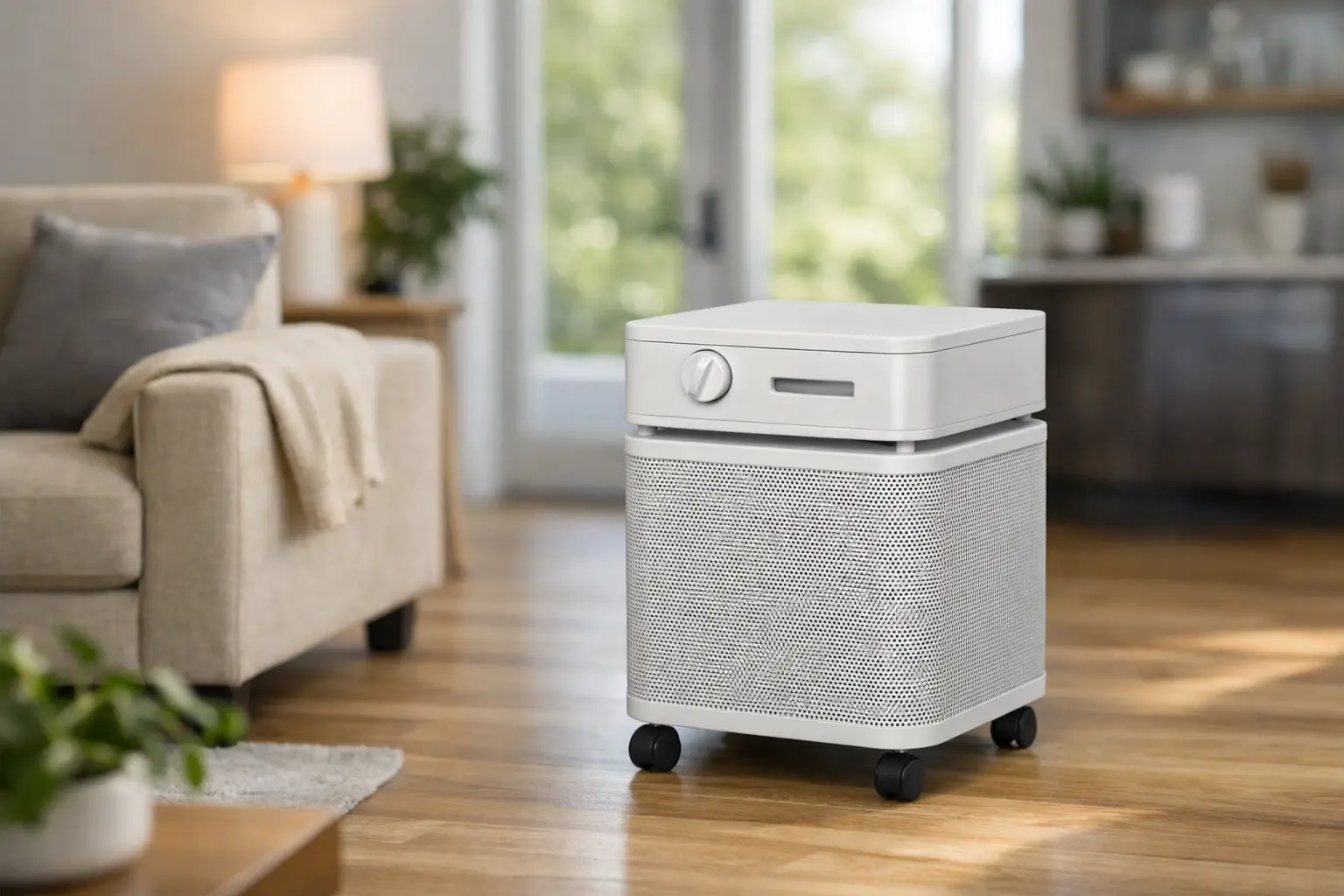
A lingering smoke smell, recurring allergy symptoms, or that stale indoor air feeling usually sends people looking for more than a basic air cleaner. The Austin Air HealthMate Plus stands out because it is built for buyers who want strong particle filtration and serious gas and odor control in one unit, especially in homes dealing with smoke, chemicals, or everyday indoor pollutants.
What makes the Austin Air HealthMate Plus different
A lot of room air purifiers are built around one main strength. Some are good at dust and pollen. Others focus more on odors. The Austin Air HealthMate Plus is popular because it is designed to address both sides of the problem at the same time.
Its filtration approach combines true HEPA filtration with a substantial activated carbon and zeolite blend. That matters for people whose concerns go beyond visible dust. If you are dealing with wildfire smoke, cooking odors, pet smells, VOCs from paint or furniture, or irritation from cleaning products, a purifier that only captures particles may not feel like enough. This model is intended to help with both airborne particulates and many gases and chemicals that can make indoor air feel harsh or unhealthy.
That makes it a practical fit for households managing allergies and asthma, but also for buyers with chemical sensitivities or homes where odor control is just as urgent as dust removal.
Who the Austin Air HealthMate Plus is best for
The best air purifier is not always the one with the longest feature list. It is the one that matches the actual problem in the room. The Austin Air HealthMate Plus tends to make the most sense for people facing a combination of concerns rather than just one.
If your main issue is pollen or ordinary dust in a small bedroom, there may be simpler options that cost less upfront. But if you are trying to reduce smoke particles, airborne allergens, and lingering odors at the same time, this unit becomes much more compelling. It is also a strong candidate for people living near traffic, in apartments where air moves between units, or in homes with remodeling fumes, new furnishings, or repeated cooking odors.
For families, it often appeals to buyers who want a trusted mechanical filtration solution without needing app controls, Wi-Fi, or a complicated learning curve. For offices and professional spaces, it can be a good fit where air quality concerns affect comfort, concentration, or customer experience.
Why gas and odor filtration matters
This is where many buyers underestimate the problem. Fine particles get most of the attention, and for good reason, but odors and chemical vapors can be just as disruptive. If someone in the home gets headaches from fragrance, notices throat irritation from cleaning products, or struggles with smoke residue after a nearby fire event, carbon capacity matters.
The Austin Air HealthMate Plus is widely considered a stronger option in this area than many lightweight consumer purifiers. That does not mean it removes every gas instantly or solves every indoor air issue on its own. Real-world results depend on the room size, source strength, ventilation conditions, and how consistently the purifier is run. Still, for buyers specifically shopping for VOC and odor reduction, this model earns attention for a reason.
Performance in everyday use
In real homes, performance usually comes down to three questions: does it move enough air, does it handle the pollutants you care about, and can you live with it day to day?
On air cleaning performance, the Austin Air HealthMate Plus has a strong reputation for handling common indoor air quality complaints in medium to large rooms. It is often used in bedrooms, living rooms, offices, and open areas where people spend hours at a time. For smoke events or allergy season, many users run it continuously so air is being cleaned throughout the day rather than only when conditions feel bad.
On filtration scope, it is better matched to broad air quality concerns than many compact units. That broad coverage is a key selling point. Buyers are not just paying for HEPA. They are paying for a system intended to address dust, pollen, dander, mold spores, smoke particles, odors, and many chemical irritants in one machine.
On day-to-day livability, there are trade-offs. This is not a tiny, design-first purifier meant to disappear into a corner. It is a heavier, more industrial-looking unit, and some buyers will find that reassuring while others may prefer a more modern appearance. Noise level also depends on the fan setting. Like most effective air cleaners, higher speeds move more air but create more sound. Many owners choose a lower setting for regular use and increase speed when air quality worsens.
A closer look at the trade-offs
A product can be highly effective and still not be right for every buyer. The Austin Air HealthMate Plus has a clear value proposition, but it helps to be honest about where it fits and where it may not.
The first trade-off is size and portability. This is not the unit people usually buy for constant moving between rooms. If you want one purifier to serve a primary living area full time, that is a better use case than expecting a lightweight grab-and-go device.
The second is price. Higher-capacity filtration and a durable build generally mean a higher upfront investment than entry-level purifiers. For some households, that cost is justified because they are trying to solve a persistent health or comfort issue, not just add a nice-to-have appliance. For others, especially those with very limited air quality concerns, it may feel like more machine than they need.
The third is feature set. Buyers who want sensors, auto mode, phone controls, or a digital display may find this model intentionally simple. That simplicity can be a plus because there is less to troubleshoot, but it is still a matter of preference.
Filter life and long-term ownership
One of the practical questions shoppers ask is whether the purifier will be affordable to maintain. That is the right question. A strong air cleaner only stays effective if owners keep up with replacement needs and use it consistently.
The Austin Air HealthMate Plus is often chosen by people who prefer a longer-term ownership mindset. Rather than replacing multiple filter stages frequently, buyers are generally looking at a heavy-duty filter design intended for extended use. Actual replacement timing depends on air quality conditions, runtime, and pollutant load. A home with pets, smoke exposure, or high VOC levels may wear through filter capacity faster than a cleaner environment.
This is why matching the purifier to the problem matters. If your air quality challenge is serious, a machine built for heavier-duty filtration can be more cost-effective over time than cycling through cheaper products that never quite solve the issue.
Is it good for allergies, asthma, smoke, and VOCs?
For allergies, the answer is often yes, especially when pollen, dust, and pet dander are part of the problem. For asthma, it can be a helpful part of an overall air quality strategy, particularly when airborne triggers are present. It is not a medical treatment, of course, but cleaner air can support a more comfortable home environment.
For smoke, this is one of the reasons people specifically seek out the Austin Air HealthMate Plus. Smoke is not just one pollutant. It includes very small particles along with odors and gases. That combination is why smoke events expose the limits of purifiers that focus only on HEPA-style particle capture.
For VOCs and household chemicals, it is a stronger candidate than many standard room purifiers because of its gas-filtration emphasis. Results still depend on source control. If a room continues releasing large amounts of chemicals from paint, flooring, adhesives, or heavy product use, air purification helps but may not fully solve the issue by itself.
When it may not be the right pick
If your priority is a compact purifier for a very small room, this may be more than you need. If your budget is tight and your concern is limited to seasonal dust, there are lower-cost ways to improve air quality. And if you want a purifier that automatically adjusts itself based on sensor readings, you may prefer a more feature-heavy design.
But if your indoor air concerns are layered - allergies plus odors, smoke plus chemical sensitivity, dust plus VOCs - this is where the Austin Air HealthMate Plus makes the strongest case for itself. It is built for shoppers who care more about filtration substance than smart-home extras.
Final buying perspective on Austin Air HealthMate Plus
The Austin Air HealthMate Plus is not trying to be trendy. It is trying to be useful for people with real indoor air problems, and that is exactly why it continues to appeal to health-focused buyers. If you need an air purifier that addresses particles, smoke, odors, and chemical irritants in a serious way, it deserves a close look. For many households, the right air cleaner is the one that makes the room feel easier to breathe in every single day.
Recent Posts
-
Airocide Air Purifier: Is It Worth It?
May 26, 2026 When a room smells clean but still leaves you with headaches, irritated sinuses, or t …23rd Oct 2026 -
Best Air Purifier for Wildfire Smoke
May 24, 2026 When wildfire smoke moves in, indoor air can turn harsh fast. If you are searc …23rd Oct 2026 -
Austin Air HealthMate Plus Review
May 22, 2026 A lingering smoke smell, recurring allergy symptoms, or that stale indoor air feeling …23rd Oct 2026