
Best Air Purifier for Wildfire Smoke
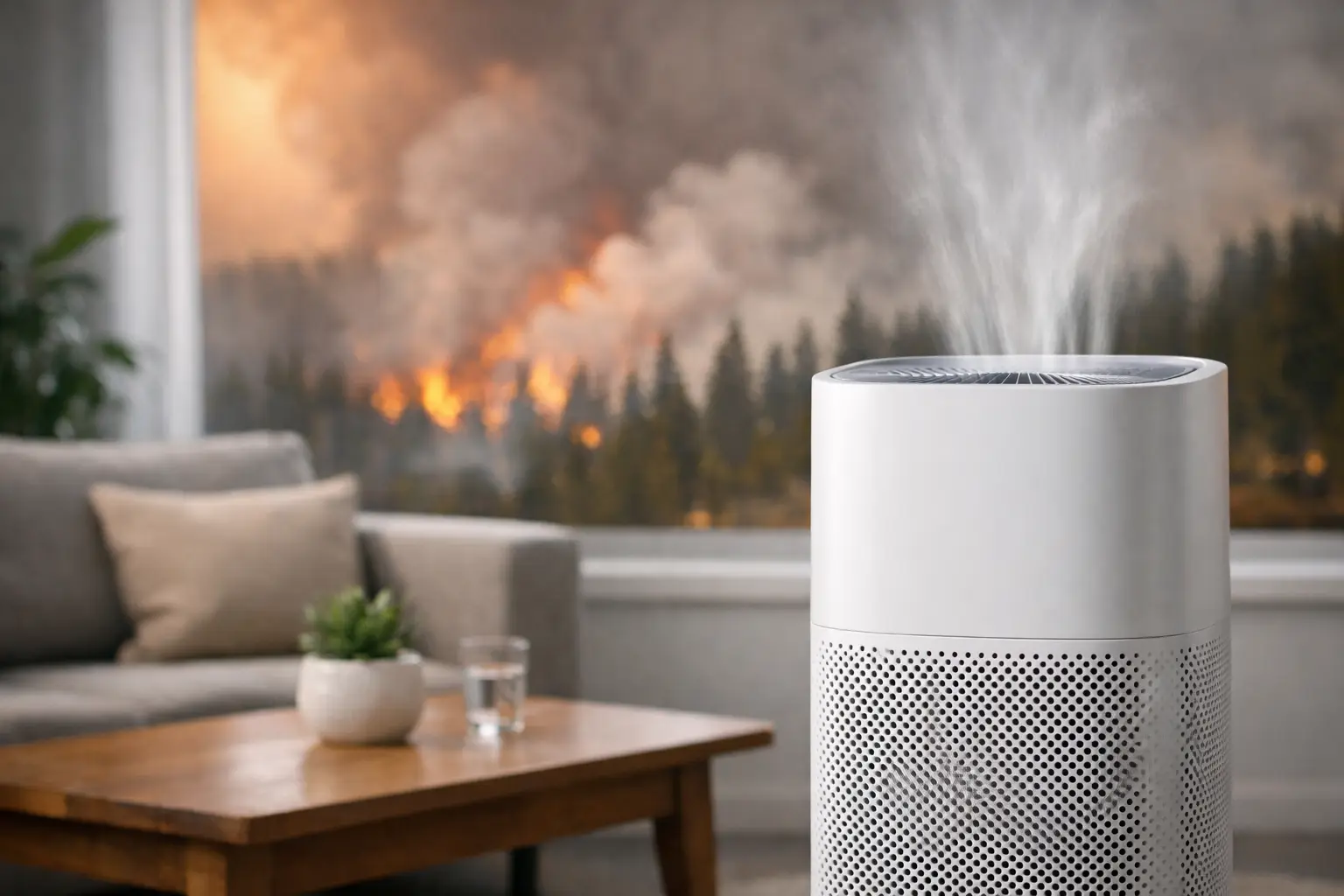
When wildfire smoke moves in, indoor air can turn harsh fast. If you are searching for the best air purifier for wildfire smoke, the right choice usually comes down to two things: true particle removal and enough airflow to clean the room you are actually in.
Smoke is not just a bad smell. It is a mix of very fine particles, gases, and volatile compounds that can irritate the eyes and throat, trigger asthma, worsen allergies, and make sleep harder. For families, older adults, and anyone with breathing issues, a smoke event changes air purifier shopping from a nice-to-have to a health decision.
What makes the best air purifier for wildfire smoke?
For wildfire conditions, the most effective units combine a true HEPA filter with a substantial activated carbon stage. HEPA handles the fine particulate matter that makes smoke dangerous. Carbon helps reduce the odor and some of the gaseous byproducts that HEPA alone cannot capture.
That combination matters because smoke is a two-part problem. Many buyers focus only on the smell, but the strongest smoke odor remover is not always the best particle remover. If your main concern is health protection, particle filtration has to come first. If your home also fills with that campfire-like odor, carbon becomes much more important.
Airflow is the other half of the equation. A purifier can have excellent filters and still disappoint if it is undersized. During wildfire season, you want a unit that can clean the room air multiple times per hour. In practical terms, that usually means choosing a model rated for a larger space than your room size, especially if ceilings are high or the space is open to other areas.
HEPA first, carbon second, size always
A true HEPA filter is the baseline for wildfire smoke. Smoke particles are extremely small, and the purifier needs to trap them efficiently as air moves through the system. This is where established room air purifiers stand apart from low-cost units that rely on loose marketing terms like HEPA-type or filter-like performance.
Activated carbon is where trade-offs start to show. Some air purifiers include only a thin carbon sheet intended mainly for light household odors. That may help a little, but it is often not enough during heavy wildfire conditions. If smoke odor is persistent, a unit with a deeper carbon bed or a more substantial gas-phase filter will generally perform better.
Then there is room size. A small purifier in a bedroom may help if the door stays closed, but it will struggle in an open living area connected to a kitchen and hallway. Buyers often underestimate this. A purifier sized too small has to run at top speed all the time, which can mean more noise, faster filter loading, and less real-world relief.
How to choose the best air purifier for wildfire smoke in your home
Start with the room where clean air matters most. For many households, that is the bedroom, because smoke exposure while sleeping can be especially uncomfortable. If budget allows only one unit, placing a properly sized purifier in the bedroom usually gives the clearest daily benefit.
Next, match the purifier to the space realistically, not optimistically. If the manufacturer says a unit covers a certain square footage under light conditions, consider stepping up if you are dealing with recurring wildfire smoke. Extra capacity helps when outdoor conditions worsen.
Filter design should be your next checkpoint. Look for true HEPA, and pay attention to the carbon stage. If you are highly sensitive to smoke odor, headaches, or chemical irritation, carbon quantity matters more than many product pages make clear. This is one reason specialty indoor air retailers tend to curate proven smoke-control models instead of treating all purifiers as interchangeable.
Noise is worth considering, but not at the expense of cleaning power. A whisper-quiet machine that cannot move enough air is not a good smoke solution. The better question is whether the purifier is tolerable on the speed you will actually use during a smoke event. Many people run their unit on a medium or high setting when air quality is poor, then lower it once conditions improve.
Features that help and features that do not matter much
A simple control panel, multiple fan speeds, and easy filter replacement are genuinely useful. During wildfire season, you do not want a complicated machine or hard-to-find replacement parts. Strong availability of replacement filter kits is part of long-term value.
Air quality sensors can be helpful, but they are not the main buying factor. Some built-in sensors react well to dust but are less informative for smoke gases and odor. An independent air quality monitor can give you a clearer picture if you want to verify whether your purifier is actually improving the room.
By contrast, app controls and smart-home extras are optional. They may be convenient, but they do not clean the air better. If budget is tight, spend your money on filtration performance, carbon capacity, and correct sizing before spending it on connectivity.
Ionizers and ozone-producing technologies require caution. Some electronic purification features are marketed aggressively, but for wildfire smoke, mechanical filtration with HEPA and carbon is the safer and more straightforward starting point for most homes. Buyers dealing with asthma, lung irritation, or chemical sensitivity often prefer to avoid adding anything that could create new indoor air concerns.
Room air purifier or whole-space strategy?
In a single room, a dedicated room air purifier is often the fastest answer. It is targeted, easy to place, and usually more cost-effective than trying to clean an entire home with one undersized unit.
For larger homes or offices, one purifier may not be enough. Wildfire smoke tends to find every gap, and larger floor plans can have uneven air quality. In those cases, a multi-room approach often works better: one stronger unit in the main living area and another in the primary bedroom or workspace.
Commercial buyers face the same issue on a bigger scale. An office, waiting room, or shared workspace may need a commercial air purification system designed for higher air volume and longer runtime. The basic rule stays the same: match filtration type and airflow to the actual environment, not the smallest possible estimate.
What to expect during a heavy smoke event
Even the best purifier has limits. If doors are opening often, windows are leaking, or your HVAC system is pulling in smoky outside air, the purifier has to work against a constant load. You can improve results by keeping windows and doors closed, sealing obvious drafts, and replacing HVAC filters on schedule.
Placement also matters. Put the purifier where air can circulate freely, not behind furniture or tucked into a corner. In a bedroom, placing it several feet from the bed often works well. In a larger room, a central location is usually better than placing it against a far wall.
Filter life will likely shorten during wildfire season. Heavy smoke can load both HEPA and carbon faster than normal household use. If performance drops, odors linger, or airflow declines, the filter may be due sooner than expected. This is not a product failure. It is often a sign that the purifier is doing its job under difficult conditions.
Common buying mistakes
The most common mistake is buying for price alone. A low-cost purifier may look appealing, but if it lacks true HEPA, has minimal carbon, or is too small for the room, it can turn into a second purchase instead of a solution.
Another mistake is focusing only on square footage without thinking about smoke severity. A unit that is adequate for everyday dust and pollen may not be the best air purifier for wildfire smoke when outdoor conditions are severe for days at a time.
The last mistake is ignoring replacement filters. A purifier is only as useful as your ability to keep it running properly. Before buying, make sure replacement filters are readily available and that the maintenance schedule is realistic for your household or business.
Which type of buyer needs the most filtration?
If someone in the home has asthma, COPD, allergies, or smoke sensitivity, it usually makes sense to buy up, not down. More airflow and better carbon filtration can make a noticeable difference in comfort. The same is true for homes with children, older adults, or pets that add extra airborne particles to the mix.
For occasional smoke in a smaller apartment, a well-sized HEPA unit with modest carbon may be enough. For seasonal wildfire regions, repeated smoke intrusion, or stronger odor control needs, a heavier-duty purifier from a recognized indoor air quality brand is often the smarter long-term choice.
A.M.I. Services focuses on this kind of problem-specific buying because smoke control is not one-size-fits-all. The best result usually comes from matching the purifier to the concern, the room, and how often the issue happens.
The best time to choose an air purifier is before the next smoke alert, not after your house already smells like a fire line. If you buy with HEPA performance, carbon capacity, and real room size in mind, you are much more likely to end up with relief you can feel the same day.
Recent Posts
-
Airocide Air Purifier: Is It Worth It?
May 26, 2026 When a room smells clean but still leaves you with headaches, irritated sinuses, or t …23rd Oct 2026 -
Best Air Purifier for Wildfire Smoke
May 24, 2026 When wildfire smoke moves in, indoor air can turn harsh fast. If you are searc …23rd Oct 2026 -
Austin Air HealthMate Plus Review
May 22, 2026 A lingering smoke smell, recurring allergy symptoms, or that stale indoor air feeling …23rd Oct 2026