
Best Commercial Air Purifier for Office Use
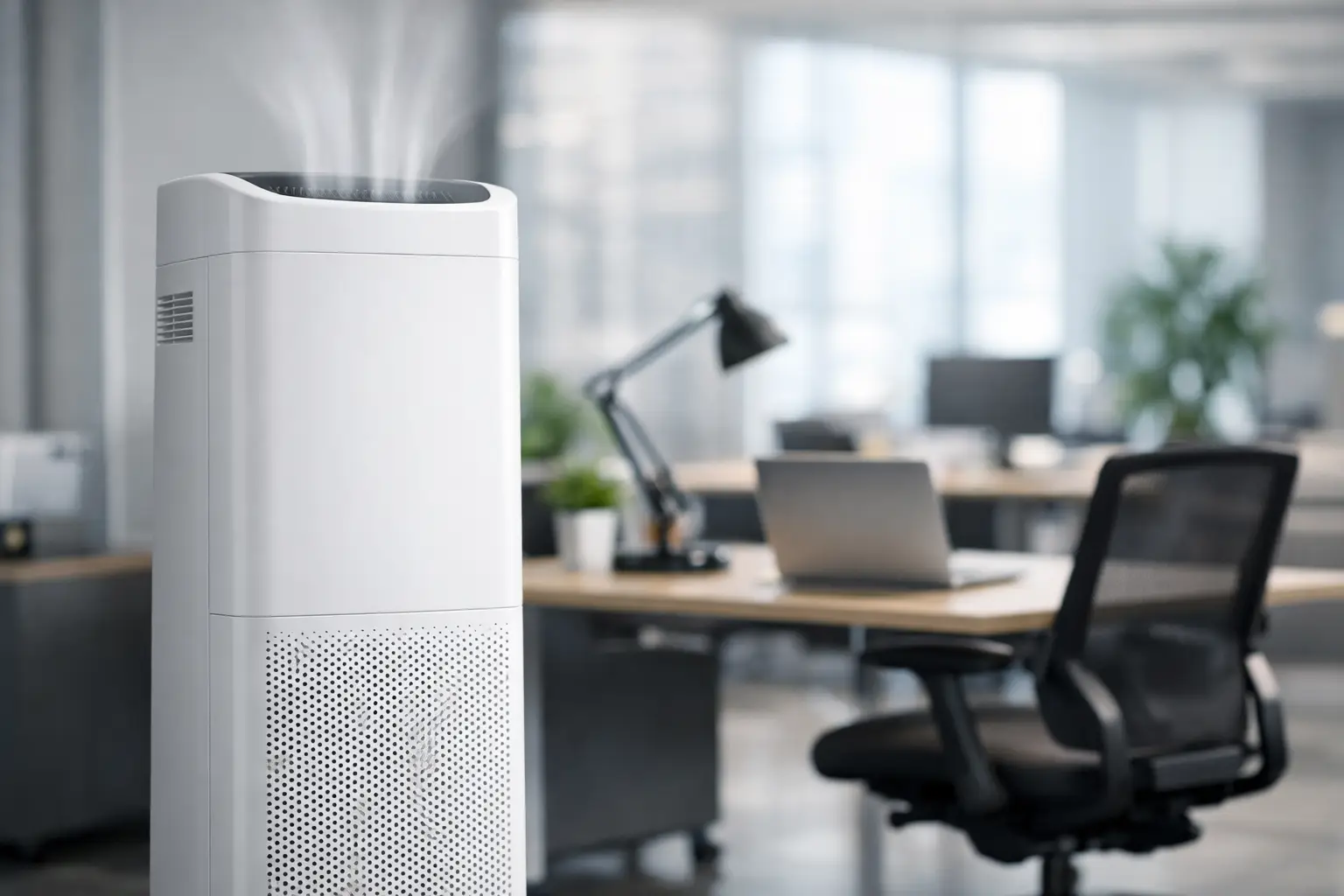
That conference room that always feels stuffy by 2 p.m. is usually telling you something. If employees mention headaches, lingering odors, dust buildup, or allergy flare-ups, a commercial air purifier for office spaces can address more than comfort - it can help create a healthier place to work.
Office air quality problems are rarely caused by one thing alone. Dust from foot traffic, outdoor pollution entering through doors, VOCs from furniture and cleaning products, and germs moving through shared spaces all add up. The right system can reduce those pollutants, but choosing one takes more than picking the biggest unit with the boldest claims.
What a commercial air purifier for office spaces should solve
An office is not a bedroom with desks. The air changes constantly as people come and go, doors open, HVAC systems cycle, and shared equipment runs all day. That means an office purifier needs to match the actual problem in the space, not just the square footage on a spec sheet.
If your main concern is dust, pollen, and fine particles, true HEPA filtration is usually the starting point. HEPA systems are designed to capture very small airborne particles that can aggravate allergies and asthma. For offices with frequent odor complaints, chemical sensitivities, or off-gassing from carpets, paint, furniture, or printers, you may also need significant activated carbon or another technology built for VOC reduction.
Some offices are more concerned about germs in high-traffic areas. In those cases, a purifier using proven air treatment methods for biological contaminants may make sense, especially in reception areas, waiting rooms, and shared meeting spaces. The key is to define the air quality problem first. A unit that is excellent for dust may be weak on odors. A system that helps with VOCs may not deliver the particle capture needed for allergy control.
Start with air changes, not just room size
One of the most common buying mistakes is choosing by advertised coverage alone. A manufacturer may say a unit covers 1,500 square feet, but that number only matters if you know how many air changes per hour it can provide in your space. In an office, more air movement generally means better cleaning performance, especially where multiple people share the same air throughout the day.
A small private office can often be handled with a room air purifier that has enough clean air delivery for the square footage. Open offices, training rooms, and larger shared areas usually need higher-capacity commercial air purification systems. If the unit is too small, it may run constantly without keeping up. If it is oversized, you may pay more upfront than needed, although a larger unit running at lower speed can sometimes be quieter and more practical.
This is where buyer intent should stay focused on the real use case. A quiet executive office, a dental front desk, and a busy administrative workspace may all require different sizing decisions even if the square footage looks similar on paper.
Filtration matters more than marketing terms
Many air cleaners sound impressive because the language is impressive. What matters more is the filter type, the amount of media used, and whether the technology fits the pollutant you want to reduce.
HEPA for dust, allergens, and airborne particles
If employees deal with allergies, visible dust, or general particle pollution, HEPA remains one of the most trusted options. A well-built HEPA unit is often the most practical choice for offices that want dependable particle removal without unnecessary complexity.
Carbon for odors and VOCs
Odor control is where many standard purifiers fall short. A thin carbon layer may help a little, but stronger odor and chemical concerns usually require more substantial activated carbon. That matters in offices with renovation materials, cleaning products, nearby traffic pollution, or a history of smoke exposure.
Specialty technologies for specific concerns
Some commercial systems use photocatalytic oxidation or other advanced methods aimed at reducing VOCs, odors, and certain biological contaminants. These can be useful, but they should be evaluated carefully. The best choice depends on whether your office problem is particles, chemicals, microbes, or a mix of all three.
Noise can make a good system fail
An office purifier that cleans well but sounds like a shop fan tends to get turned down or turned off. That is a real-world problem, especially in private offices, conference rooms, medical offices, and customer-facing spaces.
When comparing units, look beyond the highest fan setting. Ask how the purifier performs at the speed people will actually tolerate during the workday. In many offices, the best setup is a system with enough capacity to run on a medium setting most of the time. That gives you a better balance of air cleaning and day-to-day usability.
Placement also affects perceived noise. A purifier next to a reception desk may seem far louder than the same model placed across the room. If aesthetics and quiet operation matter, factor that in before buying rather than after complaints start.
Maintenance costs are part of the purchase
A commercial air purifier for office use is not a one-time expense. Filters need to be replaced, and replacement schedules can vary widely depending on the technology, office traffic, and pollution load.
This is where many buyers underestimate total cost. A unit with a lower upfront price may need more frequent filter changes. Another model may cost more initially but offer longer filter life and easier upkeep. Neither is automatically better. It depends on how often the office is occupied, how dirty the air is, and whether staff can manage simple maintenance in-house.
Filter availability matters too. Offices usually benefit from systems that have readily available replacement filter kits from established brands. That keeps long-term operation simpler and helps avoid downtime when filters reach the end of their useful life.
When one unit is enough and when it is not
For a single enclosed office, one properly sized purifier is often enough. In a larger workspace, a single unit may leave dead zones where air movement is weak. That is especially true in offices with cubicles, hallways, partitions, or multiple adjoining rooms.
In those cases, two smaller units can sometimes outperform one larger unit because they improve distribution. Reception areas, break rooms, and conference rooms may each need their own coverage rather than relying on a single purifier in a central location. It is not always about buying more equipment. It is about putting air cleaning where the pollution and occupancy actually are.
If your office already has HVAC filtration, a standalone commercial purifier can still add value. HVAC filters help, but they may not provide enough localized air cleaning for higher-risk zones or problem areas with odors, dust, or heavier occupancy.
Signs you are choosing the right office air purifier
A good fit usually becomes obvious within the first few weeks. The space feels less stale. Odors do not linger as long. Dust may collect more slowly on surfaces. Employees who are sensitive to airborne irritants may notice fewer complaints during the workday.
What you should not expect is magic. No purifier fixes moisture problems, active mold growth on surfaces, or poor housekeeping. It also does not replace proper ventilation. Air purification works best as part of a broader indoor air quality strategy that includes source control, HVAC maintenance, and filter replacement on schedule.
How to buy with confidence
The best office air purifier is the one matched to your space, your air quality concerns, and your maintenance expectations. That may mean a HEPA-heavy unit for allergens and dust, a carbon-focused model for odors and VOCs, or a commercial system that blends technologies for broader coverage.
For many buyers, the smartest move is to shop by concern first and by product second. That keeps the decision grounded in the actual problem you need to solve. A.M.I. Services takes that approach because cleaner office air is not about chasing features - it is about reducing the specific pollutants affecting your employees, customers, and workspace every day.
If your office air has become something people notice for the wrong reasons, that is usually the right time to act. A well-chosen purifier can make the room feel better, work better, and support the kind of healthy environment people appreciate without needing to talk about it constantly.
Recent Posts
-
Airocide Air Purifier: Is It Worth It?
May 26, 2026 When a room smells clean but still leaves you with headaches, irritated sinuses, or t …23rd Oct 2026 -
Best Air Purifier for Wildfire Smoke
May 24, 2026 When wildfire smoke moves in, indoor air can turn harsh fast. If you are searc …23rd Oct 2026 -
Austin Air HealthMate Plus Review
May 22, 2026 A lingering smoke smell, recurring allergy symptoms, or that stale indoor air feeling …23rd Oct 2026