
How to Choose Air Purifier for Your Space
How to Choose Air Purifier for Your Space
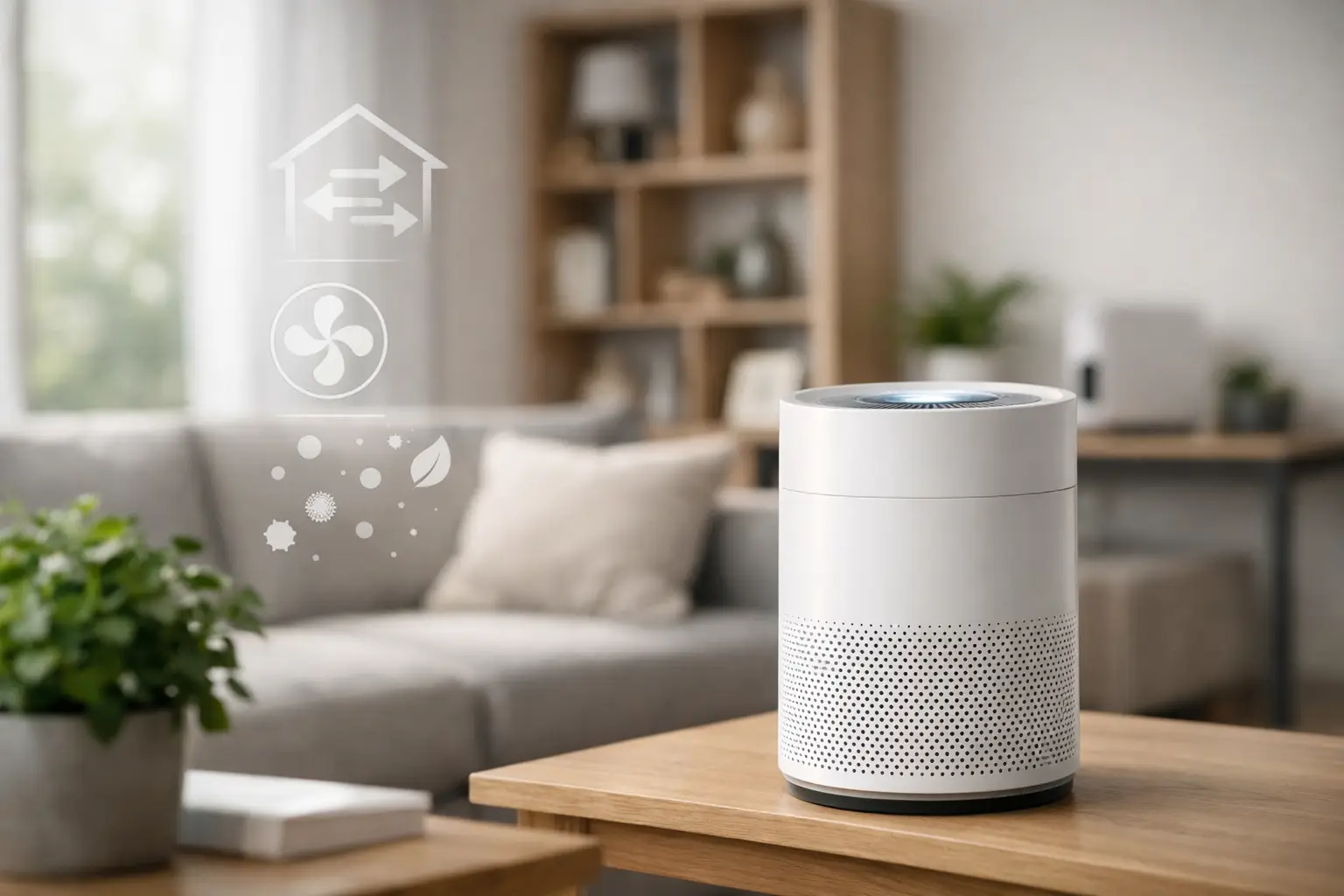
If you have ever bought an air purifier based on a star rating alone, you already know the problem - one machine can work beautifully for pollen and dust, while another is better for smoke, odors, or chemical fumes. That is why how to choose air purifier is less about finding one "best" model and more about matching the right technology to the air problem you actually need to solve.
A bedroom for allergy relief, a nursery with odor concerns, a home office with poor ventilation, and a commercial waiting room all call for different answers. The right purchase starts with a simple question: what is in the air that you want to remove?
How to choose air purifier based on your main concern
Most shoppers begin with room size, but your air quality concern should come first. Dust, pollen, pet dander, smoke, VOCs, mold particles, and everyday odors do not all respond to the same filtration method.
If allergies or asthma are the main issue, a true HEPA air purifier is usually the most practical starting point. HEPA filtration is designed to capture very small airborne particles such as pollen, dust, pet dander, and many fine irritants that can trigger symptoms. For many households, especially bedrooms and living areas, this is the baseline technology that delivers the most noticeable day-to-day improvement.
If smoke, cooking odors, wildfire haze, or chemical fumes are part of the problem, HEPA alone may not be enough. HEPA captures particles, but gases and odors require substantial activated carbon or another gas-reduction technology. This is where many buyers get disappointed. A unit may claim to help with odors, but if it contains only a thin carbon sheet, the real-world performance can be limited.
For VOCs, formaldehyde concerns, or spaces with ongoing chemical exposure from cleaning products, remodeling materials, or attached garages, you should pay closer attention to gas-removal capacity and specialized purification methods. In these cases, the right solution may involve a purifier designed specifically for chemicals and odors, not just dust control.
For germs and certain microbial concerns, some buyers look at advanced technologies such as photocatalytic systems or other specialty air treatment approaches. These can be useful in the right application, but they are not interchangeable with HEPA. If your concern includes both particles and biological contaminants, the best fit may be a unit that combines technologies rather than relying on one feature.
Room size matters more than most people think
Once you know your main concern, the next step in how to choose air purifier is sizing. An undersized purifier may run constantly and still leave the air feeling stale. An oversized model can be a smart move, especially if you want quieter operation on lower fan speeds.
Start with the actual square footage of the room where the purifier will be used most of the time. Then look beyond the marketing headline and check the recommended room coverage at a realistic fan speed. Some manufacturers advertise a large coverage number that reflects ideal conditions, not the daily setting most people will tolerate for noise.
Ceiling height also matters. A large room with high ceilings contains more air volume than a standard bedroom, so coverage can shrink fast. Open floor plans are another common issue. If the kitchen, dining, and living area are connected, sizing for one section alone may leave the purifier underpowered.
For bedrooms, many buyers prefer a model rated above the room size so it can run on a lower, quieter setting at night. For offices, waiting rooms, and shared workspaces, stronger airflow is often worth the extra investment because occupancy changes throughout the day.
CADR, airflow, and real performance
Clean Air Delivery Rate, or CADR, is a helpful metric for particle removal. It gives you a better sense of how quickly a purifier can clean the air from smoke, dust, and pollen. Higher CADR generally means faster particle reduction, but it does not tell the whole story.
CADR does not fully capture odor control, VOC removal, or long-term filter depth. A machine with strong airflow but minimal carbon may test well for particles and still do little for lingering smells or chemical sensitivity. That is why CADR is useful, but it should never be the only number guiding your choice.
Filter type is where good decisions are made
If you want a purifier that solves a real problem and not just a paper one, pay close attention to the filter system.
True HEPA is the standard most people should look for when the issue is airborne particles. It is especially useful for dust, allergens, pet dander, and fine particulate matter. Pre-filters are also important because they catch larger debris and help extend the life of the main filter.
Activated carbon is the key feature for odors, smoke, and many gaseous pollutants. The trade-off is simple: more carbon usually means better odor and gas reduction, but also a larger unit and higher replacement cost. If smoke or VOCs are a major concern, this is usually money well spent.
Some systems include permanent or washable filters. These can lower maintenance costs, but they are not always the best option for serious filtration needs. A washable layer may help with larger dust, yet dedicated replacement filters often provide more dependable fine-particle capture.
Be cautious with air purifiers that lean heavily on ionization or ozone-generating features. Some technologies can play a role in specific commercial or controlled applications, but most households shopping for cleaner indoor air want dependable filtration without adding lung irritants to the space. If someone in the home has asthma, allergies, or respiratory sensitivity, that caution matters even more.
How to choose air purifier without ignoring maintenance
A purifier is not a one-time purchase. Filters wear out, and long-term value depends on what it takes to keep the unit working properly.
Before you buy, check how often the filters need replacement and what those replacements cost over a year. A lower upfront price can be misleading if the unit uses expensive filters that need frequent changes. On the other hand, a better-built system with longer filter life may cost more at checkout but less over time.
Availability matters too. Replacement filters should be easy to identify and reorder. This is especially important for specialty units and commercial systems, where staying on schedule affects performance. If a purifier addresses a health concern you deal with every day, you do not want maintenance to become a guessing game.
Noise is another maintenance-related issue buyers often overlook. If a purifier is too loud on the setting required for effective cleaning, people tend to turn it down or off. A quieter machine that runs consistently is usually more useful than a louder one with stronger specs that no one wants to use.
Features worth paying for and features you can skip
Air quality sensors, auto mode, and filter-change indicators can be genuinely useful, especially for busy households and office settings. These features make daily use easier and help the purifier respond to changing conditions.
By contrast, app controls and extra display functions are not always necessary. They can be convenient, but they should not distract from the basics: proper sizing, strong filtration, and realistic maintenance costs. For most buyers, performance beats novelty every time.
Matching the purifier to the room
A small bedroom with seasonal allergies often benefits from a quiet HEPA unit with enough capacity to cycle the air several times per hour. A family room with pets may need stronger airflow and a better pre-filter to manage fur and dust load. A kitchen-adjacent area or smoke-affected home may need a purifier with much heavier carbon.
Commercial buyers should think in terms of occupancy, operating hours, and the nature of the air problem. An office dealing with general dust and shared indoor air has different needs than a salon, clinic, workshop, or reception area with odor or chemical concerns. In business settings, durability and replacement planning matter just as much as purification performance.
If you are not sure where to start, buy by problem rather than by appearance or gadget count. That approach is often the fastest route to a result you can actually feel. It is also the reason specialty retailers like A.M.I. Services focus on concern-based air purification instead of treating every unit as interchangeable.
The best air purifier is the one that fits your air, your room, and your tolerance for maintenance. When you choose that way, cleaner air stops being a guess and starts becoming something you notice every day.
Recent Posts
-
How to Test for Radon at Home
May 10, 2026 A radon problem rarely gives you a warning sign. No smell, no irritation, no visible …14th Oct 2026 -
Austin Air Purifier Review for Real Homes
May 8, 2026 If you are reading an Austin Air purifier review, chances are you are not shopping for …14th Oct 2026 -
Best Radon Detector for Home Buyers
May 6, 2026 A radon problem rarely comes with a warning sign. No smell, no visible residue, no obv …14th Oct 2026