
Best Air Purifier for Pet Dander
Best Air Purifier for Pet Dander
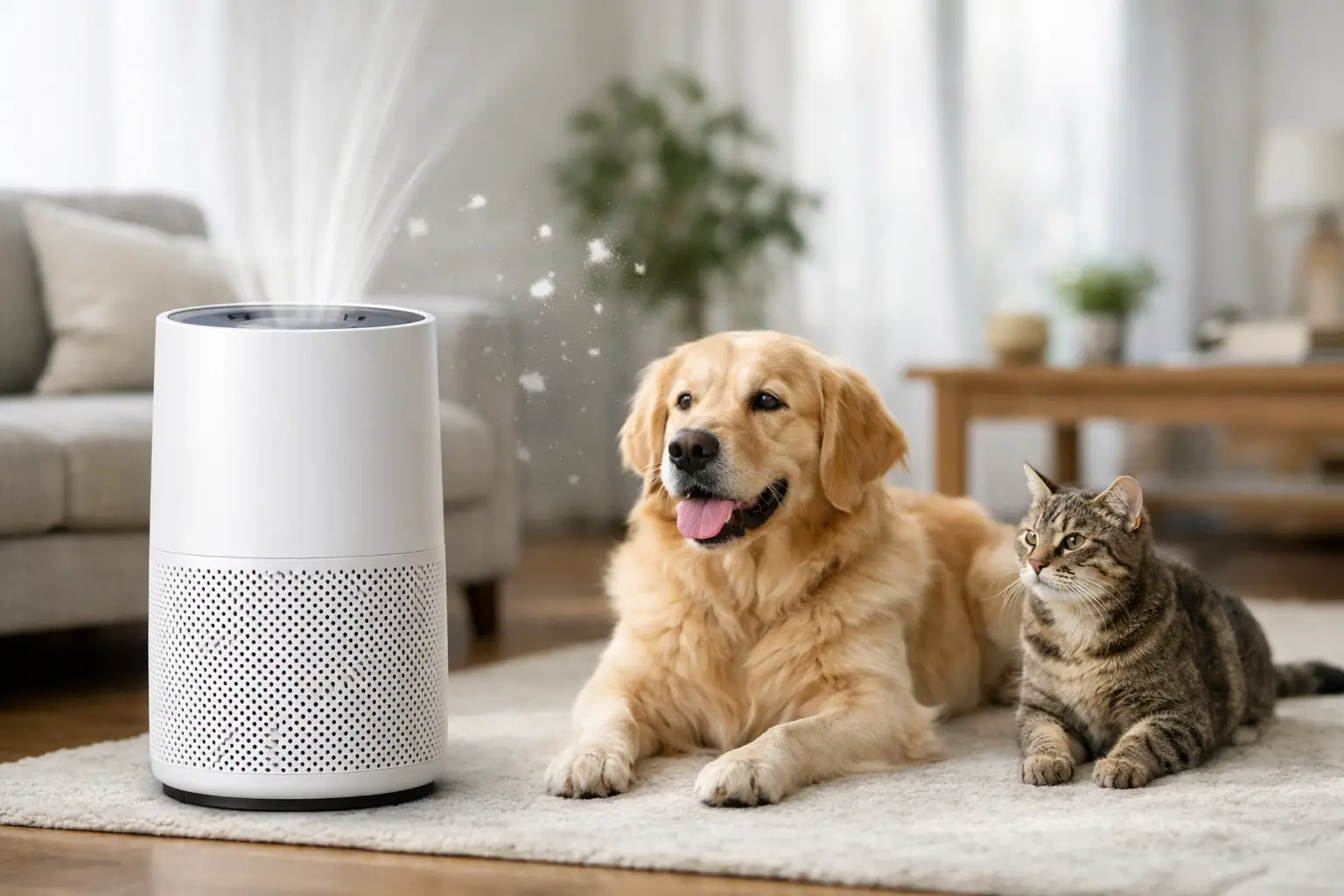
That layer of fuzz on the baseboards is annoying. The part you do not always see is what bothers most people more: pet dander floating through the air, settling into upholstery, and triggering allergy symptoms long after the dog or cat has left the room. The right air purifier for pet dander can make a meaningful difference, but only if you choose one that matches the space, the pet load, and the kind of symptoms you are trying to control.
Pet dander is not just loose fur. It is made up of microscopic skin flakes, often mixed with saliva proteins, dust, and other airborne particles that get stirred up every time a pet jumps on the couch or runs down the hall. That matters because hair alone is relatively easy to vacuum, while dander can stay suspended in the air and move from room to room through normal household activity.
What an air purifier for pet dander needs to do
If your goal is relief from sneezing, itchy eyes, congestion, or general indoor air irritation, filtration is the first thing to look at. A true HEPA filter is usually the best fit for pet dander because it is designed to capture very small airborne particles. For most households, that is the core feature that separates a serious air cleaner from a unit that mainly circulates air.
A good pet-focused system should also address the second half of the problem: odor. Dander often comes bundled with pet smells, litter box odors, and that heavier indoor air feeling that builds up in closed spaces. HEPA handles particles, but it does not remove gases and odors on its own. That is where activated carbon or other gas-phase media becomes useful.
This is why buyers sometimes end up disappointed with lower-cost units. A machine may claim to help with pets, but if it has a light pre-filter and very little carbon, it may catch some hair while doing much less for the particles and odors that actually affect comfort.
HEPA, carbon, and why both matter
For most homes, the best air purifier for pet dander combines multi-stage filtration. A pre-filter catches larger debris such as hair and lint. A true HEPA filter captures fine airborne particles, including much of the dander load. Activated carbon helps reduce pet odors and other household smells.
That combination is especially useful in homes where pets share bedrooms, living rooms, or smaller apartments. In those spaces, the issue is rarely just one thing. You may be dealing with dander, tracked-in dust, cooking odors, and seasonal allergens at the same time. A unit that only addresses one category can still help, but it may not solve the full indoor air problem.
There are also specialty technologies on the market, including photocatalytic systems and other approaches designed to reduce certain biological contaminants or VOC-related concerns. These can be a fit in some situations, but for straightforward pet dander control, HEPA remains the most dependable starting point for most buyers.
Room size is not a minor detail
One of the most common mistakes is buying too small. A purifier may look capable on paper, but if it is undersized for the room, it will struggle to keep up with a shedding dog, multiple cats, or an open-plan living area.
Match the unit to the actual room size, and be realistic. If your pet spends most of the day in a 300 square foot bedroom, choose a model rated comfortably for that size, not one that only reaches it on the highest and loudest setting. If you have high ceilings, heavy shedding, or doors that stay open, stepping up in capacity often makes sense.
For commercial settings such as veterinary waiting rooms, grooming spaces, or pet-friendly offices, capacity becomes even more important. Higher traffic and larger air volume call for systems built for heavier duty use, longer run times, and more substantial filter media.
Placement affects performance
Even a strong air cleaner will underperform if it is tucked behind furniture or placed in a dead corner with poor airflow. For the best results, put the purifier in the room where the pet spends the most time. That is often the bedroom, living room, or home office.
Keep enough clearance around the intake and output so air can move freely. If allergy symptoms are worst at night, bedroom placement usually gives the biggest payoff. Clean air where you sleep tends to matter more than clean air in a room you pass through for ten minutes a day.
In multi-pet homes, one centrally placed unit may help, but it may not be enough. Sometimes the better solution is using separate purifiers in the rooms where pets and people spend the most time rather than trying to cover the whole house with one undersized machine.
What to expect, and what not to expect
A quality air purifier can reduce airborne dander and improve overall comfort. It can help lower allergen load, cut down on fine particles, and make rooms feel fresher. For many households, that means fewer symptoms and easier breathing, especially when the unit runs continuously.
What it will not do is eliminate every source of pet allergens. Dander also settles on furniture, bedding, curtains, and carpets. If the dog sleeps on the bed or the cat owns the upholstered chair in the corner, those surfaces will still need regular cleaning.
That is why the best results usually come from a combined approach: air purification, vacuuming with a good sealed system, brushing pets regularly when appropriate, washing pet bedding, and changing HVAC filters on schedule. Air cleaning is a major part of the solution, not the whole solution by itself.
Filter replacement is part of the real cost
When comparing units, do not stop at the purchase price. Filter life and replacement cost affect long-term value. A cheaper machine with frequent filter changes may cost more over time than a better-built purifier with longer-lasting media.
This matters even more in pet homes because filters can load faster. Hair, dust, and dander put steady demand on the system. If you have multiple pets or a high-shedding breed, expect pre-filters to need attention sooner and HEPA or carbon filters to work harder than they would in a lower-particle home.
A dependable product should make replacement schedules clear and replacement filters easy to find. That is one reason specialty retailers such as A.M.I. Services are useful for buyers who want support beyond the initial sale. Ongoing maintenance is not a small detail when cleaner air is the reason you bought the machine in the first place.
Noise, speed settings, and daily use
An air purifier only helps when it is running. If it is too loud on the setting needed for the room, many people end up turning it down or off. That reduces performance right when the space needs more filtration.
Look for a model that can move enough air at a tolerable noise level for daily life. In bedrooms, this is especially important. A unit with multiple fan speeds gives you flexibility - higher during the day, lower overnight, and stronger again after vacuuming, grooming, or when pets have been active indoors.
Some buyers assume silent operation should be the goal. In practice, there is usually a trade-off. More airflow often means more sound. The better question is whether the purifier can deliver effective filtration at a noise level you will actually live with.
Choosing the best air purifier for pet dander in your home
The best air purifier for pet dander is the one that fits your actual problem, not just the product label. If allergies are the main concern, prioritize true HEPA and proper room coverage. If pet odors are part of the issue, make sure the unit has meaningful carbon media, not just a token insert. If you have multiple pets, large rooms, or constant shedding, size up instead of trying to get by with the minimum.
It also helps to think room by room. A small purifier in a large family room may disappoint, while a correctly sized unit in the bedroom may noticeably improve sleep and morning symptoms. Buyers with asthma, stronger sensitivities, or heavier indoor air concerns may benefit from more substantial systems rather than entry-level models.
The good news is that pet ownership and cleaner indoor air do not have to be in conflict. With the right filtration strategy, you can keep the dog, keep the cat, and make the air feel more manageable for everyone in the home. Start with the room that affects you most, choose a purifier built for particles and odors, and let performance guide the next step.
Recent Posts
-
How to Test for Radon at Home
May 10, 2026 A radon problem rarely gives you a warning sign. No smell, no irritation, no visible …14th Oct 2026 -
Austin Air Purifier Review for Real Homes
May 8, 2026 If you are reading an Austin Air purifier review, chances are you are not shopping for …14th Oct 2026 -
Best Radon Detector for Home Buyers
May 6, 2026 A radon problem rarely comes with a warning sign. No smell, no visible residue, no obv …14th Oct 2026