
Best Indoor Air Quality Monitor Buying Guide
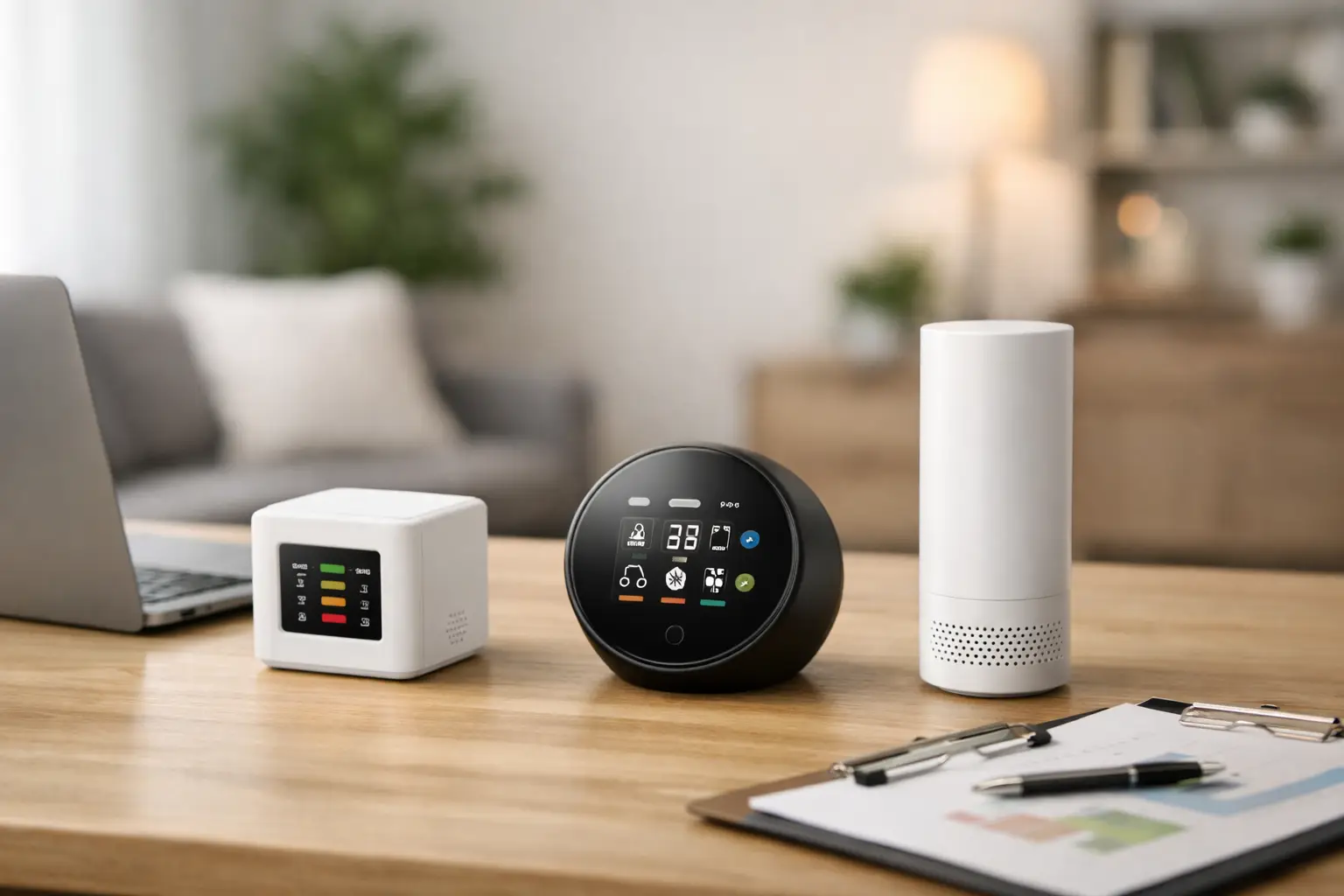
A monitor that only gives you a pretty number is not much help at 2 a.m. when your child is coughing, your bedroom feels stuffy, or a recent paint job leaves a chemical smell that will not go away. The best indoor air quality monitor should tell you what is changing in your air, why it matters, and whether you need ventilation, filtration, humidity control, or a closer look at a specific pollutant.
That is where many buyers get stuck. Some monitors focus on particles. Others emphasize VOCs, carbon dioxide, or humidity. A few try to do everything, but not all multi-sensor units are equally useful. If you are shopping for your home, apartment, nursery, or office, the right choice depends less on flashy app features and more on the problem you are trying to solve.
What the best indoor air quality monitor should actually measure
If your main concern is allergies, asthma, dust, smoke, or wildfire haze, particle measurement matters most. Look for a monitor that tracks particulate matter, usually PM2.5 and sometimes PM10. PM2.5 is especially important because these fine particles can stay suspended in the air and reach deep into the lungs. In practical terms, this is the reading that helps you tell whether cooking, candles, pet dander, cleaning, or outdoor smoke is affecting your indoor air.
If odors, chemical sensitivity, new furniture, paint, flooring, or household products are your concern, VOC tracking becomes more useful. VOC sensors do not usually identify each chemical by name, but they can show when total volatile organic compounds rise. That makes them helpful for spotting trends and comparing rooms, even if they are not a lab instrument.
Carbon dioxide is another valuable measurement, especially in bedrooms, classrooms, and offices. CO2 is not the same thing as carbon monoxide, and the two should not be confused. CO2 readings are useful because they show how well a space is ventilated. If numbers climb overnight in a closed bedroom or during work hours in a conference room, that often points to stale air and the need for better fresh air exchange.
Humidity and temperature should not be treated as bonus features. They are central to comfort and air quality. High humidity can support mold growth and dust mites. Low humidity can aggravate dry airways, skin irritation, and static. A monitor that helps you keep indoor humidity in a healthier range can prevent a lot of trouble before it turns into a bigger problem.
Best indoor air quality monitor features for real-world use
The best indoor air quality monitor is not necessarily the one with the most sensors. It is the one that gives you dependable readings you can act on. Accuracy, consistency, and clarity matter more than a long spec sheet.
A clear display is one of the first things to look for. If you have to open an app every time you want to check your air, you are less likely to use the device. A good screen lets you quickly see whether the room is fine or whether something just spiked. Color-coded indicators can help, but they should support the data rather than replace it.
Trend history is just as important as the current reading. Indoor air problems often happen in patterns. Maybe PM2.5 rises every time the oven is used. Maybe VOCs climb after cleaning day. Maybe CO2 builds up every night in one bedroom. Without a history graph or stored data, those patterns are easy to miss.
Alerts are helpful when they are tied to meaningful thresholds. A monitor that notifies you when particle levels spike can help you respond faster by turning on an air purifier, opening windows when appropriate, or changing your activity. For families dealing with asthma, smoke, or chemical sensitivity, that kind of quick feedback can be genuinely useful.
Placement flexibility also matters. Some buyers want one monitor in a main living area. Others need separate units for a nursery, basement, bedroom, or office. If you suspect mold risk in a damp lower level, humidity tracking there may matter more than readings in the kitchen. If wildfire smoke is your issue, a monitor near the room where you spend the most time makes more sense.
Matching the monitor to your air quality problem
This is where buying gets easier. Instead of asking which monitor has the longest feature list, ask what problem you need to verify or manage.
For allergies and asthma, prioritize particulate monitoring. You want to know whether dust, pet activity, smoke, or outdoor air intrusion is raising particle levels indoors. In that case, PM2.5 data often gives you the clearest picture of whether your air purifier is keeping up.
For odors, off-gassing, and chemical concerns, look for solid VOC tracking along with temperature and humidity. VOC readings can help you tell whether a room is improving after ventilation or whether a source is still active. This is especially useful after renovations, new carpeting, fresh paint, or the introduction of strong household products.
For sleep quality and stuffy bedrooms, carbon dioxide monitoring is often the missing piece. Many people assume their bedroom air is clean because it looks clean. Then a monitor shows CO2 levels climbing overnight due to limited ventilation. That does not always mean something is wrong with the home. It often means the room needs more air exchange.
For mold concern, humidity trends are essential. A monitor cannot confirm mold growth on its own, but it can show when moisture conditions make growth more likely. If one area of the home repeatedly stays too humid, that is a signal to investigate further.
For offices and small businesses, the best choice is often a monitor that balances PM2.5, CO2, humidity, and trend reporting. Employee comfort complaints, stale conference rooms, and seasonal illness concerns are easier to address when you can actually see what the air is doing.
What a monitor can and cannot do
A good monitor gives you visibility. It does not fix the air by itself. That is an important distinction.
If your PM2.5 is high, the solution may be a room air purifier with proper filtration, source control, or changes to ventilation. If VOCs are elevated, the answer may be removing the source, increasing fresh air, or using purification technology designed for chemical reduction. If humidity is the problem, you may need a dehumidifier, HVAC adjustment, or moisture repair.
It also helps to know that no consumer monitor replaces dedicated life-safety devices. You still need smoke alarms and carbon monoxide alarms where appropriate. And if you are concerned about radon, you need radon-specific testing or monitoring equipment. General indoor air quality monitors do not cover every pollutant.
Common mistakes buyers make
One common mistake is buying based on app design instead of sensor usefulness. A polished app is nice, but it should not outweigh the basics. If a monitor does not track the pollutant you actually care about, it will not solve your problem.
Another mistake is relying on one reading without watching the trend. Indoor air changes throughout the day. Cooking, cleaning, showers, occupancy, open windows, HVAC cycles, and outdoor conditions all affect the numbers. A single snapshot can be misleading.
Some buyers also place the monitor in the wrong spot. Next to an open window, directly beside a purifier, or too close to a stove can skew what you see. In most cases, place it where people actually breathe and spend time, away from obvious direct sources unless you are intentionally testing that source.
How to choose with confidence
If you want the simplest path to the best indoor air quality monitor, start with your main concern and buy around that. For particle-related concerns, choose a monitor known for useful PM tracking. For ventilation and occupancy issues, prioritize CO2. For chemical sensitivity or recent renovation concerns, make VOC tracking a must. Then add humidity and temperature because they improve the value of almost any monitor.
For many households, a balanced monitor that covers PM2.5, VOCs, CO2, humidity, and temperature will be the most useful long-term choice. For buyers with a specific health or building concern, a more focused device may be better. It depends on whether you are looking for broad awareness or targeted problem-solving.
A.M.I. Services serves many customers who are not just browsing for gadgets. They are trying to understand symptoms, protect family members, verify whether a purifier is working, or make a bedroom, nursery, or office feel safer. In those cases, the right monitor is more than a convenience. It becomes a decision-making tool.
The best results usually come when you treat monitoring as the first step, not the last one. Once you can see the pattern, it is much easier to choose the next move with confidence.
Recent Posts
-
How to Test for Radon at Home
May 10, 2026 A radon problem rarely gives you a warning sign. No smell, no irritation, no visible …14th Oct 2026 -
Austin Air Purifier Review for Real Homes
May 8, 2026 If you are reading an Austin Air purifier review, chances are you are not shopping for …14th Oct 2026 -
Best Radon Detector for Home Buyers
May 6, 2026 A radon problem rarely comes with a warning sign. No smell, no visible residue, no obv …14th Oct 2026