
Best Air Purifier for Dust: What to Buy
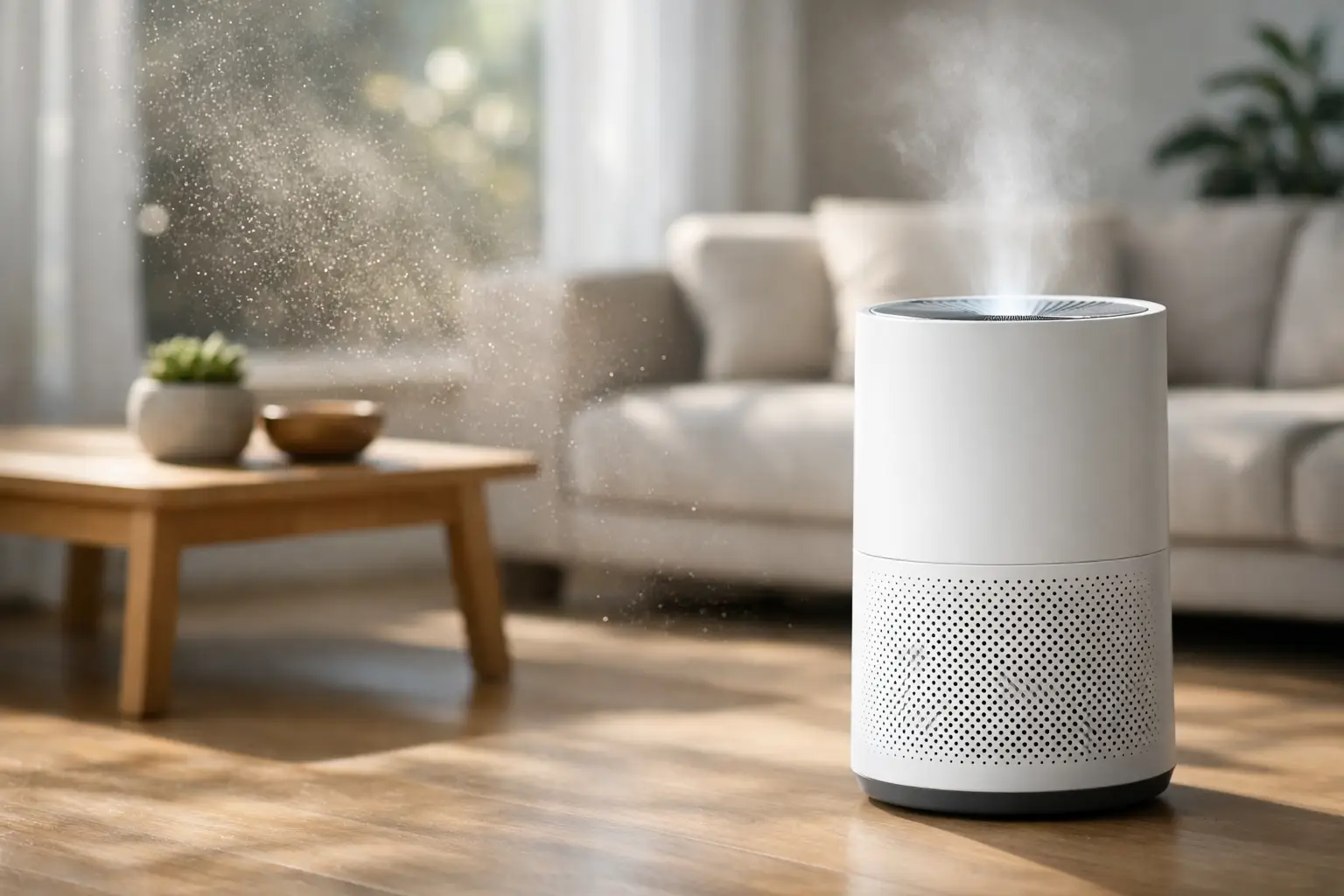
Dust has a way of showing up everywhere - on nightstands, around vents, across hardwood floors, and worst of all, in the air you breathe. If you are shopping for the best air purifier for dust, the goal is not just to reduce what settles on furniture. It is to remove the fine airborne particles that can irritate allergies, aggravate asthma, and make a room feel stuffy even when it looks clean.
What actually makes an air purifier good for dust?
For dust control, the most important feature is true HEPA filtration. A true HEPA filter is designed to capture very small airborne particles, including the fine dust that tends to stay suspended rather than dropping quickly to the floor. That matters because the dust you see is only part of the problem. The particles that trigger sneezing, dry throat, and nighttime congestion are often the ones you cannot see.
Airflow matters just as much as filtration. A purifier can have an excellent filter, but if it does not move enough air for the room, it will not make a meaningful difference. This is why room size ratings deserve real attention. In bedrooms, home offices, and living areas, an undersized unit often runs constantly without keeping up. For heavier dust loads, a machine with stronger air delivery and the ability to clean the room air multiple times per hour is usually the better choice.
Filter design also affects long-term performance. Some units rely on a thin pre-filter and a smaller HEPA stage, while others use larger, deeper filter assemblies that can handle more particulate buildup before performance starts to drop. If your home has pets, older carpeting, frequent foot traffic, or forced-air heating and cooling, that added filter capacity can be worth paying for.
Best air purifier for dust buyers should look for first
The safest starting point is a true HEPA air purifier with a solid pre-filter. The pre-filter catches larger particles like lint, hair, and visible dust, helping the HEPA filter focus on finer debris. This can also extend filter life, which matters because replacement costs are part of the real ownership cost.
Activated carbon is helpful, but mainly for odors and some gases rather than dust itself. If dust is your primary issue, HEPA performance should lead the decision. Carbon is a bonus if you also deal with cooking smells, pet odors, or light smoke.
A sealed system is another detail worth noticing. In a better-designed purifier, the air is forced through the filter media rather than leaking around it. That sounds minor, but it can affect how much of the captured dust actually stays captured.
Noise level is the practical factor many people overlook. A purifier only helps if you keep it running. For bedrooms, nurseries, and offices, a unit that performs well at a tolerable sound level is often a smarter buy than one that is powerful only on its highest, loudest setting.
HEPA vs other technologies for dust
If your main concern is household dust, HEPA remains the most proven and straightforward option. It directly addresses airborne particulate matter, which is exactly what dust is. That is why Top Rated HEPA air cleaners are usually the first recommendation for allergy-focused shoppers.
Other technologies can still have a role, but they solve different problems. Photocatalytic oxidation and similar systems may be chosen for VOCs, odors, or certain biological contaminants. Ionizers are sometimes marketed for particle reduction, but some buyers prefer to avoid ozone-related concerns and stick with mechanical filtration. If dust is the problem you want solved first, HEPA is the clearest path.
That does not mean every HEPA purifier is the same. Build quality, fan strength, filter depth, and room match all change the result. Two products can both say HEPA and still perform very differently in a real home.
Matching the purifier to your room and dust level
A small purifier in a large living room rarely satisfies the person who buys it. Room size should be treated as a minimum requirement, not a rough suggestion. If your space is close to the top end of the unit's rating, or if the room has high ceilings, open doorways, or frequent activity, sizing up is usually the better move.
Bedrooms are often where people notice dust symptoms most. You spend hours there with the door closed, and bedding can hold and release particles overnight. For that reason, many households see the biggest benefit by starting with the bedroom, even before buying a unit for the main living area.
For offices, waiting rooms, and other commercial spaces, the same logic applies but the stakes are higher. More occupants mean more particle generation from clothing fibers, foot traffic, paper dust, and HVAC movement. A commercial buyer should focus on coverage, duty cycle, and filter replacement planning instead of choosing strictly on price.
When a stronger air purifier is worth it
Sometimes the best air purifier for dust is not the smallest or cheapest model that technically fits the room. It is the one with enough power and filter capacity to stay effective under daily use. This is especially true in homes with pets, homes near construction or busy roads, and properties with older ductwork that seems to reintroduce dust constantly.
A stronger unit can also be the better value over time. If it cleans efficiently at medium speed instead of needing to run at full blast all day, you may get a better balance of comfort, sound, and performance. Buyers who are sensitive to poor sleep, sinus irritation, or morning congestion often appreciate that difference right away.
Brands known for serious filtration, including Austin Air, are often considered by shoppers who want a more heavy-duty approach. That kind of unit may take up more space and cost more upfront, but the trade-off can be worthwhile for households dealing with ongoing allergy or asthma concerns.
A few trade-offs to keep in mind
Bigger is not always better if the purifier is going into a very small room and the highest setting is too loud to live with. In that case, a well-matched unit designed for quiet overnight use may be the smarter fit. Likewise, if your main complaint is visible dust on surfaces, remember that an air purifier helps most with airborne dust. It will not replace vacuuming, mopping, or source control.
Maintenance is another reality check. Even the best machine cannot help if the filter is overdue for replacement. Some buyers prefer models with longer filter life because the upkeep is simpler and easier to budget. Others do not mind a more frequent replacement cycle if the initial machine cost is lower. Neither approach is wrong, but it should be part of the decision.
How to get better dust results after you buy
Placement matters more than many people expect. Put the purifier where air can circulate freely, not wedged behind furniture or blocked by curtains. In bedrooms, running the unit several feet from the bed often works well. In living rooms, placing it closer to the center of activity usually beats hiding it in a corner.
Keep doors and windows in mind too. If outdoor air regularly brings in pollen, dry soil, or traffic particulates, leaving windows open for long periods can work against your purifier. The same goes for dirty HVAC filters. An air purifier can help a room significantly, but if your central system is pushing dust through the house, it should be addressed as part of the bigger picture.
For households that want a more complete strategy, pairing a purifier with an indoor air quality monitor can be useful. It gives you a clearer sense of whether particle levels improve during cleaning, cooking, sleeping, or heavy HVAC use. For problem-aware buyers, that kind of feedback helps turn guesswork into a more informed purchase and maintenance plan.
So what is the best air purifier for dust?
The best choice is usually a true HEPA purifier that is properly sized for your room, has a strong pre-filter, and is quiet enough to run consistently. If you have severe allergies, pets, or persistent dust from vents and flooring, it often makes sense to choose a higher-capacity model rather than shopping to the minimum spec.
If you are buying for a bedroom, prioritize quiet operation and room fit. If you are buying for a larger home area or small business, prioritize airflow, filter depth, and replacement planning. And if your dust problem is tied to broader indoor air concerns like odors, smoke, or chemical sensitivity, you may want a purifier that adds substantial carbon filtration as well.
A.M.I. Services focuses on this kind of practical product matching because the right purifier should solve a real problem, not just look good on a product page. When you choose based on dust load, room size, and filter design, you are much more likely to end up with cleaner air you can actually feel day to day.
The right air purifier will not make cleaning obsolete, but it can make your home more comfortable, your sleep less interrupted, and your indoor air noticeably easier to live with.
Recent Posts
-
How to Test for Radon at Home
May 10, 2026 A radon problem rarely gives you a warning sign. No smell, no irritation, no visible …14th Oct 2026 -
Austin Air Purifier Review for Real Homes
May 8, 2026 If you are reading an Austin Air purifier review, chances are you are not shopping for …14th Oct 2026 -
Best Radon Detector for Home Buyers
May 6, 2026 A radon problem rarely comes with a warning sign. No smell, no visible residue, no obv …14th Oct 2026