
HEPA vs Ionic Air Purifier: Which Fits?
HEPA vs Ionic Air Purifier: Which Fits?
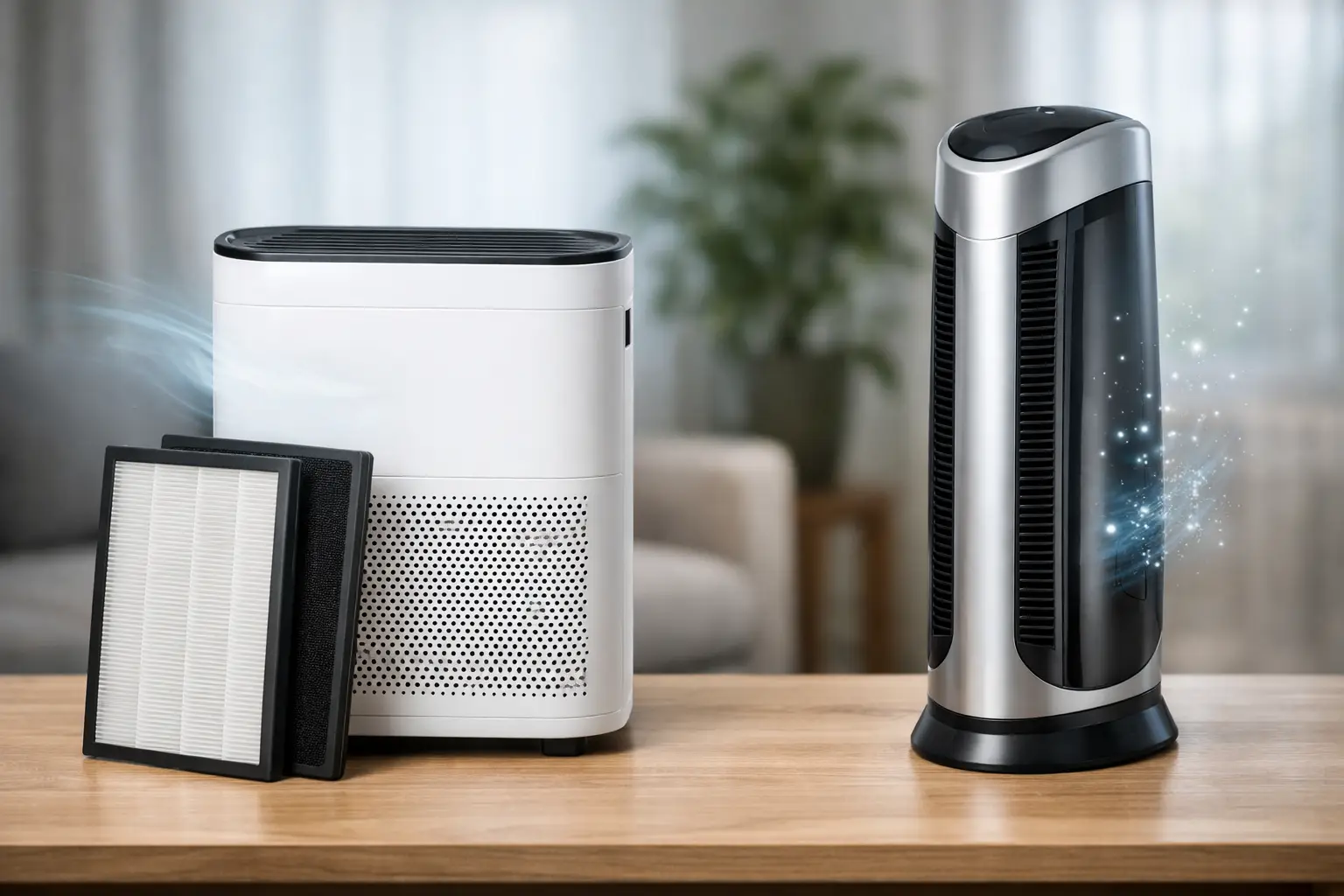
If you are comparing a hepa vs ionic air purifier, you are probably not shopping for a gadget. You are trying to solve a real problem - dust that keeps settling, smoke that lingers, allergies that flare up at night, or odors that make a room feel stale. The right choice depends less on marketing claims and more on what is actually in your air, how sensitive the people in the space are, and how much performance you expect day after day.
For most homes and offices, HEPA is the safer and more dependable pick. Ionic units can help in some situations, especially when quiet operation and low maintenance are the priority, but they come with trade-offs that matter if your goal is serious particle removal. That difference is where many buyers either get lasting relief or end up disappointed.
HEPA vs ionic air purifier: what is the difference?
A HEPA air purifier works by pulling air through a dense mechanical filter that captures airborne particles. That includes common concerns such as dust, pollen, pet dander, mold spores, and many fine particles that can aggravate allergies and asthma. In plain terms, HEPA is a trap. Contaminants enter the unit, get caught in the filter media, and stay there until the filter is replaced.
An ionic air purifier works differently. Instead of relying mainly on a dense particle filter, it releases charged ions into the air. Those ions attach to airborne particles and change their electrical charge, causing them to clump together and drop from the air or stick to nearby surfaces. Some designs include collector plates to attract those particles inside the unit, while others allow them to settle on floors, walls, shelves, and furniture.
That distinction matters. A HEPA unit removes particles from circulation and contains them. An ionic unit may reduce what is floating in the air, but in many cases it shifts particles out of the breathing zone and onto room surfaces that still need to be cleaned.
Why HEPA is usually the better choice for health concerns
If your main concern is allergies, asthma, dust, or wildfire smoke, HEPA technology generally gives you a more reliable result. It is widely used because it addresses the problem in a direct way. Air moves through the purifier, particles are captured, and cleaner air is sent back into the room.
This is especially important for people who are sensitive to fine particles. Pollen and visible dust are only part of the picture. Smaller airborne particles can affect comfort and respiratory symptoms even when the room looks clean. A true HEPA system is built to deal with that type of pollutant load in a measurable way.
There is also a practical side. If you want an air cleaner for a bedroom, nursery, office, or family room and you need confidence that it is doing real work around the clock, HEPA is easier to trust. You can inspect and replace the filter. You can match the unit to room size. You can focus on air changes, filtration stages, and long-term operating cost instead of relying on less visible performance claims.
For shoppers who buy by concern, not just by product category, HEPA is often the first place to look because it aligns well with common indoor air complaints.
Where ionic purifiers can still make sense
That does not mean ionic technology has no value. Some people choose ionic units because they are quiet, compact, and sometimes lower maintenance than filter-heavy systems. If someone wants basic particle reduction in a smaller space and is comfortable wiping down nearby surfaces often, an ionic unit may feel convenient.
Some electronic air cleaners that use ionization with collection plates can also appeal to buyers who do not want to replace filters as frequently. In commercial or niche applications, that can be part of the decision.
But convenience is not the same as whole-room purification performance. If you are dealing with ongoing allergy symptoms, smoke intrusion, or a room that sees heavy dust and dander, an ionic unit is more likely to feel like a partial fix than a complete one.
HEPA vs ionic air purifier for dust, smoke, and odors
Dust is where the difference becomes easy to understand. A HEPA purifier captures dust particles in the filter. An ionic purifier may cause them to settle out of the air, but they do not disappear. You may notice less floating dust, yet more buildup on surfaces.
For smoke, HEPA again has the stronger case when paired with substantial carbon filtration. Smoke is not just one thing. It includes fine particles and gases. HEPA handles the particles well, but odors and chemical components usually require activated carbon or other gas-control media. That is why many high-quality air cleaners combine HEPA filtration with a serious carbon stage.
Ionic purifiers can help reduce some airborne smoke particles, but they are usually less effective as a complete smoke solution, especially when odor is part of the problem. If wildfire smoke, tobacco smoke, or cooking smoke is a major concern, a HEPA unit with meaningful carbon filtration is typically the more practical buy.
Odors are where buyers sometimes get confused. Neither HEPA nor ionization alone is the full answer for strong odors and VOC-related concerns. HEPA does not remove gases by itself. Ionic technology is also not a dependable substitute for dedicated gas and odor control. If odors from pets, chemicals, cleaning products, or smoke are driving the purchase, it makes sense to look beyond the HEPA vs ionic air purifier debate and focus on systems designed with carbon or other odor-targeted media.
The ozone issue buyers should not ignore
One reason many health-focused shoppers lean away from ionic products is ozone. Some ionic air purifiers and ozone-generating devices can produce ozone as part of their operation. Even when the amount is marketed as low, that can still be a concern for people with asthma, respiratory sensitivity, or chemical sensitivities.
This is not a small detail. Many people shop for air purification because the air already feels irritating. Adding a technology that may create another respiratory trigger is not a smart trade for every household. That is especially true in bedrooms, children’s rooms, and occupied office spaces where people spend long hours.
Not every electronic air cleaner behaves the same way, so it is worth reading product specifications carefully. Still, if your goal is straightforward air cleaning with fewer question marks, HEPA remains the more reassuring route.
What to consider before you buy
The best purifier is the one that matches your actual problem. If the issue is seasonal allergies, pet dander, mold spores, or fine dust, HEPA should be at the top of the list. If the issue is smoke or persistent odors, look for a system that combines HEPA with substantial carbon filtration rather than assuming any purifier will handle both.
Room size matters just as much as technology. An undersized HEPA unit will underperform, no matter how good the filter is. Noise matters too, because the best machine is the one you can run consistently. Maintenance should also be part of the decision. HEPA systems require replacement filters, while ionic units may require regular plate cleaning or more surface cleaning around the room.
This is also where trusted specialty retailers have an advantage. A.M.I. Services focuses on matching air cleaning solutions to concerns like allergies, smoke, mold, and chemical sensitivity, which is a better buying path than choosing by price alone.
Which should you choose?
For most buyers, the answer is HEPA. It is the better fit for people who want proven particle capture, clearer performance expectations, and stronger support for common health concerns. It works especially well for bedrooms, living spaces, offices, and other areas where cleaner air needs to be more than a hopeful claim.
An ionic purifier may be worth considering if your priorities are quiet operation, a simple setup, and you understand the limitations. It can play a role in light-duty air cleaning, but it is not usually the first recommendation for serious allergy control, asthma support, or smoke-heavy conditions.
The simplest way to think about it is this: if you want particles removed from the air, HEPA is usually the more dependable tool. If you are comfortable with a technology that may reduce airborne particles by making them settle or collect differently, ionic may be acceptable in a narrower set of cases.
Cleaner indoor air starts with choosing the right solution for the problem in front of you, not the one with the flashiest claim on the box.
Recent Posts
-
How to Test for Radon at Home
May 10, 2026 A radon problem rarely gives you a warning sign. No smell, no irritation, no visible …14th Oct 2026 -
Austin Air Purifier Review for Real Homes
May 8, 2026 If you are reading an Austin Air purifier review, chances are you are not shopping for …14th Oct 2026 -
Best Radon Detector for Home Buyers
May 6, 2026 A radon problem rarely comes with a warning sign. No smell, no visible residue, no obv …14th Oct 2026