
Choosing an Air Purifier for Classroom Germs
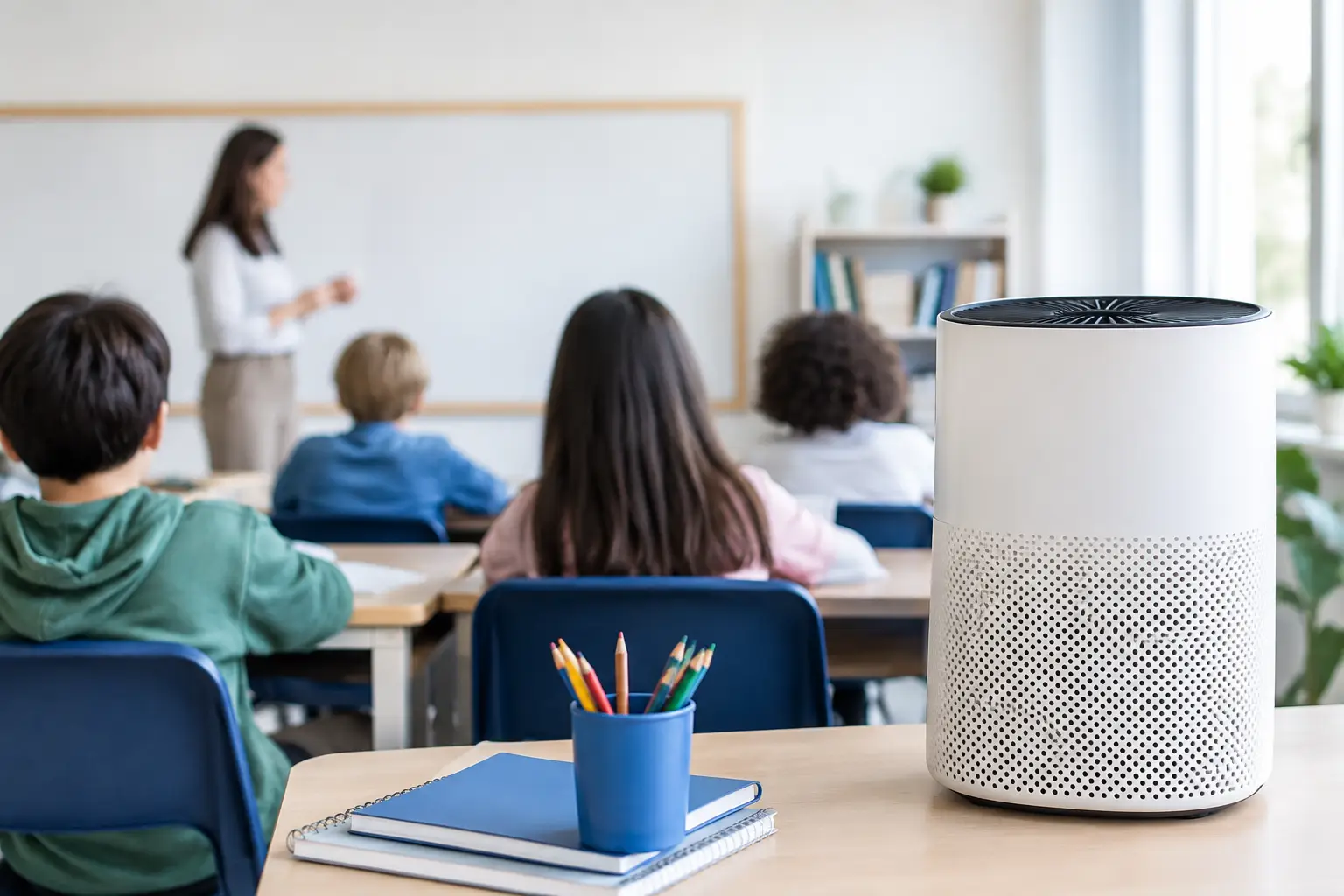
A busy classroom can hold more than backpacks, books, and lunchboxes. With students talking, coughing, moving between desks, and sharing a confined space for hours, airborne particles can build up quickly. An air purifier for classroom germs gives schools, daycare operators, tutors, and parents a practical way to add another layer of airborne particle control where ventilation alone may not be enough.
The right unit is not simply the biggest purifier available. It needs to move enough air for the room, operate quietly enough for instruction, and use filtration or air-treatment technology suited to the concern. For many classrooms, that means starting with a high-capacity HEPA air cleaner and considering complementary technology where odors, VOCs, or biological contaminants are also a concern.
What an Air Purifier Can and Cannot Do in a Classroom
A quality air purifier continuously pulls room air through its filtration or treatment system. In a HEPA-based unit, airborne particulate matter is captured in the filter media. That includes dust, pollen, many mold spores, and particle-bound contaminants. Properly sized equipment can reduce the concentration of airborne particles circulating within a classroom over time.
That matters during cold weather, allergy season, wildfire smoke events, or any period when opening windows is impractical. It also matters in older school buildings where HVAC performance varies from room to room.
An air purifier is not a replacement for cleaning, handwashing, appropriate ventilation, or staying home when sick. It does not sanitize desks, eliminate close-contact exposure, or promise that no one will get sick. The useful role of an air cleaner is narrower and still valuable: it helps reduce airborne particulate load while students and staff occupy the room.
Start With Room Size and Airflow
The most common purchasing mistake is choosing a compact room purifier for a full-size classroom. A unit may work well in a bedroom or office but be undersized for a room with 20 to 30 students, high ceilings, and frequent door traffic.
Before selecting an air purifier for classroom germs, measure the room length and width. Multiply them to find square footage, then account for ceiling height. A standard classroom may be around 700 to 1,000 square feet, but portable classrooms, music rooms, nurse offices, and small learning pods can be much smaller or larger.
Look beyond a broad coverage claim. The more useful question is how much filtered air the unit can deliver at a realistic fan speed. A purifier that only reaches its maximum coverage on a loud, high setting may not be practical during lessons. For occupied classrooms, a unit should have enough capacity to provide meaningful air cleaning while running at a tolerable everyday speed.
If the room is large, oddly shaped, or divided into activity areas, two properly placed units can be more effective than one undersized purifier in a corner. This also provides some backup if one unit needs service or filter replacement.
HEPA Filtration Is the Core Choice for Airborne Particles
For classrooms focused on dust, allergens, smoke particles, and germ-related airborne particulate concerns, a true HEPA air cleaner is often the most straightforward choice. HEPA filtration physically captures fine particles rather than relying on fragrance, masking agents, or passive airflow.
The Austin Air Immunity Machine is a strong option for buyers who want a substantial, all-metal HEPA air cleaner for high-use shared spaces. Its design combines mechanical particle filtration with significant activated carbon and zeolite media. That combination is useful when the classroom concern extends beyond airborne particles to everyday odors, cleaning-product fumes, and VOCs from art supplies, furnishings, or renovation materials.
The trade-off is size and weight. A high-capacity unit needs a sensible location, access to power, and enough open space around its intake and outlet. It is best treated as classroom equipment, not something that gets moved between rooms several times a day.
For smaller learning spaces, such as tutoring rooms, counseling offices, nurse areas, and compact daycare rooms, the Austin Air HealthMate Jr. or HealthMate Jr. Plus can be easier to place. The HealthMate Jr. Plus is especially worth considering where chemical odors and VOC concerns are part of the decision, not just particle filtration. These smaller units may be well suited to a single smaller room, but a standard full classroom may require a larger model or multiple units.
When Airocide May Fit the Classroom Plan
HEPA filtration is highly effective for capturing particles, but not every indoor-air concern is strictly particulate. Some schools are also managing persistent odors, chemical emissions, or biological contaminants that call for a different approach.
The Airocide APS-200 PM 2.5 combines particulate monitoring with Airocide's photocatalytic oxidation technology. This type of system is designed to address airborne organic compounds and biological contaminants through a reaction process rather than traditional HEPA-only filtration. It can be a useful choice where air quality monitoring and active treatment are both desired.
That does not make one technology universally better than the other. For a classroom where airborne particulate reduction is the primary goal, a high-capacity HEPA unit remains a clear starting point. Where odors, VOCs, and biological air-treatment needs are also significant, Airocide technology can be a valuable complement or a better fit depending on the room and building conditions.
For larger facilities, Airocide commercial units may be more appropriate than adding several consumer-sized machines. Commercial buyers should consider the number of rooms, occupancy patterns, maintenance access, and whether the equipment will remain in one space or move between areas.
Noise Level Is Part of Performance
A purifier that teachers turn off because it interrupts reading time is not solving the problem. Classroom air cleaning must work alongside instruction, testing, and conversation.
Review the sound level at the fan speed you expect to use daily. A unit can be run higher before students arrive, during lunch, or after dismissal, then reduced to a quieter setting during instruction. This schedule can make good use of the equipment without forcing teachers to choose between clean air and a calm classroom.
Placement affects perceived noise as well. Avoid putting a purifier directly beside the teacher's desk, reading circle, or a student with sound sensitivities. Do not block the unit with cabinets, curtains, stacked boxes, or furniture. Leave clearance so air can enter and exit freely.
Plan for Filters Before You Purchase
Air purifiers are not one-time purchases. Filter replacement is part of the cost of maintaining effective performance, especially in busy classrooms with high occupancy and frequent outdoor air entry.
A HEPA and carbon filter will gradually load with particles and adsorbed gases. Replacement timing depends on the model, fan speed, room conditions, and hours of operation. A classroom near a playground, bus loading area, renovation site, or wildfire-prone region may need more frequent attention than a lightly used office.
Buyers should confirm that replacement filters are readily available for the model they select. For Austin Air units, use the correct replacement filter kit for the specific machine, such as the HealthMate Jr., HealthMate Jr. Plus, Bedroom Machine, or Immunity Machine. These filters are not interchangeable simply because the housings may look similar.
Airocide owners should also plan ahead for reaction chamber replacement kits based on the manufacturer-recommended service cycle. Keeping a replacement on hand can prevent a school office or facility manager from postponing maintenance once the unit is due.
A Practical Setup for Better Classroom Air
For most classrooms, the strongest approach is simple: choose a correctly sized purifier, run it consistently, place it where airflow is unobstructed, and maintain it on schedule. Run the unit during occupied hours rather than only after the room is empty. Air cleaning works through repeated circulation, so regular operation matters more than occasional bursts.
Keep windows and HVAC practices aligned with local building guidance. Fresh-air ventilation and portable filtration can work together, particularly when outdoor conditions allow windows to open. If outdoor smoke, pollen, or extreme temperatures make open windows undesirable, an appropriately sized air purifier becomes even more useful indoors.
The best classroom unit is the one that matches the room, the concern, and the maintenance plan. A.M.I. Services helps buyers compare proven Austin Air and Airocide options so schools and families can choose equipment built for real indoor-air problems, not just a label that promises cleaner air.
Recent Posts
-
Austin Air HealthMate Vs HealthMate Plus: Key Differences
Choosing between the Austin Air HealthMate and the HealthMate Plus comes down to one question: do y …17th Nov 2026 -
Austin Air Vs Airocide: Which Air Purifier Fits Your Home?
Shoppers comparing Austin Air vs Airocide usually start with the same question: both are serious ho …16th Nov 2026 -
How to Choose Ozone Monitors for Your Space
An ozone smell after a treatment, a concern about outdoor air entering a building, or a workplace pr …14th Nov 2026