
Best Air Purifier for VOCs: What Works
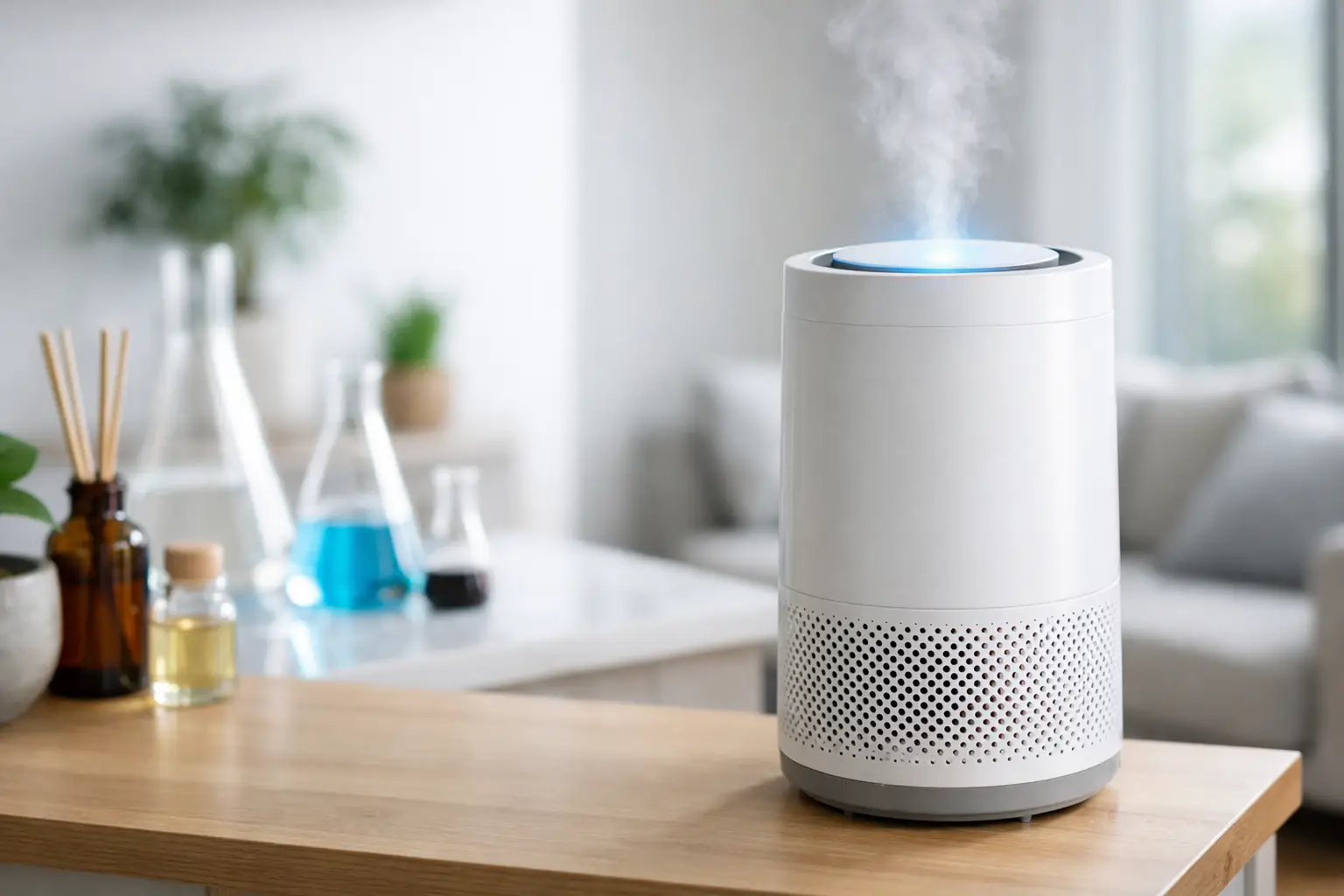
Fresh paint smell, new furniture odor, cleaning product fumes - many people assume those smells will fade and stop there. Sometimes they do. Sometimes they signal ongoing exposure to volatile organic compounds, or VOCs, that can linger far longer than expected. If you are trying to find the best air purifier for VOCs, the key is not buying the most popular machine. It is choosing the right filtration approach for gases, not just dust.
What makes VOCs harder to remove?
VOCs are airborne chemicals released from common indoor sources such as paint, flooring, adhesives, pressed wood furniture, air fresheners, solvents, smoke, and some household cleaners. In offices and commercial settings, they may also come from renovation materials, printing equipment, and industrial products stored indoors.
The reason VOCs are tricky is simple: they are gases. A standard HEPA filter is excellent for particles like dust, pollen, pet dander, and some smoke particles, but HEPA alone does not capture gases effectively. That is where many shoppers get disappointed. They buy a well-reviewed purifier, run it for weeks, and still notice chemical odors, irritation, or that stale indoor smell that never really leaves.
For VOC control, the filtration media matters more than the marketing claims on the box.
Best air purifier for VOCs: the technology that matters
If VOCs are your main concern, activated carbon or other substantial gas-adsorbing media should be at the center of your decision. The best air purifier for VOCs usually combines particle filtration with a serious carbon stage, not a thin carbon sheet added as a secondary feature.
Activated carbon is the main workhorse
Activated carbon works by adsorbing gas molecules onto its surface. The amount of carbon matters. A lightweight pre-filter with a small carbon coating can help with mild odors, but it is usually not enough for stronger chemical fumes or ongoing VOC sources.
For buyers dealing with new construction materials, wildfire smoke odors, remodeling fumes, or chemical sensitivity, heavier carbon filtration tends to perform better because it gives gases more media to interact with. That is why high-capacity units often stand out in this category.
HEPA still plays an important supporting role
Even though HEPA is not the solution for gases, it is still valuable in a VOC-focused purifier. Many indoor air problems happen at the same time. A room with paint fumes may also have dust from construction. A space with smoke odor may also have fine particles. A purifier that combines true HEPA with substantial carbon gives broader protection.
Other technologies can help, but they are not interchangeable
Some air purifiers use photocatalytic oxidation, proprietary media blends, or other methods aimed at reducing airborne chemicals. These technologies can be useful, especially in certain commercial or odor-focused applications, but they should be evaluated based on real use case, maintenance needs, and room conditions.
This is where it depends. If your primary issue is strong household chemical off-gassing, a unit with a large amount of carbon may be the more straightforward choice. If you are managing broader contamination concerns in a business, medical-adjacent setting, or shared indoor space, a different technology mix may make sense.
How to choose the best air purifier for VOCs in your space
The right purifier depends on what is causing the gases, how large the room is, and whether the exposure is temporary or ongoing.
Start with the source
If the VOC source is active, no purifier will fully solve the problem by itself. If you are storing solvents in a utility room, using strong cleaners daily, or bringing in furniture that continues to off-gas, source control still matters. Ventilation, product substitution, and removal of the emission source can reduce the load on the purifier.
That does not make the purifier less important. It just means the best results come from combining air cleaning with practical source reduction.
Match the purifier to room size
A small unit with modest airflow may help in a bedroom with light odor issues, but it will struggle in an open-concept living area or office. Always look at the manufacturer’s room-size guidance with some caution. Real-world performance depends on ceiling height, door openings, source strength, and how often the purifier can recirculate the air.
For VOCs, undersizing is a common mistake. A stronger unit running at a practical speed often works better than a smaller model running at maximum all day.
Pay attention to the carbon quantity
This point deserves extra attention because it separates gas-focused purifiers from general air cleaners. If a product highlights HEPA in large print but barely explains its carbon stage, that is a sign to look closer. For VOC removal, substantial carbon weight or significant gas-phase media is usually what you want to see.
Thin carbon pads may reduce light odors for a short period, but they saturate quickly. Buyers who are serious about chemical fumes should focus on units designed specifically for smoke, odors, and VOCs.
Think about filter replacement before you buy
A purifier is not a one-time decision. Carbon media gets used up, and replacement intervals vary depending on the pollution load. If your home has frequent VOC exposure, replacement cost and availability matter just as much as initial performance.
This is one reason specialty retailers like A.M.I. Services appeal to buyers who want long-term support, not just a box on the doorstep. Replacement filters, brand guidance, and concern-based product matching make a difference over time.
When a HEPA purifier is not enough
A lot of people searching for cleaner air start with HEPA because it is familiar and trusted. That makes sense for allergies, dust, and airborne particles. But if your symptoms are triggered by fragrances, paint, gasoline vapors, renovation work, or furniture off-gassing, a particle-only solution may miss the real problem.
You may notice this when the air looks cleaner but still smells harsh, or when irritation continues even after visible dust drops. In that case, it is worth shifting your focus from particle capture to gas reduction.
That does not mean HEPA has no place. It means the best setup for VOCs usually includes HEPA plus meaningful gas filtration rather than HEPA by itself.
Home and office buyers need slightly different answers
For residential buyers, the main questions are usually about bedrooms, nurseries, living rooms, and spaces affected by remodeling, cooking odors, cleaning chemicals, or nearby smoke. In these cases, quieter operation, dependable filter availability, and strong carbon performance tend to matter most.
For office and commercial buyers, the conversation changes a bit. Shared occupancy, larger square footage, higher ventilation demands, and more varied sources can all affect the decision. Printer emissions, renovation materials, cleaning schedules, and occupancy patterns may require a more application-specific solution.
That is why there is no one-size-fits-all answer to the best air purifier for VOCs. A good residential match may not be enough for a workplace, and an oversized commercial solution may be unnecessary for a single bedroom.
Signs you are choosing a better VOC solution
A strong VOC-focused purifier usually checks a few practical boxes. It is built for gas reduction, not just particle removal. It offers substantial carbon or equivalent gas-phase media. It is sized appropriately for the room. And it comes from a recognized brand with clear replacement filter support.
It should also fit the way you actually live or work. If a unit is so loud you will not run it, or so expensive to maintain that filters get postponed, performance on paper will not matter much.
The best purchase is usually the one that balances filtration depth, room coverage, maintenance reality, and the severity of your VOC problem.
What shoppers often get wrong
The biggest mistake is buying for odor alone without understanding whether the odor reflects particles, gases, or both. Another common issue is choosing based on smart features, styling, or app controls while ignoring the filter media. Convenience is nice, but it does not remove chemicals.
People also tend to underestimate how long VOC sources can keep releasing gases. New cabinets, flooring, mattresses, and paints may off-gas for weeks or months. If your purifier is dealing with continuous emissions, long-term filter capacity becomes much more important than short-term odor relief.
If you are comparing options, look past generic claims like freshens air or reduces airborne pollutants. For VOC concerns, the details behind the gas-removal design are what count.
Cleaner indoor air starts with matching the purifier to the pollutant. When VOCs are the problem, the best choice is usually the unit that takes gas filtration seriously from the start.
Recent Posts
-
Best Air Purifier for Pet Dander
Best Air Purifier for Pet Dander April 29, 2026 That layer of fuzz on the baseboards is annoying. …13th Oct 2026 -
Best Air Purifier for VOCs: What Works
April 28, 2026 Fresh paint smell, new furniture odor, cleaning product fumes - many people assume …13th Oct 2026 -
Best Air Purifier for Chemical Sensitivity
April 27, 2026 When someone in the home reacts to paint fumes, cleaning products, scented laundry, …13th Oct 2026