
Best Air Purifier for Smoke Smell
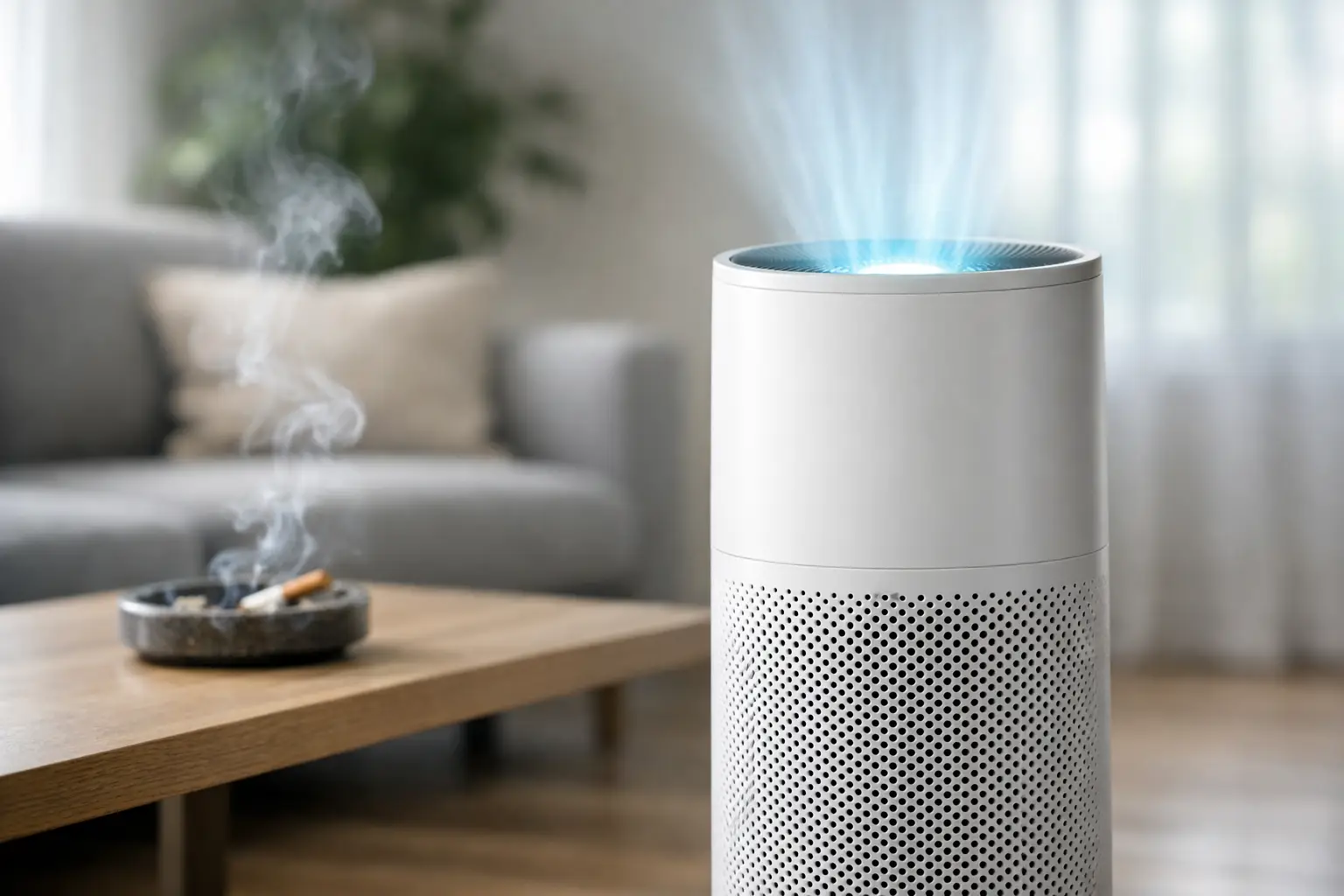
That stale smoke odor tends to settle in fast. It gets into soft furniture, drapes, carpets, and the air itself, which is why choosing the right air purifier for smoke smell matters if you want your space to feel clean again, not just temporarily masked.
Smoke is one of the harder indoor air problems to solve because it is not a single pollutant. It is a mix of very small particles, gases, and odor-causing compounds. Whether the source is wildfire smoke drifting indoors, cigarette smoke, a fireplace, or a kitchen mishap, the best results usually come from matching the purifier to the type of smoke and the size of the room.
What an air purifier for smoke smell needs to do
Many shoppers assume any air purifier will handle smoke, but that is not always true. A unit can be good at trapping dust and still do very little for the actual smell. That is because smoke removal usually requires two jobs at once.
First, the purifier needs to capture fine particulate matter. Smoke particles are much smaller than ordinary household dust, so a true HEPA filter is usually the starting point. HEPA filtration helps reduce the airborne particles that can irritate lungs, trigger asthma symptoms, and leave the air feeling hazy.
Second, the purifier needs enough activated carbon or another serious gas-phase media to address odor and chemical compounds. This is where many lightweight consumer models fall short. If the carbon stage is thin or minimal, you may notice some improvement in air clarity but little change in the lingering smoke smell.
Why smoke odor can stay even after the air looks better
This is where expectations matter. An air purifier can clean the air passing through it, but it cannot instantly pull smoke residue out of every fabric, wall, and upholstered surface. If your room still smells smoky after running a purifier, that does not always mean the machine is failing. It may mean the odor source is now embedded in the room.
In practical terms, airborne smoke can often be reduced fairly quickly with the right purifier, while the smell attached to surfaces can take longer. Washing fabrics, cleaning hard surfaces, and replacing heavily contaminated filters in your HVAC system can make a big difference. The purifier helps by reducing what continues to circulate.
The most important features to compare
When buying an air purifier for smoke smell, focus less on flashy extras and more on the filter system and real capacity. The first thing to verify is true HEPA filtration. This is the proven standard for capturing fine airborne particles, including many of the particulates found in smoke.
The second thing to look at is the carbon component. For smoke odor, more carbon generally means better odor control. If a product barely mentions activated carbon or uses a thin pre-filter with light carbon coating, it may not be enough for persistent tobacco smoke or wildfire conditions. Heavier-duty units with substantial carbon or specialty gas-removal media are typically the better fit.
Room size is just as important. A purifier that is undersized for the space will struggle, even if the filter design is otherwise excellent. If you are dealing with smoke regularly, it often makes sense to choose a unit rated for a larger area than your room size rather than buying right at the limit.
Noise is another practical factor. Many users want to run a purifier in a bedroom, nursery, or office for long stretches. The reality is that stronger airflow often means more sound, especially on higher settings where smoke removal is most effective. A quieter machine may be more comfortable, but if it moves less air, performance can suffer. It is a trade-off worth considering before you buy.
HEPA alone is not enough for smoke smell
This is one of the biggest buying mistakes. A HEPA filter is excellent for particulate removal, but smell itself is usually tied to gases and volatile compounds that need adsorption media such as activated carbon. If your main complaint is odor, not just visible haze or throat irritation, carbon matters a great deal.
That does not mean HEPA is optional. Smoke contains both particles and gases, and the best-performing systems for this problem usually combine particle filtration with meaningful odor-control media. If a purifier offers one without the other, it may only solve half the issue.
Choosing for wildfire smoke vs. cigarette smoke
Not all smoke problems behave the same way. Wildfire smoke often enters from outdoors and can spike quickly depending on weather and building leakage. In that case, you want strong particle filtration, good airflow, and enough carbon support to help with odor and combustion byproducts. Keeping doors and windows closed as much as possible is part of the solution.
Cigarette or cigar smoke can be more persistent indoors because the source may be repeated and the odor clings heavily to surfaces. For this use case, a stronger carbon stage becomes even more important. If smoking is ongoing inside the space, even an excellent purifier will be working continuously against a fresh source. It can reduce airborne contaminants and improve the room, but it may not fully eliminate odor unless the source stops.
What about ionizers and other technologies?
Some smoke-focused units use additional technologies beyond HEPA and carbon. These can include photocatalytic systems, certain oxidation-based designs, or ionization features. In the right application, advanced technologies may help address odor or specific airborne contaminants, but they should not distract from the basics.
For most buyers, the filter system still tells the bigger story. Proven smoke performance usually starts with strong particle capture and real gas-phase media. If a product leans heavily on a special technology but says little about HEPA quality, carbon weight, or airflow, that is a reason to look more carefully.
Placement and operation make a real difference
Even a top-rated purifier can underperform if it is placed poorly. For smoke, put the unit in the room where the problem is strongest or where people spend the most time. Avoid tucking it behind furniture or tight against a wall where airflow is restricted.
During heavy smoke events, higher fan speeds are usually necessary. Many users switch to a quiet low setting too soon, then wonder why the smell hangs around. Low speed may be fine for maintenance after the air has improved, but active smoke problems usually require more aggressive airflow.
If smoke affects multiple rooms, one purifier may not be enough. Air cleaners work best within the area they are treating. An open floor plan may allow one larger unit to help broadly, but separate enclosed rooms often need their own coverage.
Filter replacement is part of the real cost
Smoke loads filters faster than ordinary household dust. That is especially true during wildfire season or in spaces with repeated tobacco exposure. A purifier with excellent smoke performance is only as good as the condition of its filters.
Before buying, check replacement filter availability and expected replacement intervals. Some systems have higher upfront costs but better long-term value because the filters are substantial and the machine is built for serious air cleaning. Others may seem affordable at first but become less attractive if replacement filters are frequent or hard to source.
This is where specialty retailers like A.M.I. Services can be helpful, because smoke-related buyers often need both the purifier and a dependable source for replacement filter kits.
How to tell if your purifier is actually helping
Your nose is one indicator, but it should not be the only one. Smoke sensitivity varies from person to person, and some odors linger on surfaces even after airborne levels improve. If you have an air quality monitor, you can track particulate levels and get a clearer picture of what is happening in the room.
You may also notice practical changes such as less throat irritation, fewer asthma triggers, reduced haze in sunlight, and a fresher sleeping environment. Those signs matter, especially for families trying to protect children, older adults, or anyone with respiratory sensitivity.
When a stronger unit is the better choice
If smoke is an occasional issue, a good residential purifier with HEPA and substantial carbon may be enough. But if you are dealing with repeated wildfire intrusion, tobacco smoke transfer in apartments, or a commercial setting with ongoing odor complaints, stepping up to a more heavy-duty system often makes sense.
The main reason is simple: smoke is demanding. It challenges airflow, filter capacity, and odor control all at once. Buying a stronger machine than you think you need is often smarter than buying a stylish lightweight model that never quite solves the problem.
A cleaner-smelling room usually starts with a better-matched machine, not more fragrance or guesswork. If you choose an air purifier built for fine particles, meaningful carbon filtration, and the right room size, you give yourself the best chance of turning smoke-heavy indoor air into something that feels livable again.
Recent Posts
-
Best Air Purifier for Pet Dander
Best Air Purifier for Pet Dander April 29, 2026 That layer of fuzz on the baseboards is annoying. …13th Oct 2026 -
Best Air Purifier for VOCs: What Works
April 28, 2026 Fresh paint smell, new furniture odor, cleaning product fumes - many people assume …13th Oct 2026 -
Best Air Purifier for Chemical Sensitivity
April 27, 2026 When someone in the home reacts to paint fumes, cleaning products, scented laundry, …13th Oct 2026