
Best Air Purifier for Mold Spores
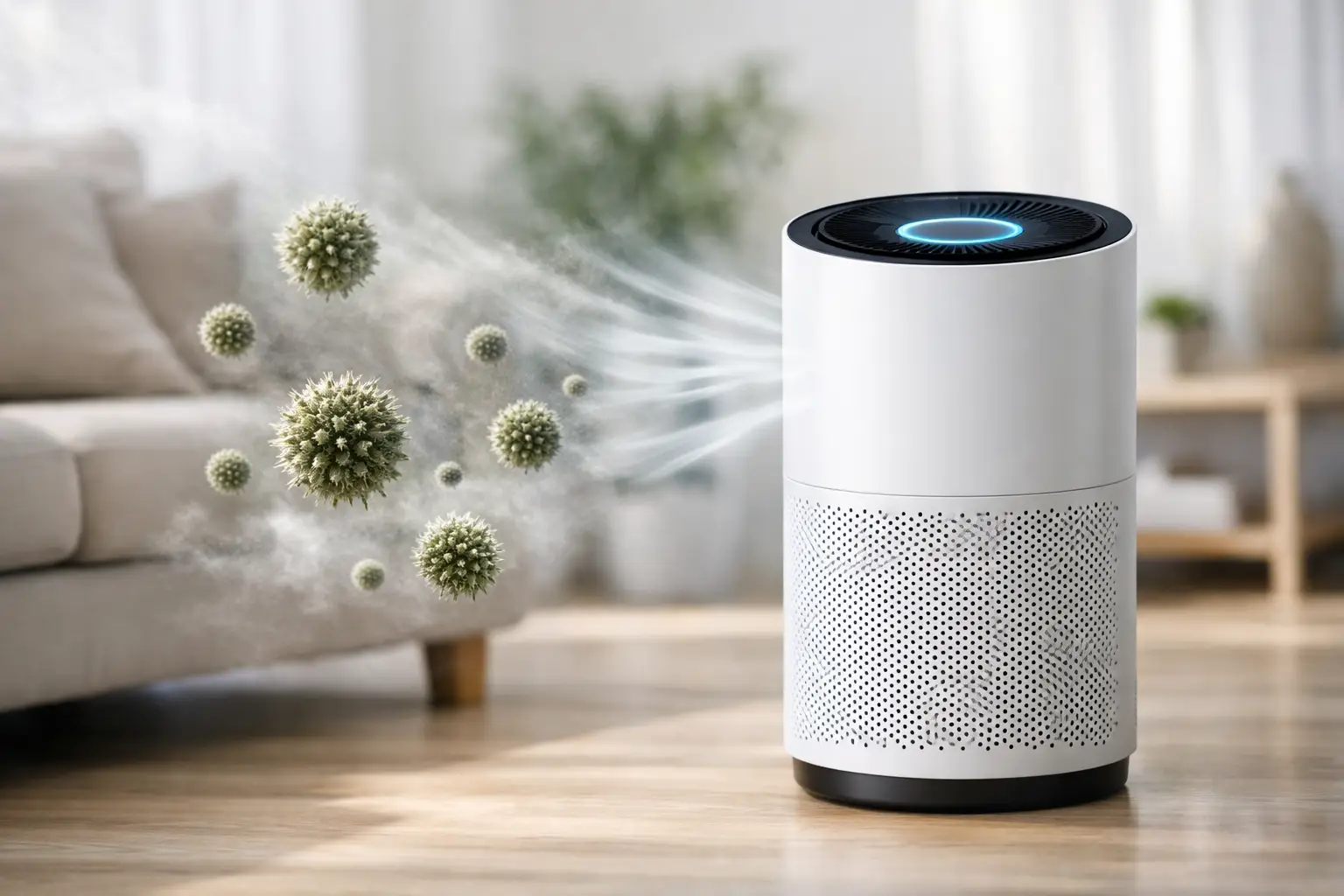
If you can smell that damp, musty odor before you even open the closet door, you are not dealing with a small air quality issue. Mold spores can move through indoor air long before you see visible growth, which is why choosing the right air purifier for mold spores matters for allergy relief, asthma control, and everyday peace of mind.
What an air purifier can do well is capture or reduce airborne mold particles. What it cannot do is fix the moisture problem that allowed mold to grow in the first place. That distinction matters, because many buyers expect a machine to solve both problems. The better approach is to treat the purifier as one part of a larger mold-control plan.
What to look for in an air purifier for mold spores
For most homes and offices, the most reliable starting point is true HEPA filtration. Mold spores are airborne particles, and HEPA filters are designed to capture very small particulates with high efficiency. If your goal is to reduce what is floating in the air and being inhaled, this is the feature that should lead your search.
Filter quality matters more than marketing language. Terms like "HEPA-type" or "HEPA-style" do not mean the same thing as true HEPA. If you are buying specifically for mold concerns, vague filter claims are not good enough. Look for clear specifications and a purifier built for particle removal, not just odor reduction.
Activated carbon can also help, but for a different reason. Carbon is useful for adsorbing musty odors and some chemical byproducts, not for capturing mold spores themselves. In a mold-prone room, a combination of HEPA for particles and carbon for odor is often more satisfying than HEPA alone, especially if the space smells stale even after cleaning.
Some buyers also consider technologies like photocatalytic oxidation or other advanced air treatment methods. These can play a role in certain applications, especially where odors, VOCs, and biological contaminants overlap. Still, if mold spores are the main issue, particle filtration should remain the foundation. Extra technology can be helpful, but it should not replace proven mechanical filtration.
HEPA vs other technologies for mold control
HEPA is usually the safest recommendation because it addresses the problem directly. Mold spores are particles. A strong HEPA system captures particles. That makes the buying logic fairly straightforward.
Ionic and ozone-producing products are where buyers need to be more careful. Some low-cost units promise cleaner air but rely on methods that may not be ideal for occupied spaces, especially for people with asthma or respiratory sensitivity. If a product creates ozone, that is a serious trade-off. Ozone can irritate lungs, and it is not a good substitute for proper filtration.
UV technology is another category that causes confusion. UV can help in some systems, but it does not physically remove airborne spores from the room. It also depends heavily on exposure time and system design. In real-world residential use, a solid HEPA purifier is usually the more dependable choice if your main concern is breathing cleaner air.
That does not mean every HEPA machine is equal. Airflow, room-size coverage, build quality, and filter sealing all affect performance. A weak unit with a HEPA label may not clean the room fast enough to make a noticeable difference.
Room size and airflow matter more than most people think
A common mistake is buying a purifier that is too small for the space. That can leave spores circulating even when the unit runs all day. If you are shopping for an air purifier for mold spores, match the purifier to the actual square footage and, when possible, choose a model with enough capacity to handle the room on a realistic fan speed.
This matters because many machines advertise coverage based on ideal conditions or lower cleaning expectations. In a room with active mold concerns, higher air changes per hour are better. Bedrooms, basements, bathrooms adjacent to living spaces, and offices with poor ventilation often need more air movement than buyers expect.
Placement also affects results. Putting the purifier in a dead corner behind furniture limits circulation. In most rooms, the best position is where airflow is not blocked and where the unit can pull in contaminated air and return cleaned air across the room. If the mold issue is tied to one specific area, keep the purifier as close to that source zone as practical without interfering with normal airflow.
What an air purifier will not fix
This is the part many sellers skip, but it is essential. An air purifier does not dry out a damp basement, repair a roof leak, stop condensation on windows, or correct a bathroom exhaust problem. If moisture continues, mold will continue.
That is why mold control usually involves both air treatment and source control. You may need a dehumidifier, better ventilation, cleaning of contaminated surfaces, or professional remediation if the growth is significant. For many households, the purifier is what reduces day-to-day airborne exposure while those larger fixes are handled.
If you see widespread visible mold, a purifier should not be your only response. It can support a healthier indoor environment during cleanup, but it is not a substitute for removing contaminated materials when needed.
Features worth paying for and features you can skip
A few features are genuinely useful when buying for mold concerns. A sealed filter design helps make sure air passes through the filter instead of around it. Multiple fan speeds are helpful because you may want higher cleaning power during the day and quieter operation at night. Easy filter replacement is also important, because a great purifier becomes a poor one if the replacement process is frustrating or expensive enough that owners delay maintenance.
A particle monitor can be helpful, but it is not essential for every buyer. Mold spores are only one part of the indoor air picture, and many built-in sensors are better at detecting general particle levels than diagnosing mold specifically. They are useful for tracking trends, not for confirming a mold problem.
The feature to treat with skepticism is flashy automation without strong filtration specs behind it. A dependable machine with a true HEPA filter and sufficient airflow will usually outperform a gadget-heavy model that looks smart but cleans slowly.
Filter replacement and ongoing cost
The upfront price is only part of the decision. Replacement filters are part of owning any serious air purifier, and for mold concerns, staying on schedule matters. A clogged particle filter reduces airflow and overall effectiveness, which is exactly what you do not want when trying to keep spores out of the breathing zone.
Before you buy, check how often filters need to be changed and whether replacement kits are easy to find. This is one reason many buyers prefer established indoor air quality brands over generic marketplace options. Reliable replacement support is not exciting, but it makes long-term ownership much easier.
For households with allergies, asthma, or recurring moisture issues, the best value often comes from a purifier that is built well enough to run consistently for years. That may cost more upfront, but it usually pays off in performance and fewer frustrations.
Choosing the right air purifier for mold spores in your space
If you are buying for a bedroom, prioritize quiet operation, true HEPA filtration, and enough airflow to clean the room several times per hour. If you are buying for a basement, focus on stronger coverage and pair the purifier with humidity control. For offices or shared workspaces, look for a unit that can handle the full room volume without creating too much noise distraction.
People with asthma or strong sensitivities should be especially cautious about ozone-generating products and should lean toward proven filtration. Families dealing with both mold odor and airborne particles may benefit most from a purifier that combines substantial HEPA media with a meaningful amount of activated carbon.
This is where specialist retailers can help narrow the field. A.M.I. Services, for example, focuses on concern-based shopping, which is useful when you are not just browsing air purifiers but trying to solve a mold-related air problem with the right technology and replacement support.
The best buying decision usually comes down to four questions. Does it use true HEPA filtration? Is it sized correctly for the room? Are replacement filters readily available? And are you also addressing the moisture source? If the answer to all four is yes, you are much more likely to see real improvement.
Cleaner air starts with realistic expectations and the right equipment. When mold spores are part of the problem, a well-chosen purifier can make the room easier to breathe in while you tackle the cause behind it.
Recent Posts
-
Best Air Purifier for Pet Dander
Best Air Purifier for Pet Dander April 29, 2026 That layer of fuzz on the baseboards is annoying. …13th Oct 2026 -
Best Air Purifier for VOCs: What Works
April 28, 2026 Fresh paint smell, new furniture odor, cleaning product fumes - many people assume …13th Oct 2026 -
Best Air Purifier for Chemical Sensitivity
April 27, 2026 When someone in the home reacts to paint fumes, cleaning products, scented laundry, …13th Oct 2026