
Best Air Purifier for Allergies: What Works?
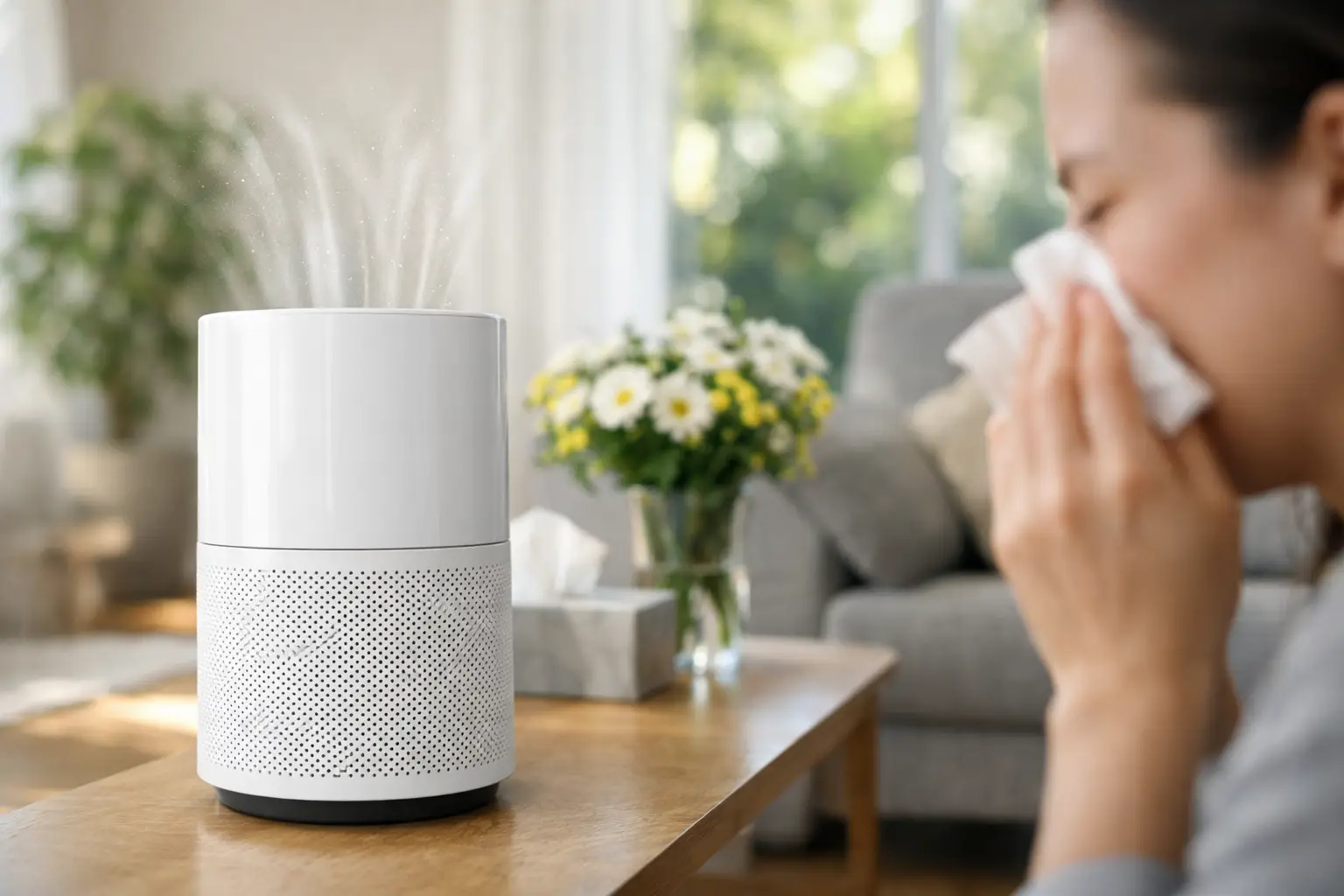
When allergy symptoms follow you indoors, the problem usually is not just "bad air." It is a mix of particles - pollen, dust mite waste, pet dander, mold spores, and fine dust - circulating through the rooms where you sleep, work, and recover. Finding the best air purifier for allergies means choosing a unit that can remove those triggers consistently, not just look good on a spec sheet.
What the best air purifier for allergies should actually do
For most households, the best air purifier for allergies is a true mechanical filtration unit with a high-efficiency particulate filter. In plain terms, that means an air cleaner designed to pull airborne particles through dense filter media that captures the allergens causing symptoms. If your main concern is sneezing, itchy eyes, congestion, or nighttime breathing irritation, particle removal is the job that matters most.
That is why HEPA and HEPA-type discussions deserve a closer look. A true HEPA system is the standard many buyers should start with because it is built for particle capture, including many of the common irritants that stay suspended in indoor air. Marketing terms can get muddy fast, so it helps to focus less on buzzwords and more on whether the purifier is designed for serious particulate filtration in a room your family actually uses.
This is also where trade-offs come in. Some technologies are better suited to odors, chemical vapors, or microbial concerns than to allergy particles alone. If allergies are your primary issue, a purifier that excels at trapping dust, pollen, and dander will usually make more sense than one built mainly around odor control.
Start with your allergy triggers, not the product category
A lot of people shop backward. They start with a popular model, then try to decide whether it fits their problem. A better approach is to identify what is triggering symptoms in your space.
If pollen is getting indoors during spring and fall, you need strong particle filtration and enough airflow to cycle room air regularly. If pet dander is the issue, the purifier needs to handle a constant stream of airborne material rather than occasional contamination. If mold spores are part of the problem, air cleaning can help reduce airborne exposure, but it should not be treated as a fix for moisture or hidden mold growth. And if you are reacting to smoke, VOCs, or strong odors along with allergies, you may need a purifier that combines particle filtration with substantial gas-phase media such as activated carbon.
This matters because the best air purifier for allergies may not be the best air purifier for chemicals, smoke, or heavy odor removal. Some households need both. Others are paying for features they do not really need.
Room size matters more than most buyers expect
One of the most common buying mistakes is choosing a purifier that is too small for the room. A compact unit may run quietly and cost less upfront, but if it cannot move enough air, allergy relief will be limited. The purifier needs enough capacity for the actual room size, with some margin if you have high ceilings, open floor plans, pets, or severe symptoms.
Bedrooms are often the smartest first purchase because that is where exposure adds up over long hours. If you wake up congested, coughing, or rubbing your eyes, putting the right purifier in the bedroom can deliver the most noticeable improvement. For larger living areas, you may need a bigger unit or more than one purifier depending on layout.
A unit that is rated generously for the room will often perform better at lower fan speeds, which also helps with noise. That is an underrated advantage. A purifier only helps if people keep it running.
HEPA is usually the best fit for allergy relief
For dust, pollen, mold spores, and pet dander, HEPA filtration is usually the safest place to focus. Top rated HEPA air cleaners are popular for a reason: they are straightforward, proven, and easy to match to common household allergy concerns.
That does not mean every HEPA purifier is equally effective. Build quality, fan strength, filter sealing, and real-world room coverage all affect performance. A weak machine with a HEPA label can still disappoint if air bypasses the filter or the unit does not process enough air.
It also does not mean HEPA alone solves every indoor air issue. If someone in the home is sensitive to wildfire smoke, cooking fumes, cleaning chemicals, or other VOCs, then a purifier with meaningful carbon media may be the better choice. Particle filtration helps with the solid portion of smoke, but gases and odors require a different strategy.
The filter replacement question is not a small detail
Buyers often focus on the purchase price and overlook filter replacement costs. That is a mistake, especially for households planning to run a purifier daily. The best air purifier for allergies is not just the one that works on day one. It is the one you can maintain properly over time.
Replacement schedule, filter availability, and total annual cost should be part of the decision. A lower-cost machine with expensive or hard-to-find filters can become frustrating fast. On the other hand, a premium unit with longer filter life may be the better value if it delivers stronger performance and simpler upkeep.
This is where specialty retailers often make the process easier. A.M.I. Services, for example, focuses on indoor environmental quality products and replacement components, which matters when you want ongoing support rather than a one-time box purchase.
Noise, placement, and day-to-day use
Air purifiers are not set-it-and-forget-it appliances if they are used poorly. Placement affects results. A purifier shoved behind furniture, blocked by curtains, or placed in a dead corner will not clean air as efficiently as one positioned with clear airflow around it.
Noise also affects compliance. A powerful purifier that is too loud for sleep may get turned down or off overnight, which undercuts its value for allergy control. In many homes, the sweet spot is a well-sized purifier that can run on medium or low during sleep and still maintain good air cleaning.
If symptoms are severe, run the purifier continuously rather than only when the room feels stuffy. Allergy particles are often invisible. By the time you notice irritation, exposure has already happened.
What office and commercial buyers should think about
For offices, clinics, reception areas, and other shared spaces, the same principles apply but the stakes are often higher. More occupants mean more particles entering and recirculating in the space. Allergy complaints, dust load, and general comfort can all improve with the right air cleaning approach, but undersized units are even more likely to disappoint in commercial settings.
Commercial buyers should look beyond basic consumer claims and think in terms of room volume, occupancy, maintenance needs, and the specific concern being addressed. If the goal is reducing airborne allergy triggers in a private office, a room air purifier may be enough. If the goal is treating a larger open workspace or customer-facing area, a commercial air purification system may be more appropriate.
Red flags when comparing options
If you are comparing models, be careful with vague performance language. Terms like "HEPA-style," "99% effective," or "freshens air" can sound reassuring without telling you much about actual allergy control. The more severe the symptoms, the more important it is to choose equipment built around proven particulate filtration and realistic room sizing.
Also be cautious with purifiers that create intentional byproducts you may not want in occupied spaces. For sensitive households, especially where asthma or respiratory irritation is involved, simpler and proven filtration-based solutions are often the more dependable choice.
So what is the best air purifier for allergies?
For most homes, it is a properly sized air purifier with true HEPA filtration, reliable airflow, and replacement filters you can actually keep up with. If your allergy symptoms are driven by dust, pollen, pet dander, or mold spores in the air, that combination is usually the most practical and effective place to start.
If your home also has smoke, odors, or VOC concerns, then the best choice may be a more specialized system that combines strong particle capture with substantial carbon or another targeted technology. That is where the answer becomes more specific to the space and the people living in it.
The good news is that allergy relief indoors does not have to start with guesswork. When you match the purifier to the trigger, the room size, and the way the space is actually used, cleaner air becomes a realistic part of everyday life - especially in the rooms where breathing well matters most.
Recent Posts
-
Best Air Purifier for Allergies: What Works?
April 23, 2026 When allergy symptoms follow you indoors, the problem usually is not just "bad air. …12th Oct 2026 -
How Long Do Austin Air Filters Last?
When investing in an air purifier, one of the first questions potential buyers ask is how long the …4th Oct 2024 -

How the Austin Air Bedroom Machine Can Improve Your Sleep Quality
Quick Answer for 'Bedroom Machine Austin Air': The Austin Air Bedroom Machine is specifically design …27th Feb 2024